Nielsen’s latest report, K-Beauty Goes Global, shows that global sales of Korean beauty products grew by 53% in 2025, bringing the cumulative increase over the past two years to 131%.
Compared with Korean beauty brands, which have leveraged the US market to achieve global expansion, Chinese beauty brands are exploring a more regionally distinctive path to international growth.
In contrast, Southeast Asia has emerged as the most important overseas growth market for Chinese beauty brands today. With accessible pricing, faster R&D iteration cycles, and stronger adaptation to local needs, Chinese brands are gradually carving out their own identity in competition with Japanese and Korean players in the region.
According to data cited by Bloomberg, although Chinese beauty brands’ overseas sales are currently about half those of Korean brands, the gap is steadily narrowing. The analysis suggests that Southeast Asia has become the preferred destination for Chinese brands largely due to the similarity between the two regions’ e-commerce ecosystems. As major Southeast Asian platforms Lazada and TikTok Shop are operated by Alibaba Group and ByteDance respectively, Chinese brands are able to replicate operational expertise proven in the domestic market more seamlessly in Southeast Asia.

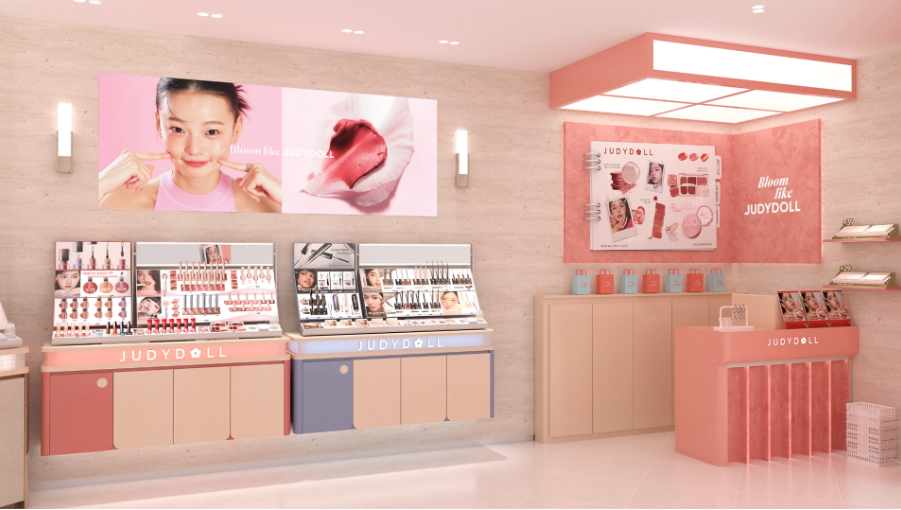
Take Joy Group as an example. After entering the Southeast Asian market, its makeup brands JudydoLL and Joocyee have accelerated expansion since 2023, and have now opened three directly operated stores in Singapore, marking the group’s first overseas retail outlets. In Vietnam, the two brands have established distribution channels through e-commerce platforms TikTok Shop and Shopee, as well as local retailers such as Hasaki, Guardian, and Medicare. According to fiscal year 2025 data, Joy Group’s revenue exceeded RMB 4.3 billion (approximately USD 600 million), up 22% year-on-year. Among this, overseas retail revenue surpassed RMB 600 million (approximately USD 83 million), representing roughly a tenfold increase over three years and becoming a key driver of the group’s growth — three of its top five overseas markets are located in Southeast Asia.
Proya Cosmetics Co is also stepping up its overseas expansion. As growth in the domestic mass skincare market slows, overseas business is being positioned as a new growth engine. According to its 2025 annual report, Proya recorded revenue of RMB 298 million (approximately USD 41 million) from Hong Kong, China and other overseas markets, up 111.59% year-on-year. In Southeast Asian markets such as Malaysia, Proya has entered the Guardian drugstore retail chain under the DFI Retail Group.

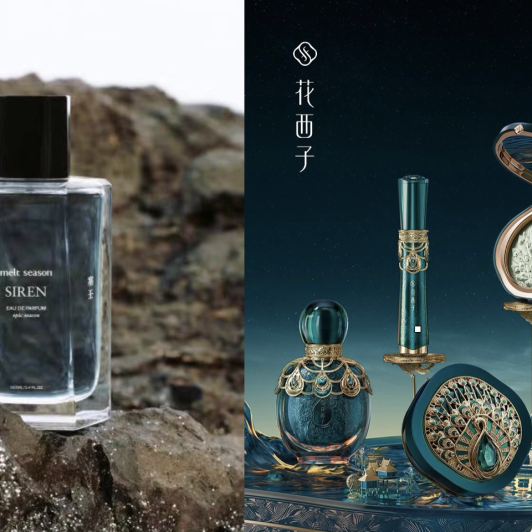
Notably, in May the company announced it would increase its stake in the makeup brand Flower Knows by 12.55% for RMB 351.1 million (approximately USD 49 million), raising its total shareholding to 51%. Flower Knows is one of the earlier Chinese makeup brands to expand overseas. In 2025, the brand recorded total revenue of RMB 1.726 billion (approximately USD 240 million), of which overseas revenue accounted for about RMB 200 million (approximately USD 28 million), representing roughly 11.6%. The brand entered offline retail channels in Japan in 2019 and has gradually expanded into Europe and the US since 2022, entering retailers such as Urban Outfitters and Ulta Beauty. Following Proya’s acquisition of a controlling stake, it is expected to leverage Flower Knows’ existing overseas distribution network to accelerate the international expansion of its color cosmetics business.
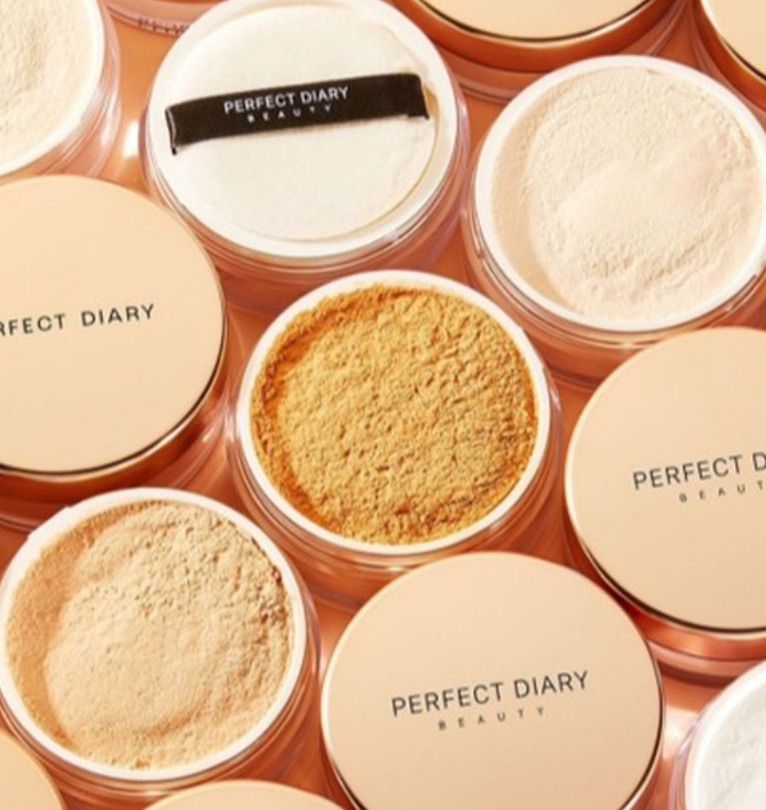
Perfect Diary‘s parent company Yatsen Holding is also deepening its presence in Southeast Asia. As one of the earlier Chinese beauty companies to expand overseas, its strategy has now shifted toward “deep localisation.”
Perfect Diary continues to strengthen its cooperation with local e-commerce platforms Shopee and Lazada in Singapore and Malaysia, while also expanding into offline retail channels in the Philippines and Vietnam. To tap into markets with large Muslim populations such as Indonesia and Malaysia, Yatsen Holding has increased investment in Halal certification. Its core makeup products and some skincare items have already obtained Halal certification in Indonesia, with further implementation underway. This provides a reference point for Chinese brands seeking to enter the Middle East and other overseas markets.
丨Image Credit: Changi Airport official website, official brand press releases, Instagram accounts
丨Editor: Luxeplace