
On 19 March, the 2026 ‘LUXE.CO Fashion Innovation and Investment Forum’ concluded successfully at the Jing’an Shangri-La, Shanghai.
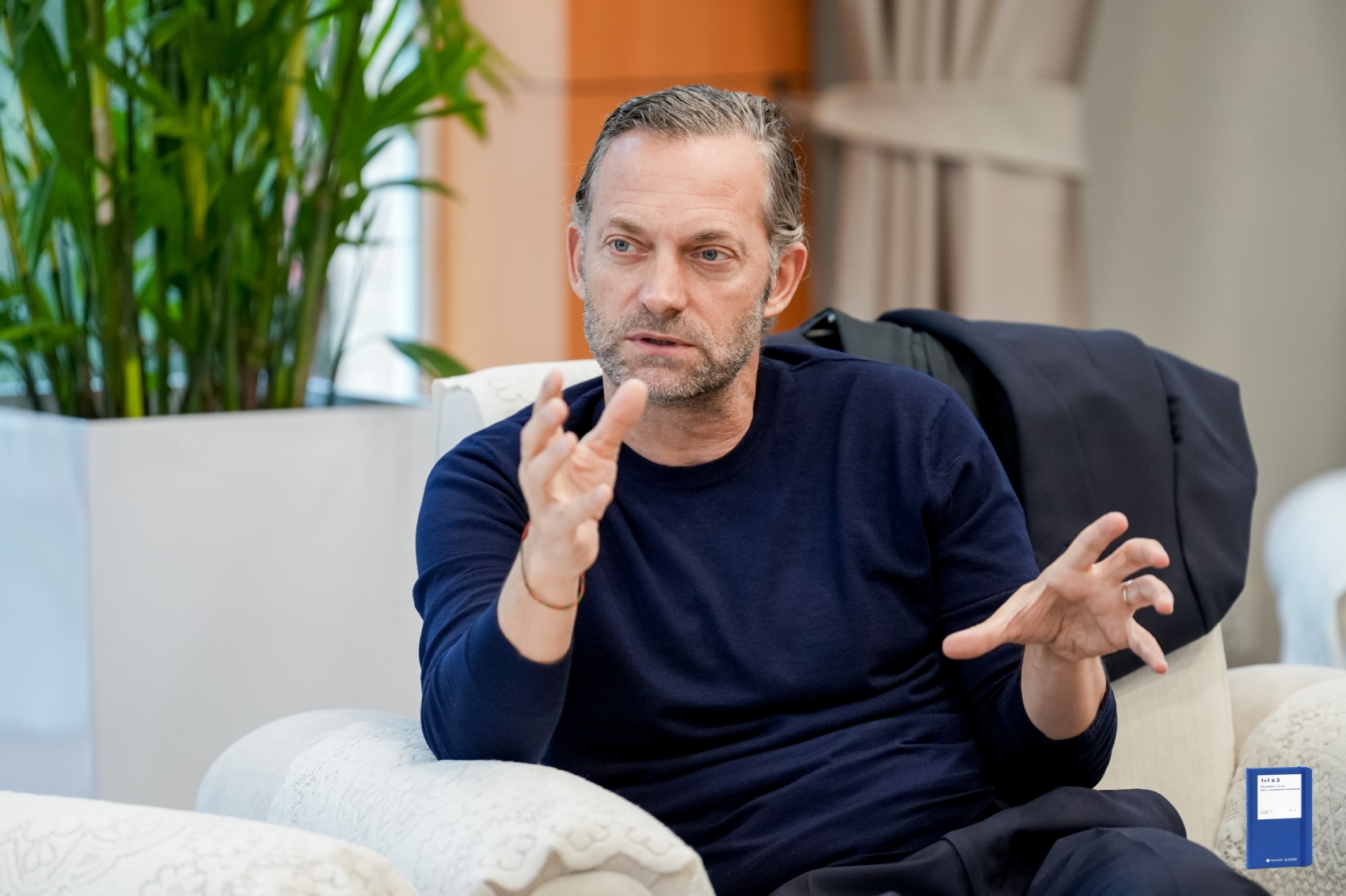
Luca Solca, Managing Director and Sector Head – Global Luxury Goods at Bernstein, was invited to join a video conference with LUXE.CO from Europe to discuss how the global luxury industry landscape is set to be reshaped, focusing on the following aspects:
- The Chinese luxury market is showing early signs of recovery, with diverging trends among high-net-worth and younger consumer segments
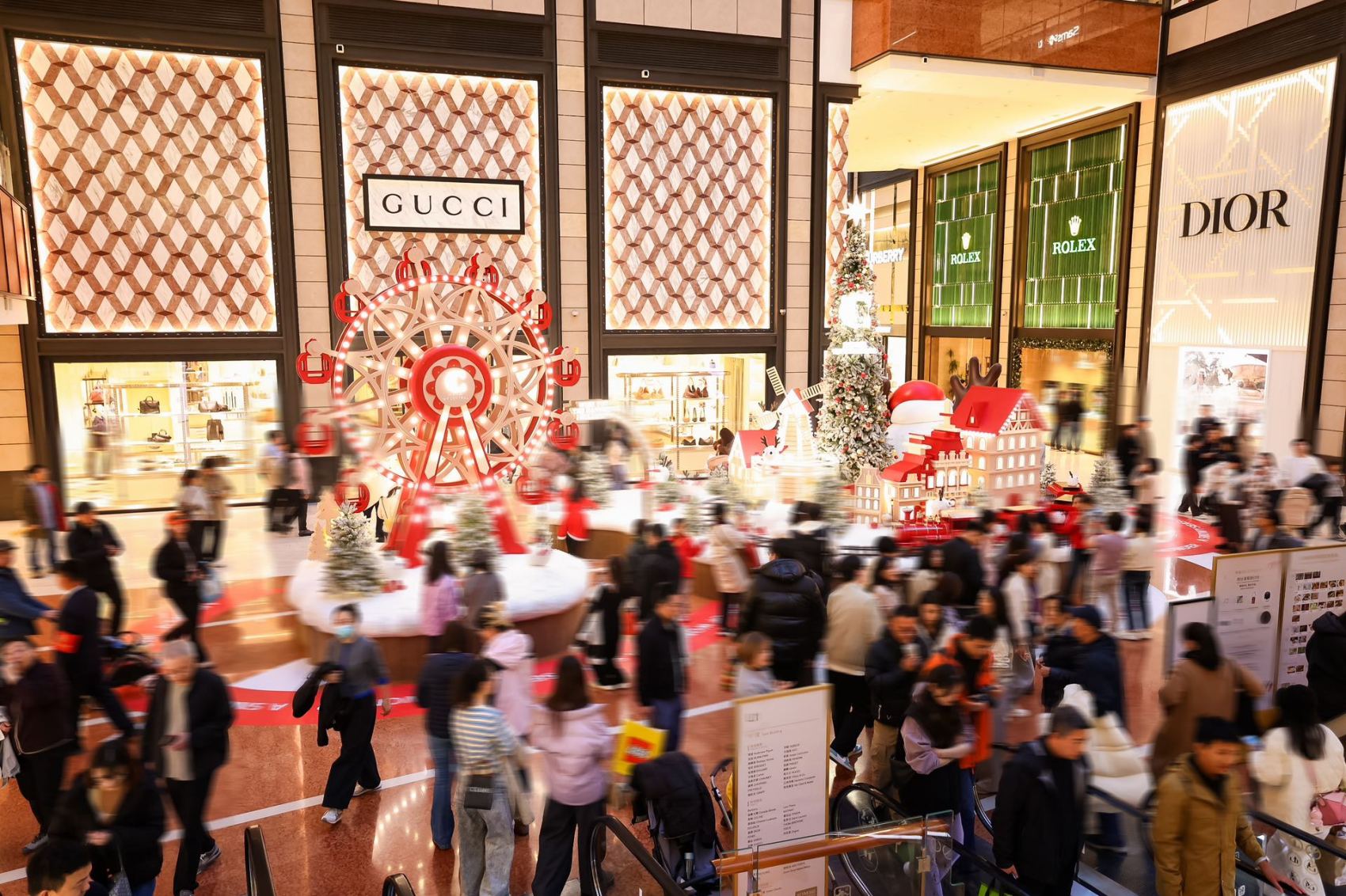
- Luxury streetwear is under the greatest pressure, whilst affordable luxury and entry-level luxury brands are benefiting from the trend towards downgrading consumption
- To succeed in China, luxury brands must demonstrate depth, relevance and innovation
- As first-generation leaders approach retirement age, succession by family members presents both advantages and disadvantages
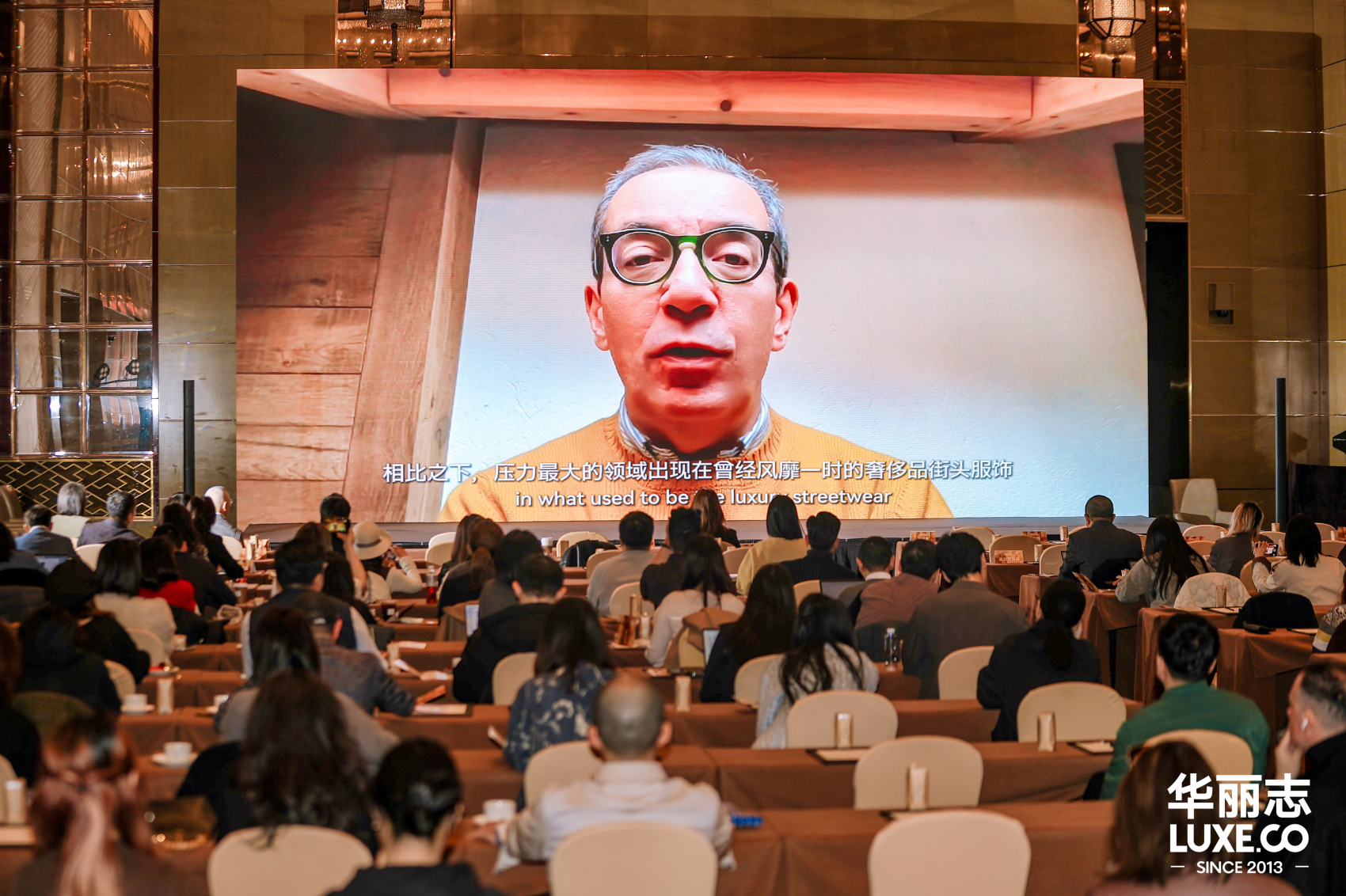
Here are some highlights from this live broadcast:
The Chinese luxury market is showing early signs of recovery, with diverging trends among high-net-worth and younger consumer segments
LUXE.CO: What were the most prominent changes in the Chinese luxury market in 2025? How have these changes impacted the global market? Additionally, what are your expectations for the Chinese luxury market in 2026?
Luca Solca: When I look at Chinese demand—Chinese luxury demand during 2025—I see that we have started to see, especially in the second half, the first signs of revival.
This has probably come in a very averaged way, when we look at consumers in the high end, they have been most active in coming back to the sector. This is primarily, I believe, because of the stock market revival that we’ve seen in China and a number of indicators that things were probably close to a bottom when it came to the real estate market.
Where we continue to see weak demand is in the younger consumer cohort. This has been affected by people saving on the back of the real estate market collapse, which has slowed the economy and reduced the ability to find good jobs when you enter the market. These consumers today are on the back foot and are probably the ones who are spending the least. They have resorted to ways of enjoying life without spending too much money. While 10 years ago the world was their oyster, they felt that they could make all the money they wanted and could therefore spend very freely in the sector.
We continue to see a fragile recovery despite the revival that seems to be confirmed. When we look at the traffic ahead of the Chinese New Year, which was up relative to the previous year, store checks that we carried out showed an increase of almost 50% in 10 shopping malls across China. So that seems to be an encouraging data point, which supports our assumption that they see a Chinese luxury demand that is probably going to be growing at 4 or 5% on a yearly basis. That would be a base case scenario. And that, of course, was before factoring in any material adverse impact from the most recent Gulf War that erupted a few days ago.
Luxury streetwear is under the greatest pressure, whilst affordable luxury and entry-level luxury brands are benefiting from the trend towards downgrading consumption
LUXE.CO: From the perspective of different pricing tiers and product categories, which segments do you believe are facing the greatest challenges, and which categories hold the most growth potential?
Luca Solca: Chinese consumers have behaved in a very averaged manner across pricing categories, on the one hand, similarly to the rest of the world, the high end continues to be doing very well. On the other hand, the mid-price luxury offer is being penalised as aspirational and middle-class consumers have been trading down.
We’ve seen accessible luxury do pretty well. We’ve seen American brands occupying the higher end of accessible luxury. Take Polo Ralph Lauren or Coach, for example, which are doing very well as consumers have been trading down.
Where the most important pressure was seen is in what used to be the luxury streetwear. If we take sneakers or tee-shirts, which were sold by brands taking care of the aspirational middle-class younger consumer cohort, these are the brands that have suffered the most, I’m thinking Gucci, for example. I’m thinking Balenciaga or Alexander McQueen; these brands have suffered the most as consumers have moved away from relatively expensive luxury streetwear.
In fact, resorted to cheaper alternatives from the likes of Nike or from the likes of local brands moving up market like Anta or Lining, and in other product categories, for example, from the likes of Arc’teryx, I think that pricing has been the most important driver causing consumer behaviour to change across the Chinese market.

When we look at product categories, there’s definitely a keen interest that consumers have shown for anything that is connected to outerwear. Chinese consumers are in love with the outdoors and spending time outdoors.
Outerwear, for example, as a consequence, has been doing very well at both the high end and different price points. We see that Moncler, for example, has been supported very significantly, first because of the Genius event in the end of 2024, but then again, despite that communication being geared primarily towards the American consumer segment with the Al Pacino and Robert De Niro campaign they’ve been doing, they have continued to be doing very well with Chinese consumers despite that.
What I would also add is how Chinese consumers have been in love with jewellery. This is not unusual, and it’s not surprising. We normally see Chinese consumers getting interested in jewellery when the gold price goes up. This has been to the benefit of Chinese jewellery brands.
First and foremost, I’m thinking of Chow Tai Fook, Lukfook, and the meteoric rise of Laopu Gold, while western jewellery brands that offer a lower content of gold have probably been penalised by this major disruption that the Chinese consumers have enjoyed. I don’t necessarily think this is the end of Western jewellery brands in China. In fact, we see consumers buying both for different purposes and different usage occasions, and it wouldn’t necessarily therefore be negative on Western jewellery brands like Cartier, Van Cleef & Arpels in the medium term.
To succeed in China, luxury brands must demonstrate depth, relevance and innovation
LUXE.CO: In the long run, what should be the key strategies and investments for luxury brands to succeed in China?
Luca Solca: To think that for luxury goods brands to succeed in China, they require flawless execution. I don’t believe that this is any different from what we’ve seen in the past few years. You need to be at the top of your game.
Chinese consumers, as they buy quite a lot and as they have bought quite a lot in recent years, down the learning curve, they are very demanding and sophisticated. For the most part, I think that it’s difficult to generalise a Chinese consumer. There are many different Chinese consumer segments. There are those who have been in the market for a longer period of time who are definitely responding to the profile that I was describing. There are those who come to the market more recently who have different tastes and different requirements.
It is very important for luxury brands to recognise these differences to be able to interpret the Chinese character in a way that is both true to their own brand DNA, but also in-depth and meaningful for the Chinese consumer and their sensitivities.

Innovation has to be at the top of the game. We see that the best in-class brand state, Louis Vuitton, for example, uses China as the market to test and experiment with new ways to attract consumers. I think of the Louis, the temporary store in the shape of a ship in Shanghai, in the shopping mall, HKRI Taikoo Hui, which opened a few months ago, attracting a huge amount of interest, both in terms of locally interested people visiting the store, but also in terms of buzz across China that has favoured Louis Vuitton.
And what I think makes most sense is that this is not just new, this is not just attractive, but this is meaningful and relevant versus the DNA, the soul of the Louis Vuitton brand that is intrinsically connected to travel and therefore cruise ships, which is how trunks were invented and came to use for consumers in the first place.
You require stuff like that. You need to be deep, you need to be relevant, you need to be innovative, and if you are all of those, and if you are in front of consumers, attractive with those, then I think you can have a place in the market, which is clearly more difficult. Growth has significantly slowed. And so this is not a time that is going to lift all boats as a few years ago when consumers, we’re a lot more open to buy luxury goods.
As first-generation leaders approach retirement age, succession by family members presents both advantages and disadvantages
LUXE.CO: Recently, family-owned businesses in France and Italy have gradually introduced a new generation of successors. What challenges will they be facing?
Luca Solca: Luxury goods are a relatively recent industry in their modern format. When you look at the luxury goods companies operating in the sector, they claim, of course, a long heritage. They came to be relevant and prominent from both a business and a cultural viewpoint, starting in the late 80s.
In many of those companies, you still have the first generation at the helm of the company, think of LVMH with Bernard Arnault. Think of Moncler with Remo Ruffini, who had relaunched Moncler out of oblivion. Think of Richemont with Johann Rupert, who got his family business to transform significantly from a tobacco-focused to a luxury-focused activity. So for all of these companies, there’s the issue of managing succession after 30 or 40 years at the helm; the founders are in a position that they are close to retirement in a way.
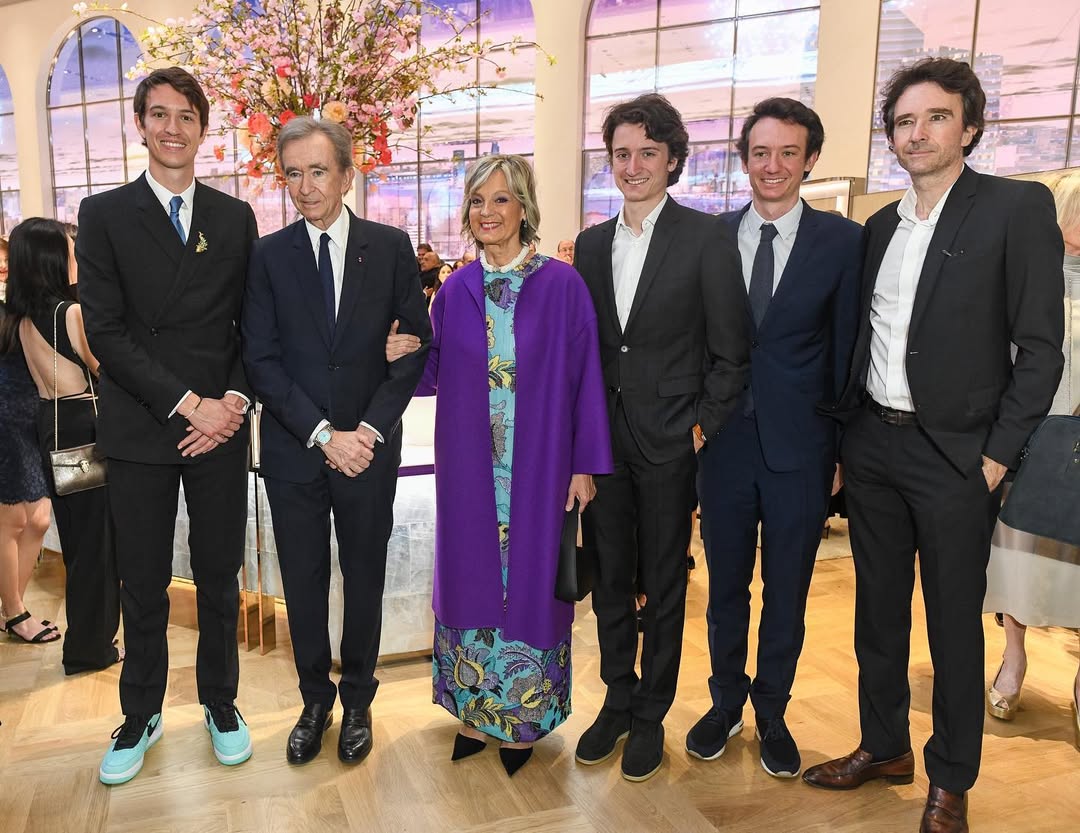
When we look at the LVMH Group, we see that the five children of Monsieur Arnault are jostling for a position. They all have responsibilities within the company and have to show the value, the worth as potential successes. This is creating some tensions and some risks in execution. Other companies, I think, are further ahead.
If we look at Richemont, Johann Rupert has made it clear that his children will just be shareholders and, as appointed for the first time a while ago, a real CEO, Nicolas Bos, a strong CEO with a lot of credibility, with a track record of succeeding over 25 years at Van Cleef & Arpels. I think the ability to take the company forward for at least another 10 to 15 years.

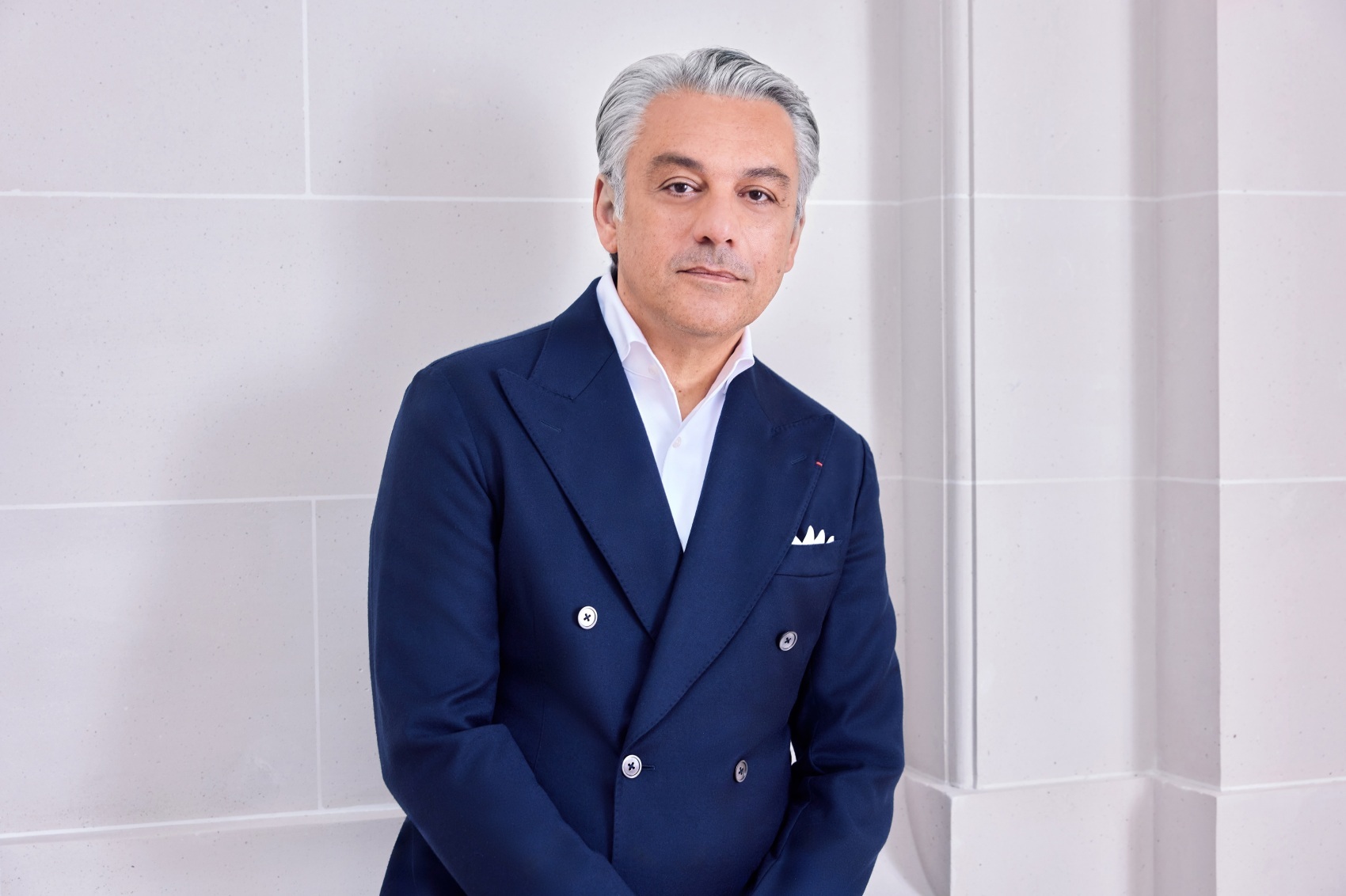
In other cases, you have experiments, I think that Kering’s appointment of Luca de Meo as CEO. It is a bit of a transplant if you like, from a completely different industry, the automotive industry, into luxury goods, luxury goods being a younger industry, less structured, like autos are more structured.
In the past, we had seen successes in bringing executive talent from other industries, especially when this was carried out from the FMCG(fast-moving consumer goods) industry. I’m thinking Procter & Gamble executives being brought into LVMH at the top level, Antonio Belloni was for 25 years number two to Bernard Arnault, or Pietro Beccari came into LVMH from Henkel and has been CEO of FENDI, Dior and more recently, Louis Vuitton.
Being confined to family members can be both a pro and a con. Clearly, families have at heart the long-term success of the business, and so we make decisions for the long term. But sometimes you don’t necessarily have the impression that business talent is inherited. And so this as a con would be very important if companies end up in the wrong hands, family or not, this is not a good recipe for success.
About The Luxe.CO Fashion Innovation and Investment Forum
Twelve years ago, Luxe.CO was among the first to recognise the critical importance of high-quality information, communication, and research for the development of mid- to high-end brands. Beginning with comprehensive and professional financial and business reporting, we have accumulated a wealth of exclusive data and case assets, along with proprietary insights into brands and niche sectors. We have built a well-structured system capable of consistently producing high-quality content and research outcomes, positioning Luxe.CO as one of the most “certain” anchors within the noise and volatility of the Big Fashion industry. In doing so, we provide decision-makers with pivotal leverage points for the future and naturally attract China’s most distinguished high-end readership.
Throughout our process of continuous iteration and advancement, we have had the privilege of engaging and collaborating deeply with an increasing number of outstanding entrepreneurs, investors, and business leaders, becoming trusted companions on their journey.
When such high-quality accumulation and exchange reached a critical threshold, the Luxe.CO Fashion Innovation and Investment Forum emerged as a natural milestone.
Since 2015, LUXE.CO has organised eight high-profile industry forums and over a hundred online and offline themed events, providing a valuable platform for high-level, face-to-face exchanges amongst leading figures in the ‘broad fashion’ sector.
丨Editor: Maier

.jpg)