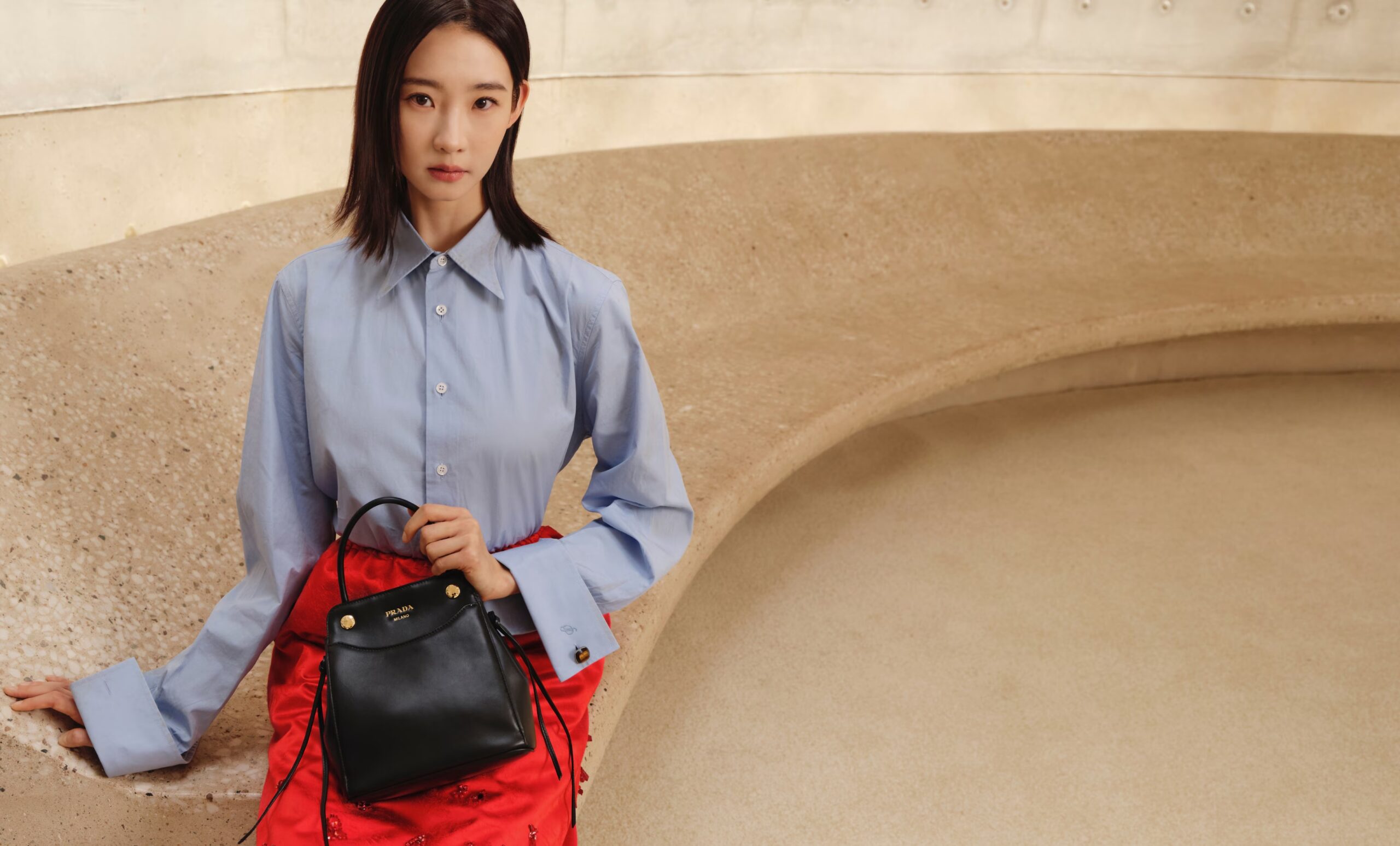
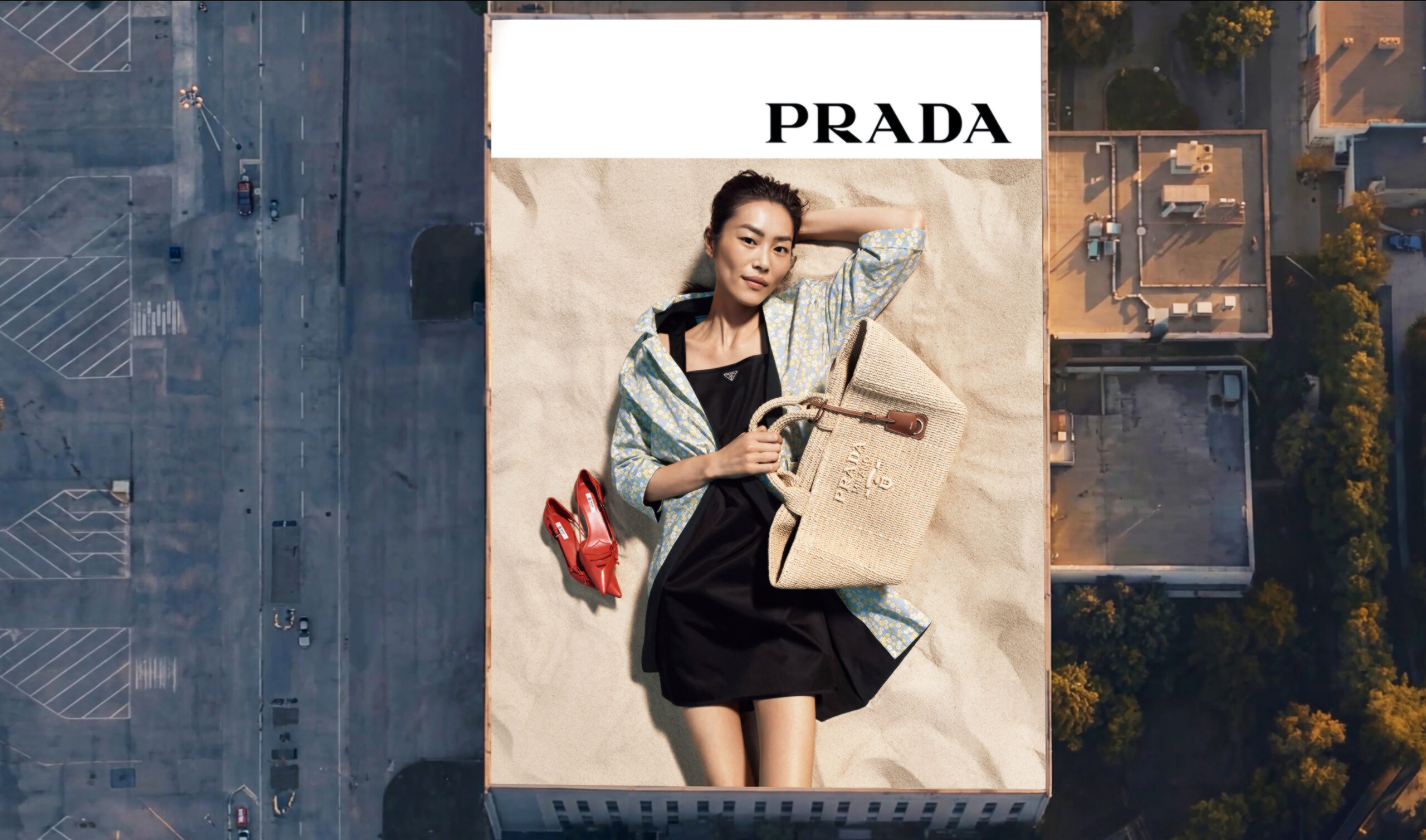
To the west of Shanghai Hongqiao Airport, a giant Prada image advertisement spanning approximately 4,000 square metres has appeared on the rooftop of the executive jet terminal FBO. The visual features supermodel Liu Wen interpreting Prada’s 2026 “Days of Summer” collection, presenting the brand’s signature minimalist visual language.
For those passing by on the ground, what they see is merely the building itself. Only when the viewpoint rises to a certain height—such as at the moment when a private jet is taking off or landing—does the image align with the city skyline below, the contours of the Hongqiao Business District, and the airport runway, forming a complete visual sequence. The minimalist visual language, the composed presence of the model, and the linear outlines of the city overlap from an aerial perspective, creating a contemporary atmosphere that balances tension and lightness.
As luxury outdoor advertising begins to “take to the skies,” the asset of airport rooftops is being re-evaluated. A question naturally arises: when an advertisement can only be fully seen from the air, what is the brand trying to communicate? And what kind of industry shifts does this reflect?
I. From the Huangpu Riverside to the Hongqiao Rooftop
Luxe.CO has observed that this rooftop advertisement is not an isolated move, but rather a natural extension of Prada’s outdoor visual strategy in China.
The Spring/Summer 2024 campaign previously landed at the North Bund World Reception Hall in Shanghai, connecting with urban life along the Huangpu River through a landmark location (see image below). This year, the Spring/Summer 2026 campaign featuring Liu Wen covered passenger traffic routes at Hongqiao Airport Terminal 2, presented through large screens and lightboxes, capturing the attention of tens of thousands of daily travellers.
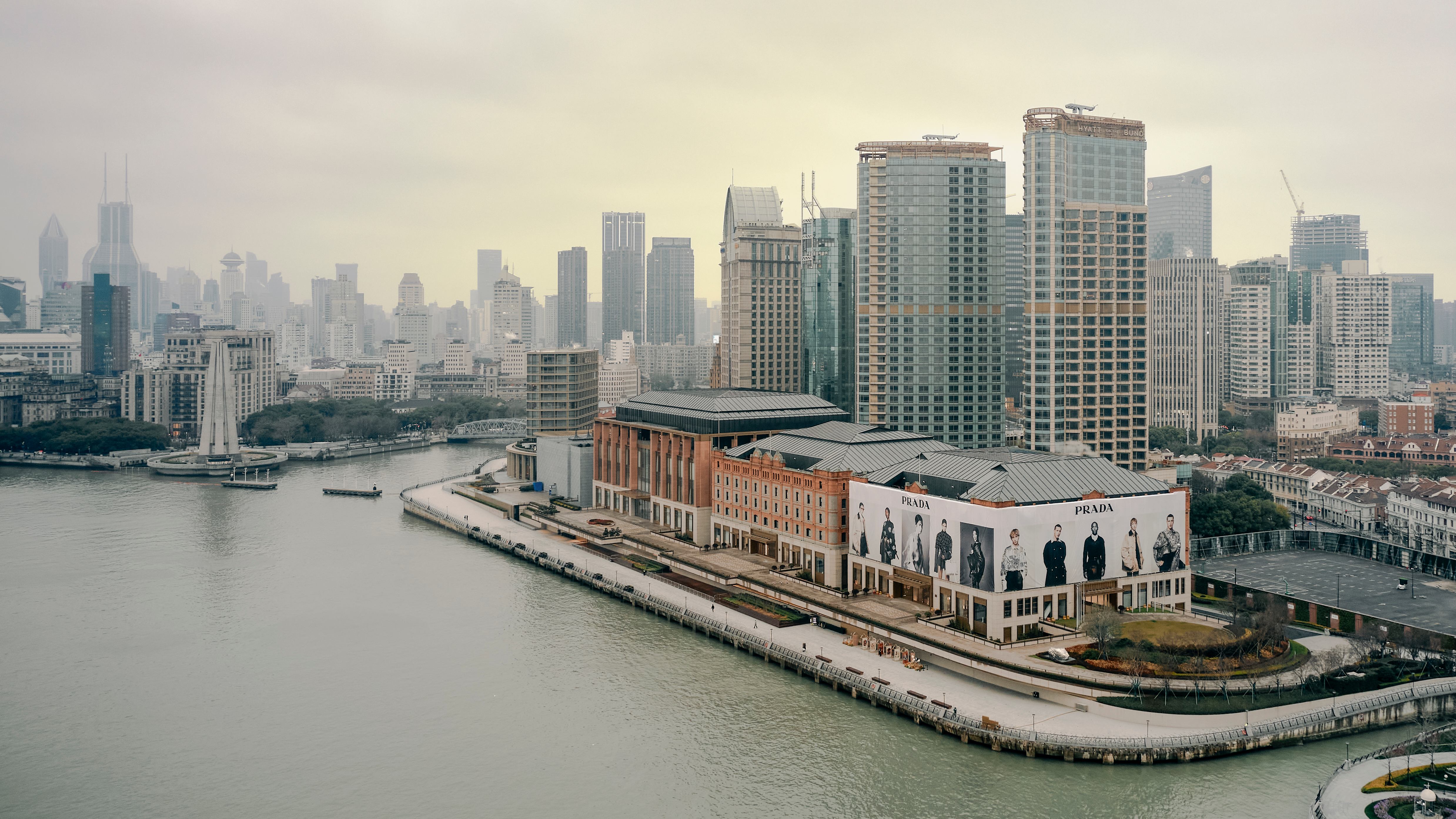
This latest rooftop advertisement at the Hongqiao executive jet terminal FBO brings the brand’s imagery to a part of the urban skyline not traditionally considered “advertising space.” Different formats of visuals are placed within different types of urban environments.
Why choose the executive jet terminal FBO? Public data offers clear clues. The Shanghai Hongqiao Business Aviation Base was launched in March 2010, operated by a subsidiary of Shanghai Airport Authority, providing integrated FBO and MRO services, and serving as a key gateway for business aviation in the Yangtze River Delta.
According to Shanghai Airport, in March 2026, business jet movements at Shanghai Pudong and Hongqiao airports reached 522 flights, marking a year-on-year increase of 20%. Data from Vista also shows that domestic business aviation flights in China grew by 28% in 2025, with the Hong Kong–Shanghai route becoming one of the company’s three busiest routes in the Asia-Pacific region.
Executive jet terminals bring together entrepreneurs, business travellers, and high-net-worth individuals engaged in cross-border mobility—an expanding scenario. Bain’s latest data indicates that the private jet and yacht market grew strongly by 9% at current exchange rates in 2025, reaching €34 billion. Placing the visual here creates a natural resonance with a “premium travel scenario,” aligning with the calm, light, and travel-oriented mood expressed in Prada’s 2026 “Days of Summer” campaign.
What truly distinguishes this installation is its use of a “holistic aerial visual.” Viewed from the perspective of an ascending or descending jet, at the moment the aircraft approaches the runway, the city contours below, the Hongqiao Business District skyline, the runway, and the Prada image on the rooftop overlap into a unified visual sequence.
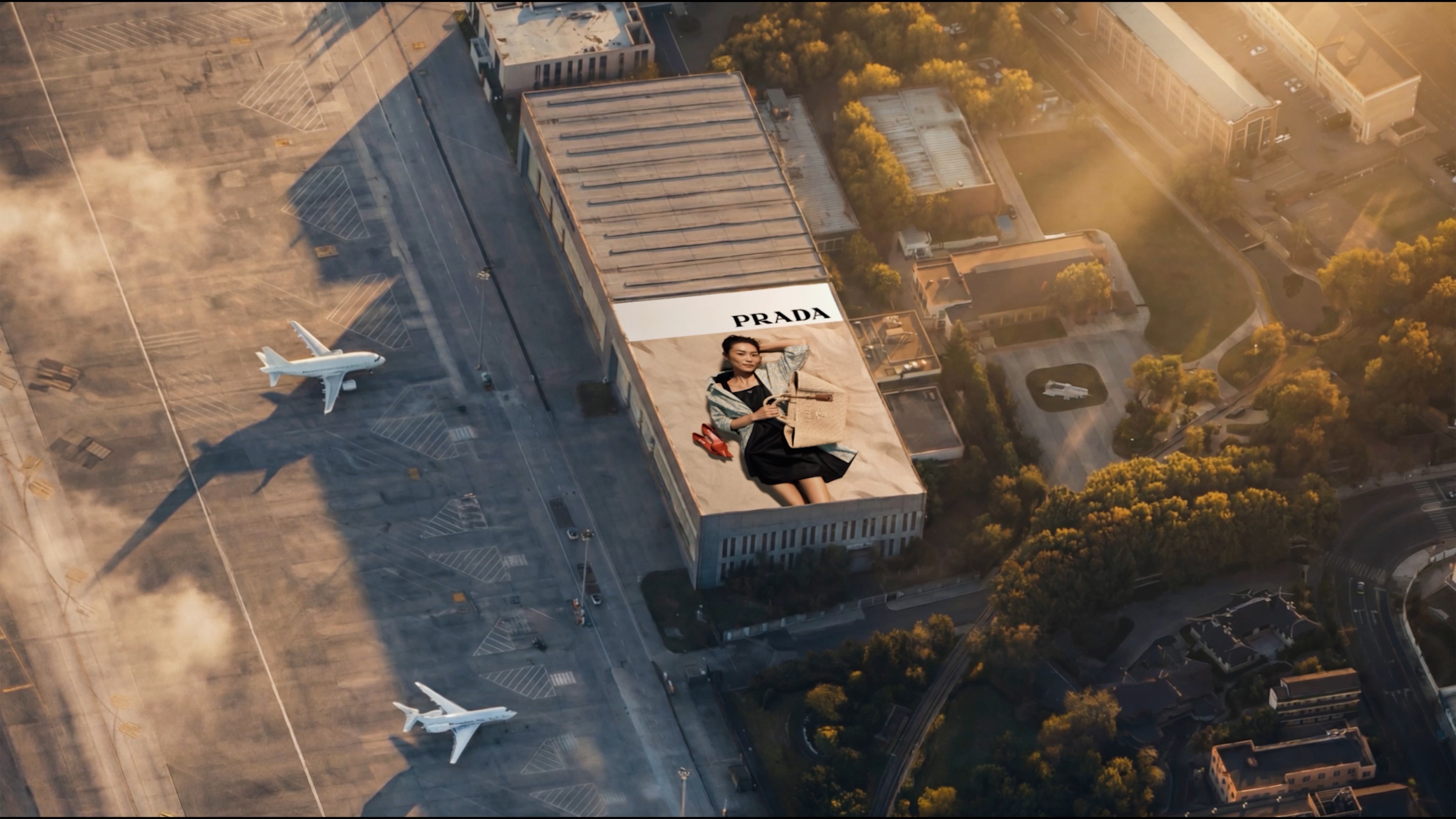
The minimalist composition and the geometric lines of the city serve as mutual backdrops, with the model positioned calmly within. Ground-level advertising has its own visual language, while this aerial visual approach is unique to the rooftop format—it effectively writes the contours of the entire city into the advertisement.
The scale of 4,000 square metres also points to another layer of value. Today, most advertisements are viewed on mobile screens—just a few inches wide, for only a few seconds. An image that can only be fully seen from the air, and that is jointly framed by the city’s contours, offers a different viewing experience: it requires time, context, and the viewer’s full immersion. This is one of the reasons why large-scale physical visuals continue to be used frequently by brands in the digital age.
II. Rethinking “Where the Image Lives” in Luxury
Placed within the current context of the Chinese luxury market, this campaign reflects an ongoing shift: brands are becoming more deliberate about where their visuals are located, and what kinds of scenarios they engage with.
Prada Group CEO Andrea Guerra noted during the FY2025 earnings call that “over the past three to four years, the luxury industry has lost around one-fifth of its consumers.”
The market remains in adjustment. Bain’s “2025 China Personal Luxury Market” report indicates that the Chinese Mainland personal luxury market is expected to decline by 3%–5% in 2025, with signs of recovery emerging from the third quarter and continuing into the fourth quarter.
At the same time, consumption itself is shifting. Deloitte’s latest report, “Global Powers of Luxury Goods 2026,” highlights that more than one-third of industry executives identify “luxury travel” as the fastest-growing luxury segment over the next 12 months, ranking above beauty and fashion.
This suggests that key consumer touchpoints are expanding beyond traditional retail environments into broader lifestyle scenarios such as travel, mobility, culture, and dining. As a result, the question of where advertisements should appear is becoming increasingly diverse.
Alongside this shift in scenarios is a transformation in customer structure. The importance of VICs (Very Important Clients) is being further amplified. BCG’s latest report, “True-Luxury Global Consumer Insight 2025,” presents a striking contrast: top-tier clients account for just 0.1% of luxury consumers, yet contributed approximately 23% of personal luxury spending in 2024 (rising to 37% when including categories such as luxury cars, yachts, private jets, and wellness experiences), compared to just 12% in 2013.
Andrea Guerra also noted in the FY2025 earnings call regarding the China market that “we have made progress in acquiring new customers, something we had not seen for some time in China. We are seeing improvements across all client tiers—from VICs to aspirational customers.“
Bringing these two threads together, Luxe.CO observes a straightforward conclusion: as consumption shifts toward travel and experiential scenarios, and as the value of VIC clients continues to rise, spaces that naturally intersect with the daily movements of high-net-worth individuals—such as airports, mobility environments, and cultural venues—are becoming integral to brand visual strategies. Prada’s decision to place this campaign on the rooftop of an executive jet terminal sits precisely at this intersection. As the spending power of a small group continues to intensify, the value of a visual that can only be fully seen by them is no longer measured solely by how many people see it.
III. Viewing It Within Prada’s China Strategy Puzzle
This rooftop advertisement is not an isolated placement. Group heir Lorenzo Bertelli summarised the Group’s overall strategy during the FY2025 earnings call as “through distinctive experiences and long-term collaborations, we are continuously building a multifaceted brand universe.”
In the Chinese market, this “brand universe” is composed of several parallel threads—and these threads are now being deployed at a more tightly coordinated pace.
——Retail networks across airports and travel scenarios
Prada’s presence across major global aviation hubs has been developing for many years. Core nodes including Milan Malpensa, London Heathrow, Paris Charles de Gaulle, Singapore Changi, and Hong Kong International Airport all host Prada boutiques or Prada Beauty counters. Among them, Milan Malpensa Airport Terminal 1 houses the first permanent Prada Beauty travel retail counter globally; in November 2025, the Prada Paradigme fragrance was presented through a coordinated activation across five airports: Milan Malpensa, Dubai, Istanbul, London Heathrow, and Paris Charles de Gaulle.
Returning to the Chinese market, Shanghai Hongqiao Airport Terminal 2 has long hosted a Prada boutique, which reopened in May 2023 following renovation. In February 2023, Prada opened a boutique at Sanya Phoenix International Airport, spanning nearly 150 square metres.
In February 2026, Prada unveiled a directly operated flagship store at Shenzhen Airport Terminal 3. The store adopts a fresh green colour palette, with floors paved in the brand’s signature black-and-white checkered marble, and primarily showcases the brand’s Spring/Summer 2026 collections (see image below).
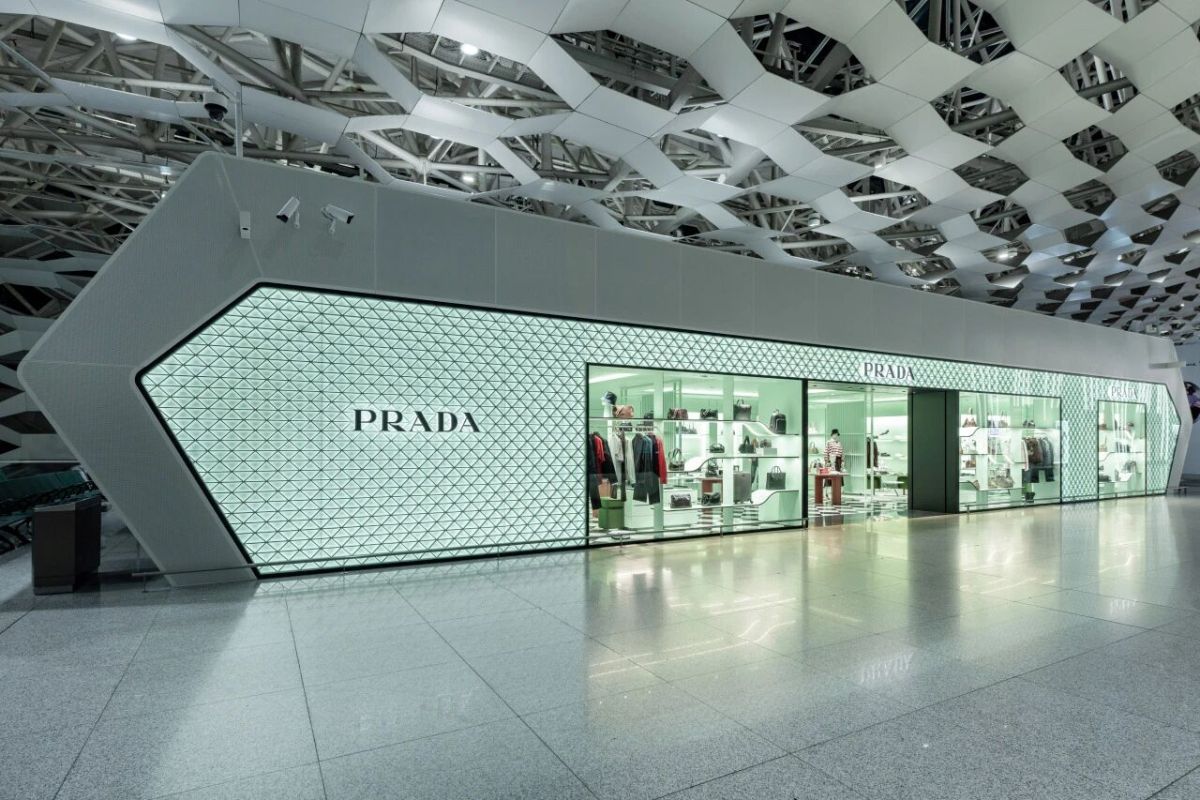
From Milan Malpensa to London Heathrow, from Shanghai Hongqiao to Shenzhen Airport, Prada’s sustained investment in reaching “business travellers” has been unfolding across geographies and over time. This rooftop advertisement at the Hongqiao executive jet terminal FBO represents a new move within this global trajectory in the Chinese market.
——Multi-scenario extensions across cultural spaces, dining, and festivals
Beyond retail networks, Prada’s cultural and experiential initiatives in China are also accelerating.
These relatively private spaces, designed for deeper engagement, respond directly to a clear demand from top-tier clients—according to BCG, 80% of top clients expect exclusive, private, and non-standardised physical spaces rather than crowded, conventional environments.
Following its restoration and reopening to the public in 2017, Prada Rong Zhai has continued to serve as a cultural space for the brand. It is also one of the key venues in China for Prada’s global cultural programme ecosystem, including the Prada Mode cultural club and exhibitions by the Prada Foundation.
In October 2025, the “SEA BEYOND: Prada Rong Zhai Sees the Ocean” educational initiative was held at Prada Rong Zhai. This ocean education project, jointly promoted by the Prada Group and UNESCO’s Intergovernmental Oceanographic Commission, was presented at Rong Zhai for the first time, attracting more than 8,000 visitors. From November 2025 to February 2026, Rong Zhai hosted the “A Kind of Language” film storyboard exhibition, featuring over 500 works by more than 30 directors and artists worldwide. From March to June 2026, the exhibition “Diagram” curated by AMO/OMA (the architectural practice founded by renowned architect Rem Koolhaas) was presented at Rong Zhai as its second chapter following its debut at the Prada Foundation in Venice, including a dedicated study of the Ming Dynasty Chinese encyclopaedia Sancai Tuhui.
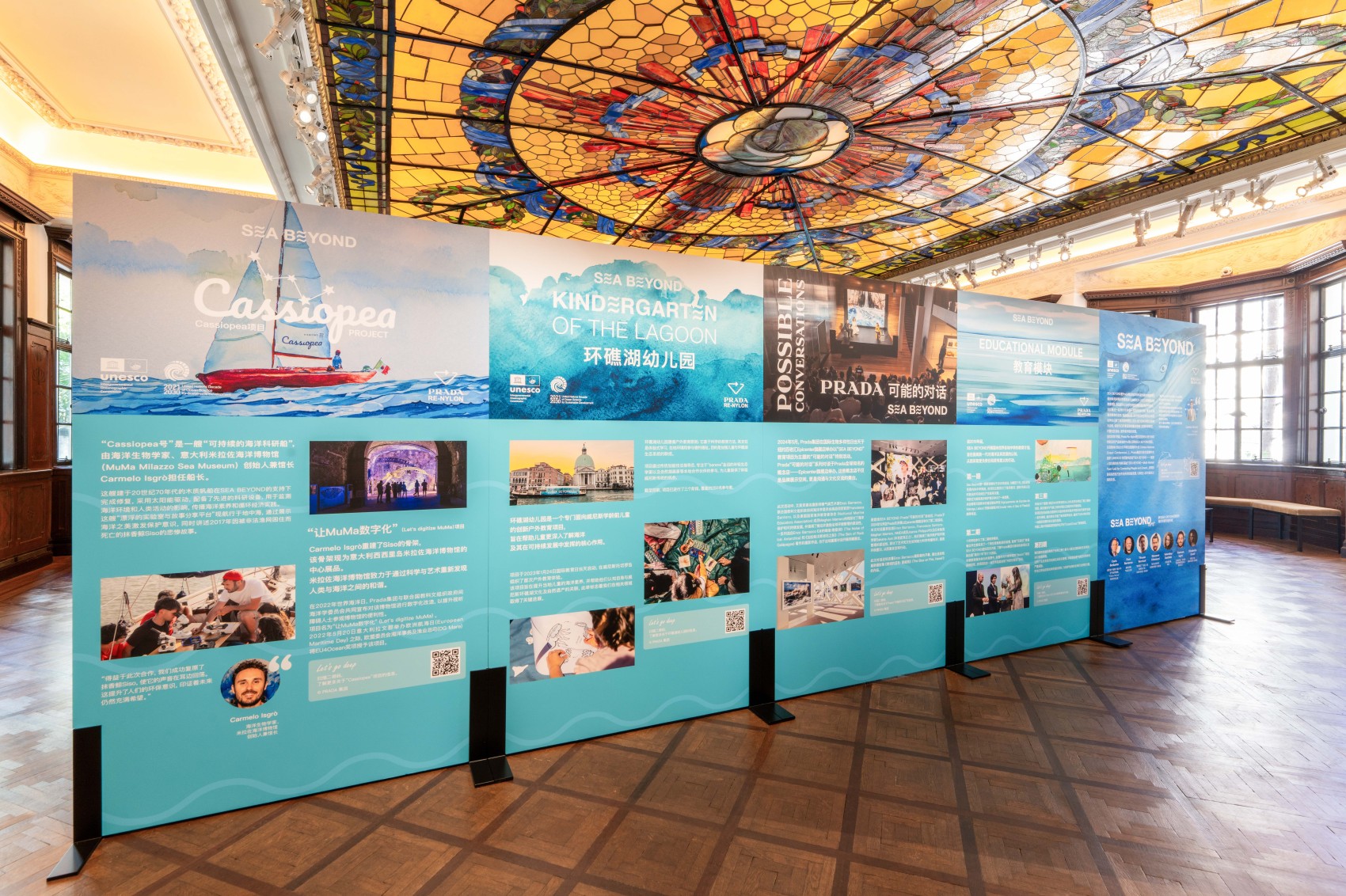
“SEA BEYOND: Prada Rong Zhai Sees the Ocean” event site
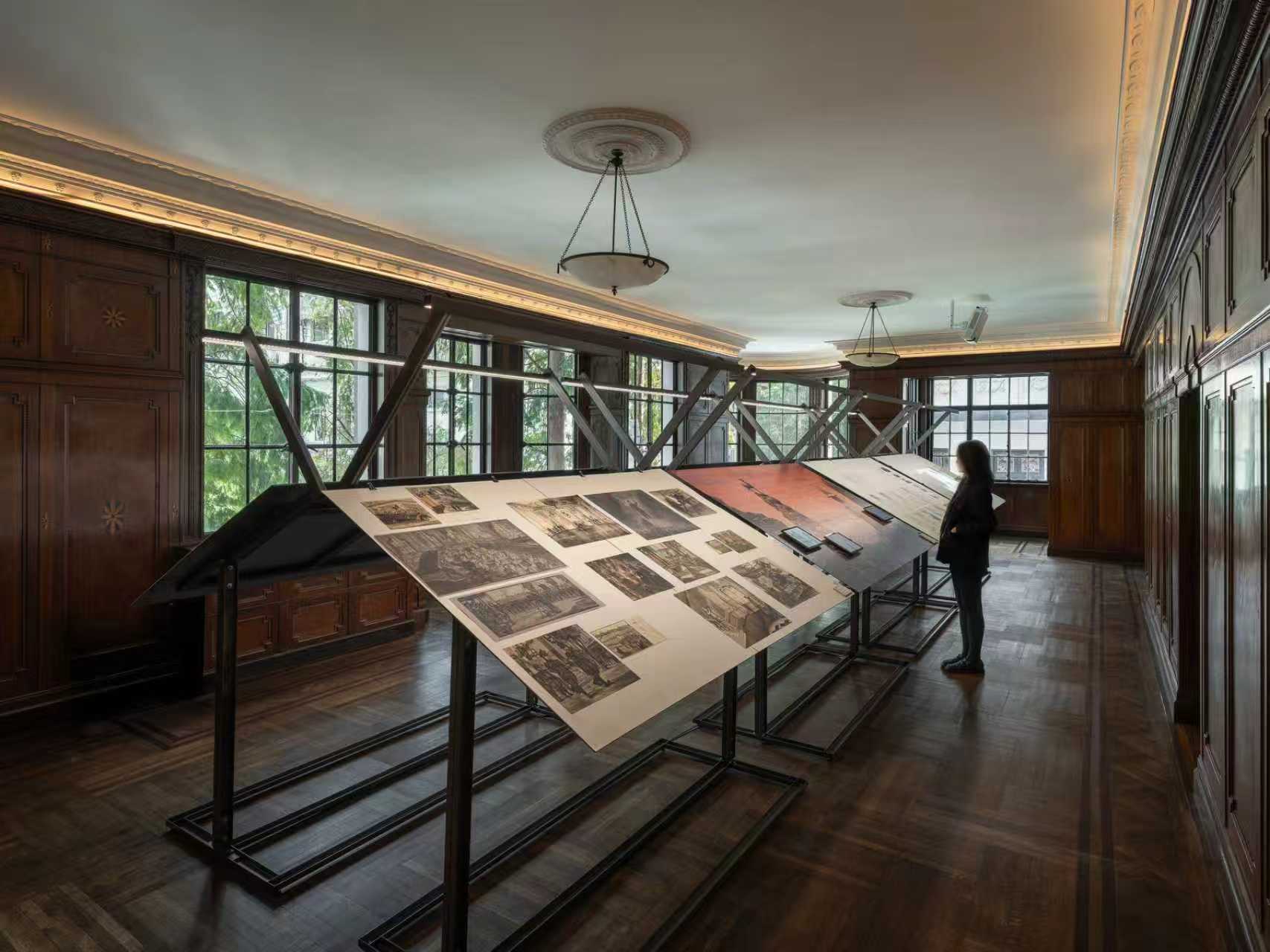
PRADA Rong Zhai “A Kind of Language” exhibition site
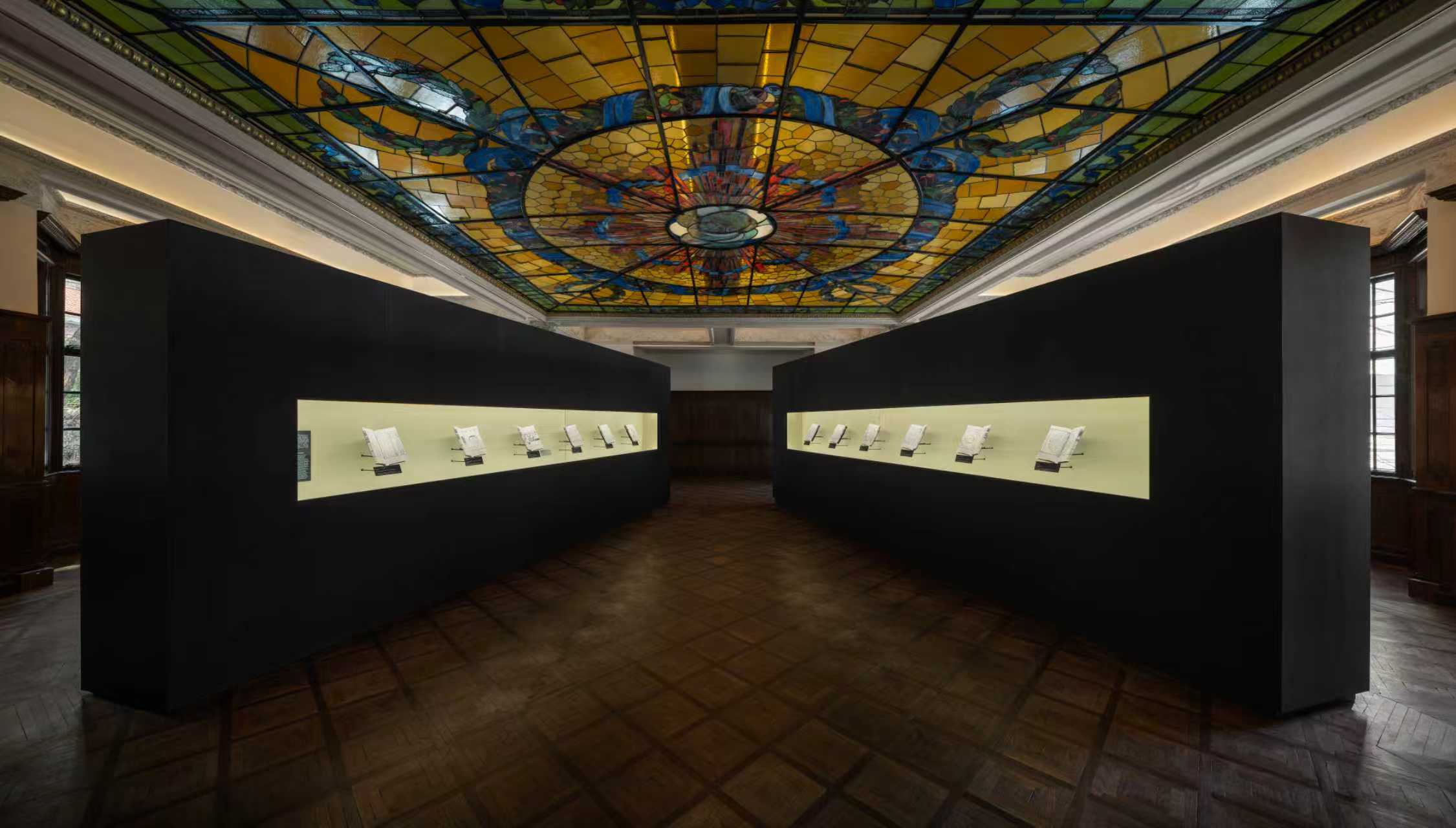
PRADA Rong Zhai “Diagram” exhibition site
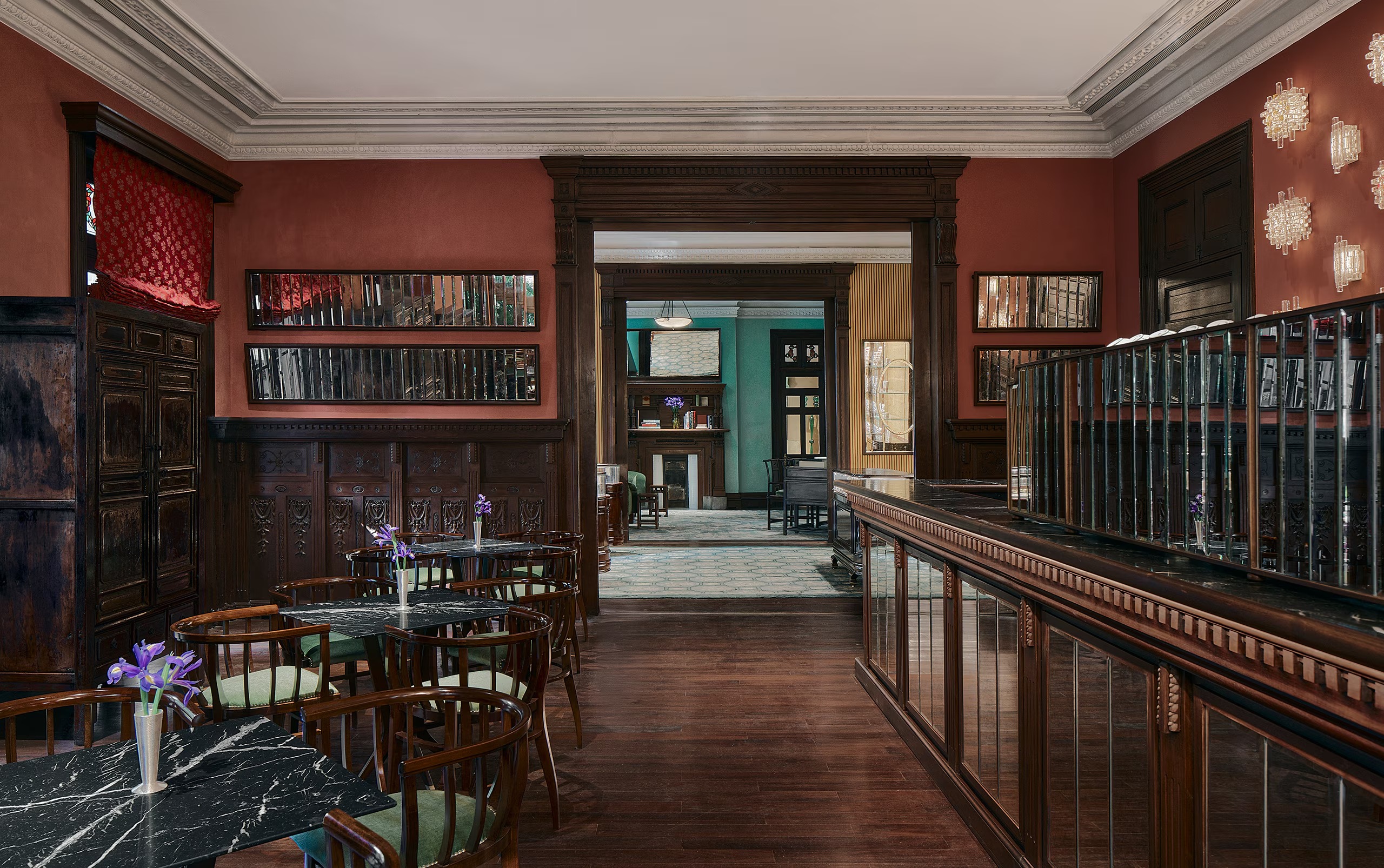
Opened in March 2025, “Mi Shang Prada Rong Zhai” is Prada Group’s first standalone fine dining space in Asia, conceived in collaboration with director Wong Kar-wai. Lorenzo Bertelli described it during the FY2025 earnings call as a key milestone for the year, noting that “this project reflects our understanding of hospitality as a cultural expression, where fashion, cinema, and lifestyle intersect in a meaningful way.”
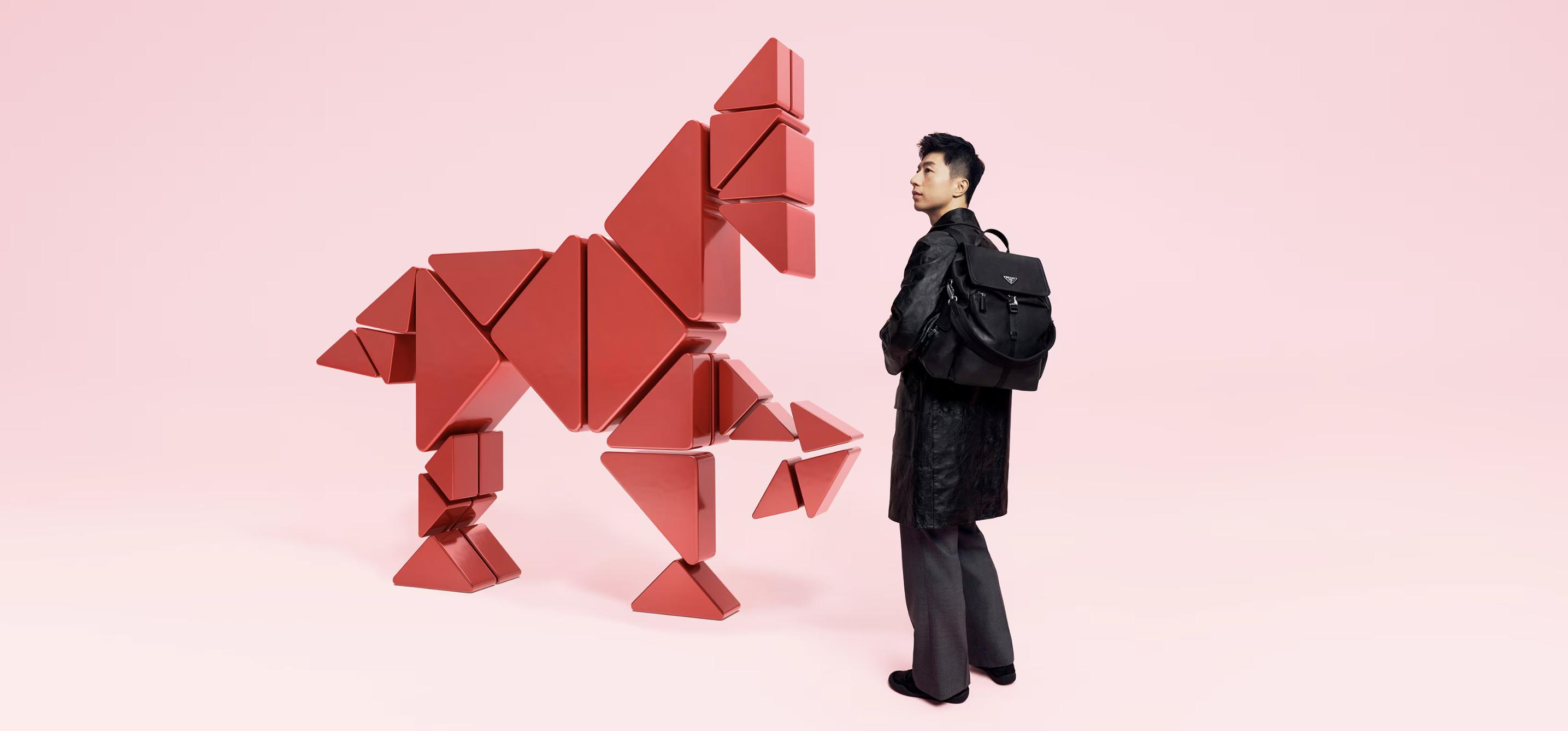
At the beginning of 2026, the “Red Horse Welcomes Spring” special campaign featured brand ambassadors Yang Mi and Ma Long interpreting the Spring/Summer 2026 collection. During the same period, Prada’s triangular Red Horse installations appeared simultaneously at Shanghai IFC Mall, Prada Rong Zhai, and Chengdu International Finance Square. Following the Chinese New Year, Rong Zhai continued to host the “Red Horse Lantern Festival,” presented in conjunction with “Mi Shang Prada Rong Zhai.”
——Performance as objective support
Viewed against the backdrop of the Group’s financial performance, these initiatives are supported by solid results. According to Prada Group’s FY2025 results announcement, total net revenue reached €5.7175 billion, representing a year-on-year increase of 9.1% at constant exchange rates. The Asia-Pacific region recorded retail sales of €1.6994 billion, accounting for 33.3% of the Group’s total retail revenue, making it the largest regional contributor. As of 31 December 2025, the Group operated 318 directly operated stores in Asia-Pacific, the highest number across all regions.
Entering 2026, according to the Group’s Q1 results, retail sales in Asia-Pacific increased by 13.5% year-on-year at constant exchange rates. The performance of the Prada brand further improved during the quarter, “particularly in the Chinese Mainland, Hong Kong, and Macau.”
More direct commentary comes from management. Andrea Guerra, responding to analysts during the Q1 2026 earnings call, stated that “we still have two major regions where we need to gain our fair share—namely the United States and China. In China, through the continued development of projects around Prada Rong Zhai, we have established an epicentre for the brand.” He also noted that since mid-2025, key performance indicators for the Prada brand in China have shown consistent improvement, a trend that has continued into 2026.
Conclusion
Returning to this 4,000-square-metre advertisement—one that can only be fully appreciated from an aerial perspective—it introduces the rarely used dimension of a “holistic aerial visual” into Prada’s outdoor advertising language within travel scenarios.
Where an advertisement is placed, what kind of environment it engages with, and which moments in consumers’ lives it connects to—these considerations are now being incorporated into brand strategy with increasing precision. Where Prada will next position its advertisements and spaces remains something Luxe.CO will continue to observe.
丨Image Credit: Provided by the brand, Prada Group official website
丨Editor: Luxeplace