
“In China, Gucci may have suffered deeper damage to its brand image than in the United States,” said Armelle Poulou, Chief Financial Officer of Kering, candidly during the Group’s first-quarter 2026 earnings call.
According to Kering’s latest financial report, the Group generated total revenue of EUR 3.568 billion in the first quarter, flat year-on-year on a comparable basis (0%), with overall trends showing signs of improvement. However, flagship brand Gucci declined by 8% year-on-year on a comparable basis. Although this marked an improvement from the previous quarter (comparable -10%), the rebound was limited, and the situation among Chinese customers remained largely unchanged from the fourth quarter, still registering negative growth. By contrast, Gucci’s customer base in the United States “strongly improved and actually turned positive,” European customers were “negative but significantly narrowing,” and other Asian markets “performed well.”
Clearly, Gucci’s performance in the Chinese Mainland has lagged behind other major markets. While streamlining its store network, the brand also faces the formidable task of rebuilding and repairing its brand image.

In China, We Are Addressing the Issues One by One
When asked by an analyst why Gucci’s performance in China had diverged so markedly from that of its peers, Armelle Poulou attributed the issue to internal factors:
“We have been very clear that Gucci’s performance in China is quite different from some of our peers. We have been impacted by the challenging market environment in China, but we have also had our own issues. We are actively addressing these issues and have put in place a dedicated plan for China.”
“We are rebuilding Gucci’s cultural relevance in China through sharper storytelling, stronger brand ambassadors, and regional activations, while continuing to upgrade our store network in the market.”
When further pressed on what exactly Gucci was “missing” in China—whether communication, product execution, store location choices, or social media engagement—Poulou responded:
“In China, what we need to ensure is that Gucci has cultural relevance and disciplined execution. We are increasingly localising our storytelling to resonate with Chinese consumers, and placing stronger focus on products that align with local demand.”
“We are improving our distribution. We were over-distributed in China, so we want to upgrade the network—fewer stores, but better stores, with higher customer engagement. To support this, we are also continuing to increase and more precisely allocate our marketing investments.”
At its Investor Day, management indicated that marketing and commercial activation budgets for Greater China would see a “double-digit increase.”
“In China, we may have suffered deeper image damage than in the United States. We are addressing the issues one by one.”
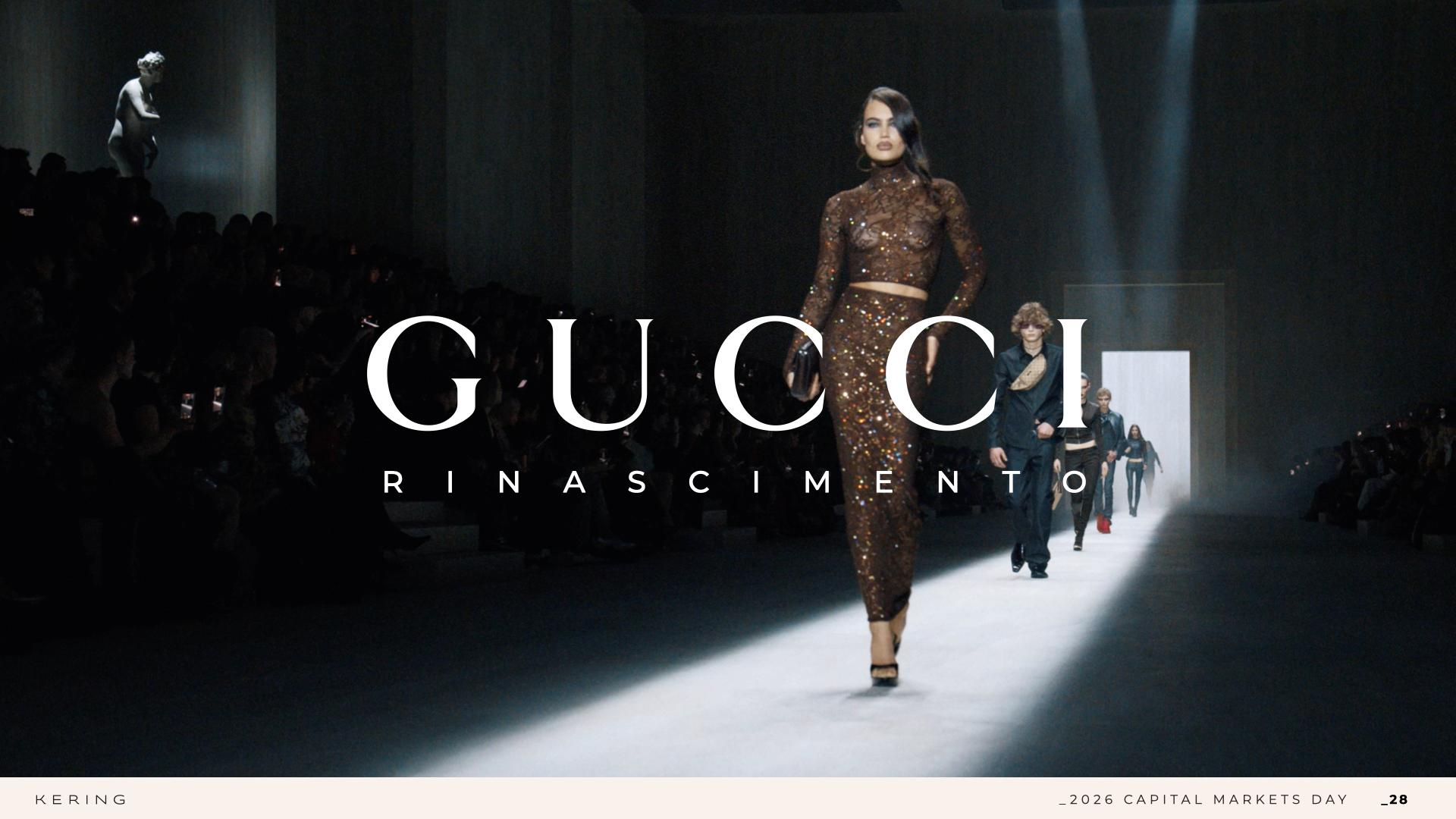
A slightly positive signal emerged at the store-efficiency level. When asked about traffic and conversion rates in China, Poulou said:
“Traffic remains soft in many regions, with variations—North America is clearly more positive than Asia-Pacific, especially China. What we saw in the first quarter was an improvement in conversion rates, which is encouraging for us. It means that the efforts we have made in product, in training our sales associates, and in enhancing the in-store retail experience are starting to bear fruit. Of course, this does not fully offset the softness in traffic, but seeing conversion improve is a very good signal—and conversion is improving across all regions, including China.”
Under its “fewer, better, stronger” retail network restructuring plan, Kering has already net closed 75 stores in 2025. In the first quarter alone, the Group net closed 47 stores (with a target of at least 100 net closures by the end of 2026), including 11 Gucci stores, accounting for nearly one-quarter of the total. When asked whether the pace of closures was “too conservative,” Poulou said Kering was “executing according to plan and confident in delivery.”
Localisation Efforts: From a China Version of La Famiglia to Smaller Handbag Sizes
Beyond acknowledging the challenges, Poulou devoted considerable time to explaining the “localisation” adjustments made for Chinese consumers, citing a specific example:
“The recently launched La Famiglia campaign is a good example. China was the only region where we localised the film to some extent—we engaged Chinese actors, and it generated very strong resonance locally, with significant discussion and engagement on social media. It may be a good attempt: staying connected to the global La Famiglia event while ensuring it resonates locally in China.”
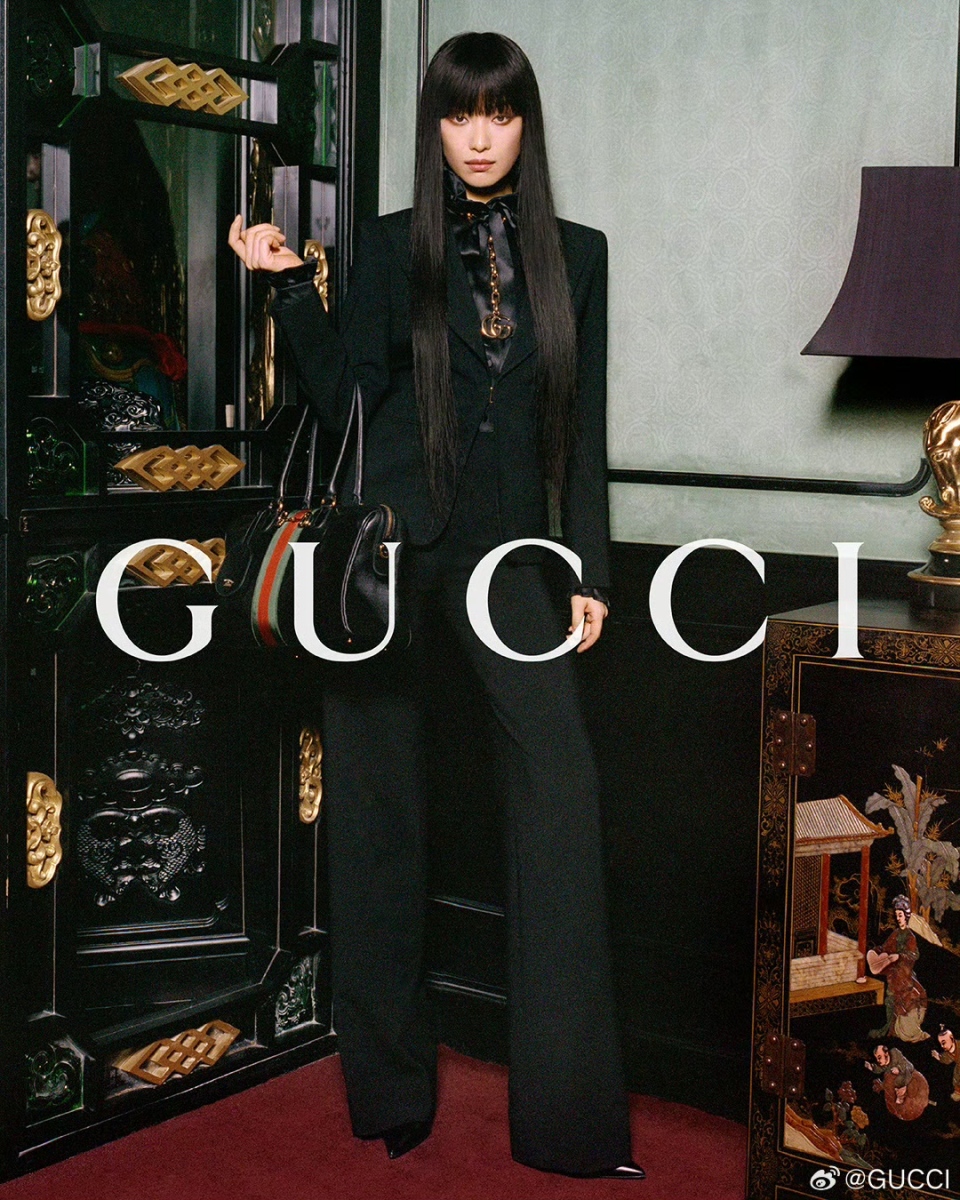
“It is really about finding the right balance—ensuring we have a localised go-to-market strategy, which will be very important going forward. Of course, this also has broader implications. At Gucci, the level of collaboration between headquarters and regions has become more important than in the past. On the one hand, we must drive the global brand strategy; on the other, we must ensure we incorporate insights from the regions.”
In addition to communication-level localisation, Kering has also made product adjustments closely aligned with the Chinese market:
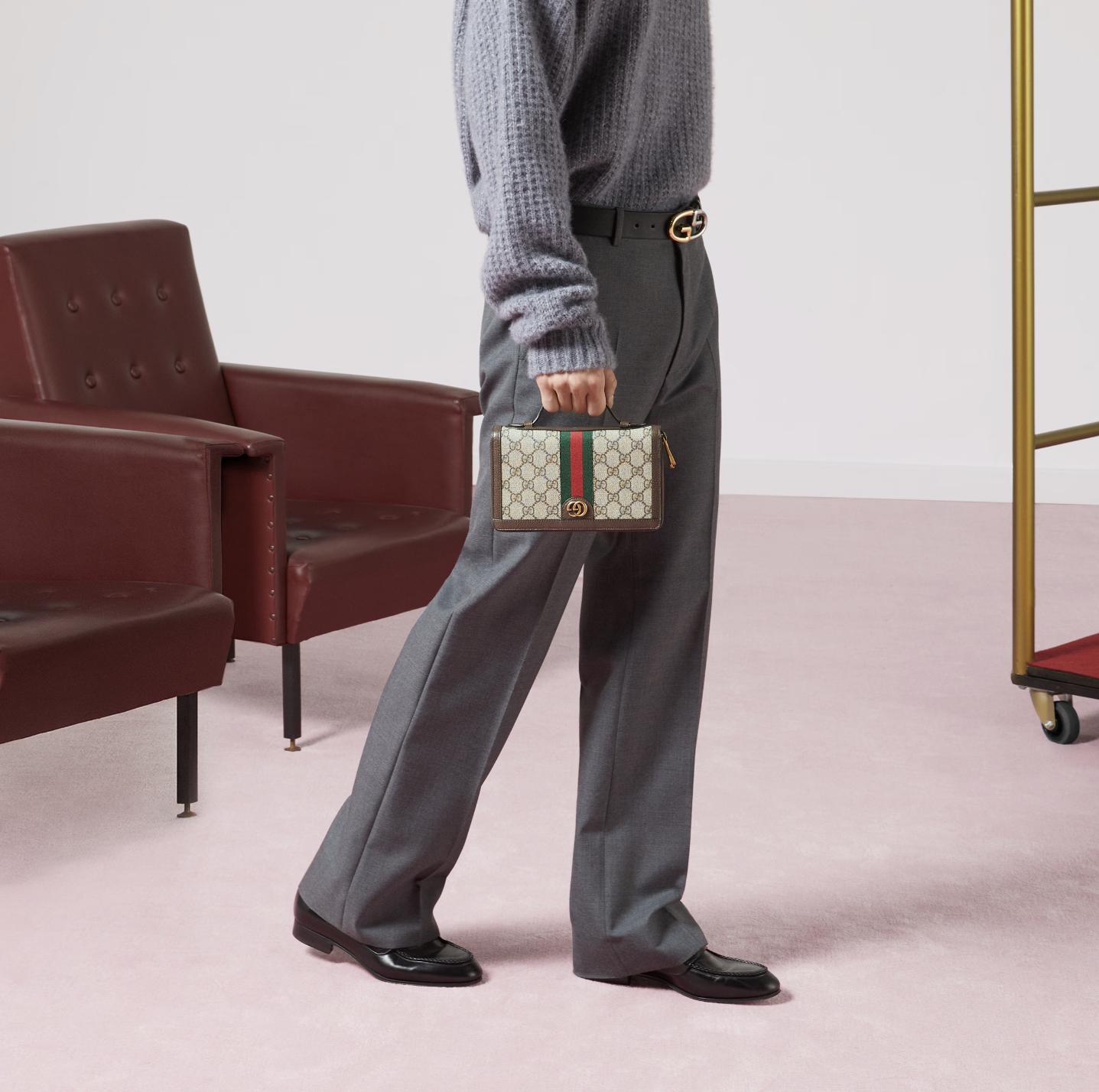
“Another example is the Emblème handbag line. Emblème continues to perform well in Asia-Pacific and ranks strongly within our handbag sales. It also includes some smaller formats. We have introduced the Mini Giglio and Small Giglio to ensure we offer products that are relevant in size and functionality for Chinese consumers, even though they are part of a global line.“
In closing the call, Poulou said:
“We are improving Gucci’s situation on multiple fronts. Perhaps the reaction and feedback to these actions appeared first in the United States, but we believe that, over time, this will happen across regions. In China, there is still more work to be done—we have always been very clear about that. We are working on product architecture and product supply, simplifying the number of SKUs to ensure more precise allocation, while also introducing newness. We are also working on communication, because we absolutely need to improve store traffic.“
“Yes, it will take a little more time in China.”
丨Source: Kering Analyst Conference
丨Image Credit: Kering official website
丨Editor: Luxeplace

.jpg.jpeg)
