On October 29, German sportswear giant adidas announced its results for the third quarter of fiscal 2026, ended September 30, before the market opened. During an online earnings call held the same day, CEO Bjørn Gulden and CFO Harm Ohlmeyer outlined the group’s latest strategy.
Third-quarter sales rose 9% year on year to €7.252 billion (up 7% at constant exchange rates), setting a new quarterly net sales record for the group. Operating profit surged 37% year on year to €1.008 billion, also a quarterly record, while the operating margin expanded by 2.8 percentage points to 13.9%. Net income from continuing operations rose 48% year on year to €711 million, with earnings per share of €4.06. Quarterly operating profit significantly exceeded market expectations of around €742 million.
On October 29, adidas shares closed at €167.15, up 5.8% from the previous trading day. At the time of publication by LuxePlace.com, the group’s shares had gained 3.48% over the past year, giving it a market capitalisation of €28.4 billion.
Greater China was one of the quarter’s biggest highlights, with revenue rising 20% year on year (13% at constant exchange rates) and the DTC channel also delivering double-digit growth.
adidas CEO Bjørn Gulden told reporters on the call, “We see other companies struggling in China, but at the moment there is nothing to suggest any clouds on the horizon over the next few quarters.” He also revealed that the group is directing more resources towards growth markets, saying, “If Europe is heavily discounted and growth is weak, you might allocate more resources to a growing market like China.”
Bjørn Gulden reiterated that staying close to consumers and local culture is central to the group’s strategy, and that the only way to achieve this is to empower local market teams. “Wherever we go in the world, we find talented adidas people who are full of energy, focused on serving consumers and athletes, and passionate about the brand. In a volatile and complex world, it is a privilege to work with such a great team.”
Following its strong third-quarter performance, adidas had already raised its full-year guidance on October 20. It maintained its forecast for revenue growth of 9%-10% at constant exchange rates, while raising its operating profit forecast from around €2.3 billion to around €2.5 billion. The company explained that the figure reflected three factors: approximately €200 million in US tariff refunds, around €100 million in additional profit from business growth, and its decision to invest approximately €100 million in the fourth quarter to improve future operating leverage.
Bjørn Gulden revealed that the €100 million would cover write-offs relating to underperforming stores, the retirement of software and systems no longer needed, and workforce adjustments, severance costs and structural cost optimisation worldwide. The aim is to create “breathing room” for 2027-2028.
He also described the company’s current position as “standing at a crossroads again after four successful years”, stressing that it would prioritise balance and avoid repeating the cycle of rising on the success of a single hit product only to decline again. Under its plans, adidas will maintain an operating margin of around 10% over the next two years while adding approximately €2 billion in sales.
“The past four years have been a journey… Looking ahead to 2027 and 2028, we will continue to grow. We now have a much stronger foundation for improvement than we did in 2023,” Bjørn Gulden said. He added that the group was shifting from the growth driven by lifestyle footwear, including retro styles such as Samba and Gazelle, in 2024-2025 towards using the brand’s popularity to drive apparel innovation. As lifestyle footwear trends slow, consumers drawn to the brand will naturally move into performance footwear for running and training, or lifestyle apparel.
Commenting on the overall third-quarter results, Bjørn Gulden said, “This was a great quarter for adidas. We achieved our highest-ever quarterly sales of €7.252 billion and operating profit of €1.008 billion. Every market except Europe delivered double-digit growth, while DTC grew 17% globally. All of this shows that the adidas brand is performing well around the world.”
“Our marketing investment and creativity have generated brand heat and made us a desirable brand globally once again. Our investment in innovation is also paying off, not just in events, storytelling and results, but in strong, profitable growth in football, running and training. Admittedly, the lifestyle footwear business is challenging at the moment, mainly because market inventories are too high and discounting is too deep, but we know the situation will normalise soon. In this environment, we are not seeking to maximise short-term results. Instead, we are remaining disciplined, continuing to strengthen the foundations for sustainable, profitable growth, and focusing on our medium-term goals.”
By product category, apparel became the quarter’s main growth driver. Revenue rose 19% year on year at constant exchange rates, with double-digit growth in Originals and football, alongside broad-based gains in Sportswear, running and training. According to disclosures on the earnings call, quarterly apparel revenue was approximately €2.9 billion, accounting for around 40% of total group revenue. Footwear revenue was broadly flat at approximately €3.83 billion (around 53% of total revenue), mainly because the group continued to manage wholesale shipments (sell-in) cautiously amid high industry inventories and heavy discounting to protect its full-price business. In the DTC channel, however, footwear still grew 6%, with double-digit gains in running and training. Accessories grew 5% year on year.
Bjørn Gulden acknowledged that lifestyle footwear was going through a “difficult phase”, with excess inventory and deep discounting in some markets. “But we do not need to panic. This is not a long-term disaster. These things happen, and if we become more disciplined, which we will, the market will normalise soon.”
adidas Group’s Results for the Third Quarter of Fiscal 2026, Ended September 30:
— By Channel (at Constant Exchange Rates)
DTC: Revenue grew 17% year on year, with e-commerce up 18% and own retail stores up 16%. All store formats achieved double-digit comparable sales growth, while the continued focus on full-price sales further improved the DTC business’s gross margin.
Wholesale: Revenue grew 2% year on year. The group maintained a cautious approach to shipments, particularly in Europe, in response to an uncertain consumer environment, elevated market inventories and heavy promotional activity.
— By Region (at Constant Exchange Rates)
- Japan/South Korea: Revenue grew 19% year on year;
- Latin America: Revenue grew 16% year on year;
- Emerging Markets: Revenue grew 15% year on year (despite regional conflicts affecting sales in some Middle Eastern countries);
- Greater China: Revenue grew 13% year on year;
- North America: Revenue grew 12% year on year;
- Europe: Revenue declined 4% year on year.
— By Product Category (at Constant Exchange Rates)
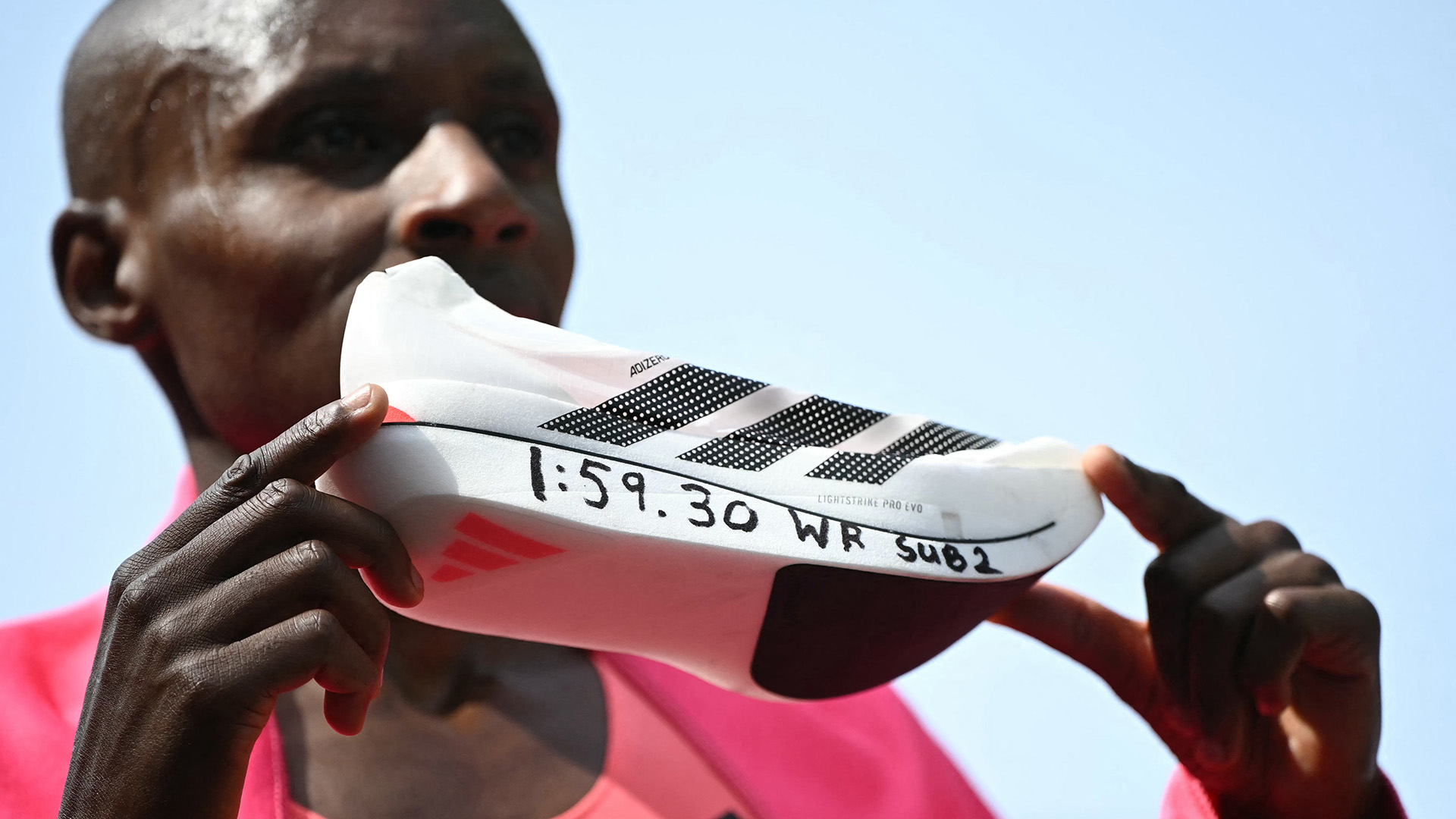
Performance: Revenue grew 14% year on year, with double-digit growth in running, training and football.
In running, adidas athletes claimed all six podium places at the Berlin Marathon wearing the Adizero Adios Pro Evo 3, further reinforcing the Adizero range’s performance credentials and supporting the subsequent launch of the next-generation Adizero Adios Pro 5 racing shoe. Climacool+ 3D cooling fabric, Techfit Pro muscle-support fabric and the new Hyperboost Run everyday running shoe further broadened the product portfolio.
In training, the first women’s Originals Sport collection brought the brand’s iconic Trefoil aesthetic to the gym and achieved exceptionally high sell-through rates. New colourways of the Adizero Dropset Elite and Pro hybrid training shoes continued to launch, strengthening the brand’s position in hybrid training.
In football, momentum from the “all-adidas” 2026 World Cup final carried into the new season, with successful launches of kits and fan merchandise for clubs including Arsenal, Real Madrid, Bayern Munich, Liverpool and Manchester United. Motorsport (the Singapore-themed Vanda Bloom collection), US sports (new NCAA partnership collections for the University of Tennessee and Penn State University), outdoor, tennis and golf also recorded growth.
Lifestyle: Revenue grew 3% year on year, led by double-digit growth in Originals apparel.
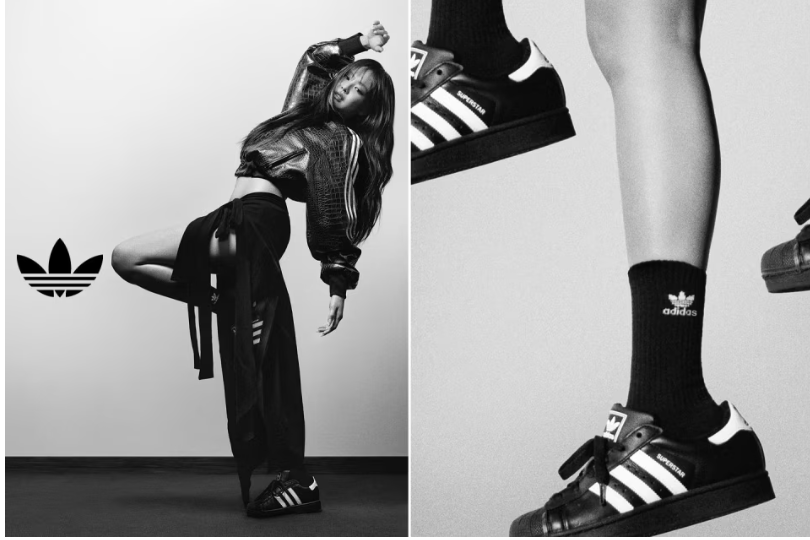
Firebird and adicolor maintained their strong momentum, with checked prints, seasonal materials such as corduroy, and collegiate-inspired silhouettes, including blouson track tops, pleated trousers, and suede and satin jackets, proving popular with consumers. The new adiSignature collection offered a modern take on comfortable everyday style, while collaborations with Jennie, Arte Antwerp and Simone Rocha further increased the visibility of the apparel offering.
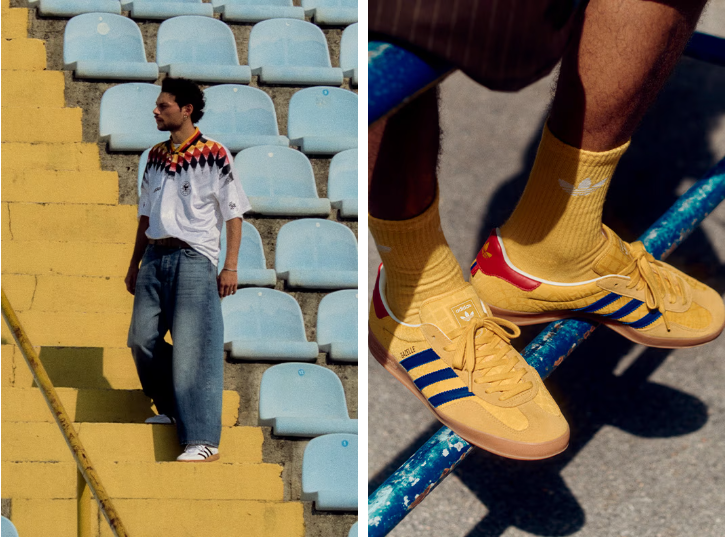
In classic footwear, Superstar and Low Profile continued to grow, with the Bad Bunny F50 Ghost Sprint collaboration and new colourways of Japan and Tokyo well received. Seasonal updates to Samba and Handball Spezial, including ballet-inspired, slipper-style and double-laced versions, attracted particularly strong consumer interest. New Adistar colourways and new versions of Megaride developed with Willy Chavarria drove growth in the running-inspired lifestyle business.
adidas Group’s Results for the First Nine Months of Fiscal 2026, Ended September 30:
- Revenue grew 10% year on year to €20.587 billion (up 11% at constant exchange rates);
- Operating profit grew 21% year on year to €2.287 billion, with an operating margin of 11.1%;
- Net income from continuing operations grew 23% year on year to €1.593 billion, with earnings per share of €8.85.
- Gross margin expanded by 0.8 percentage points year on year to 52.7%.
- Inventories stood at €5.739 billion, down 4% from the previous quarter, with current- and next-season products accounting for the vast majority;
- The ratio of adjusted net borrowings to EBITDA fell to 1.3 times (from 1.6 times a year earlier).
| Sources: Official press release, earnings call transcript, Reuters
| Image Credit: adidas Official Website
| Editor: Luxeplace