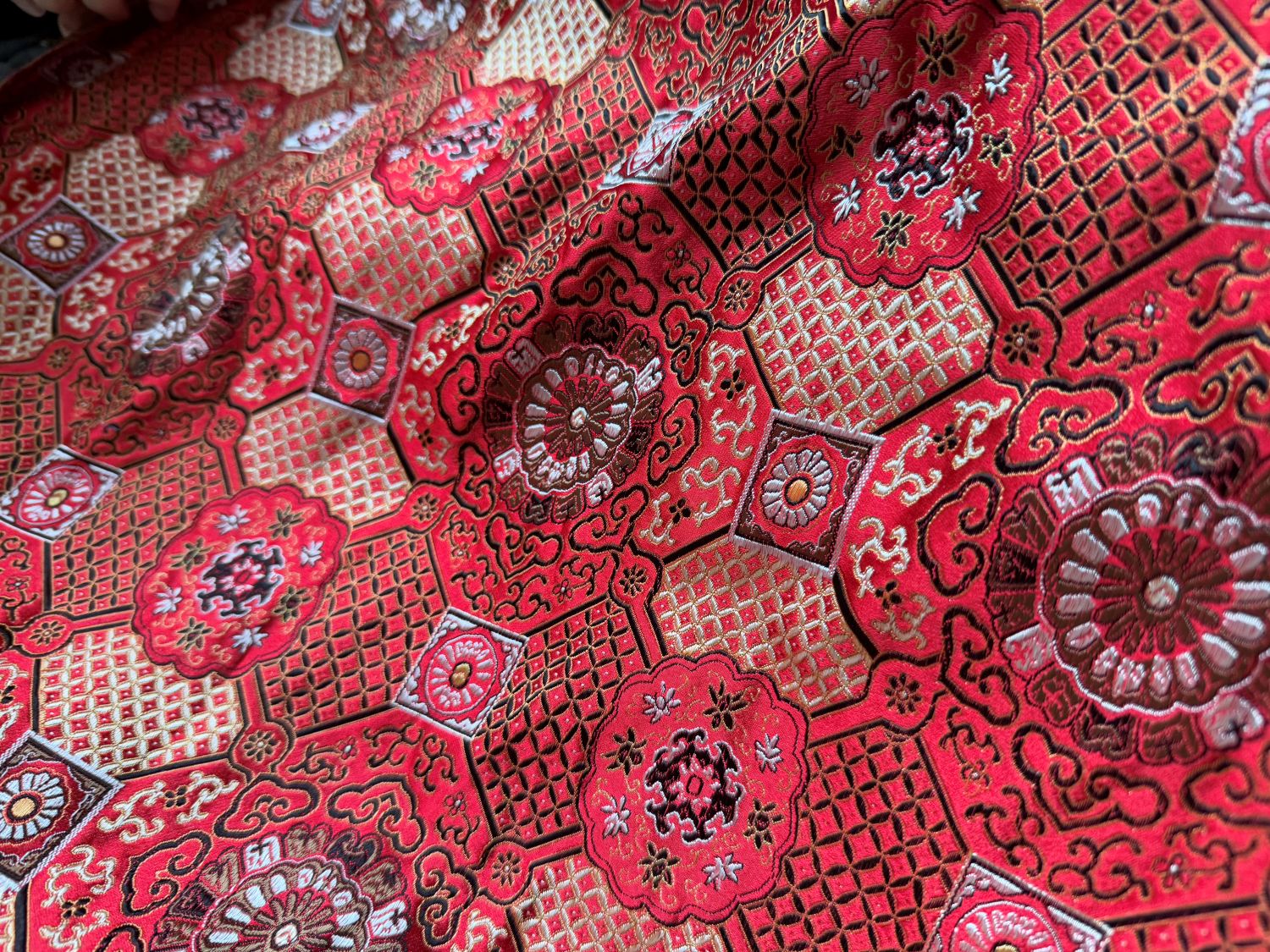
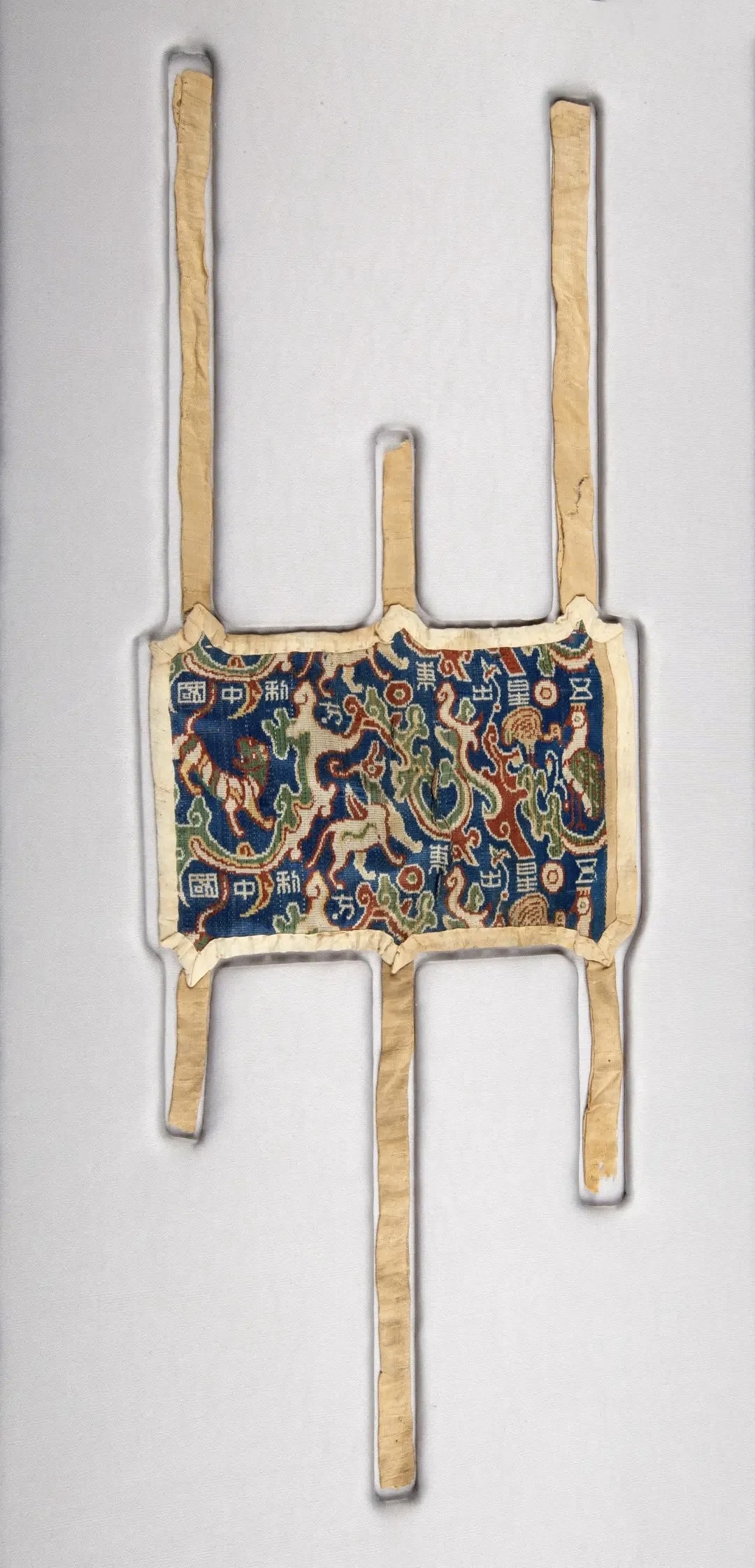
In late October 1995, a remarkable cultural relic from the Eastern Han Dynasty was unearthed at the Niya Ruins on the southern edge of the Taklamakan Desert in Xinjiang—an embroidered Shu brocade armband bearing the phrase “Five Stars Rising in the East.” Hailed as one of the most significant archaeological discoveries in China in the 20th century, it is now regarded as the No. 1 national treasure of Chinese silk.
This brocade armband exemplifies the pinnacle of silk weaving techniques in both China and the world at the time. It is also the earliest known artifact discovered in Xinjiang that features the word “China,” making it an unparalleled cultural treasure.
On December 22 of that same year, China’s National Cultural Heritage Administration officially announced this major archaeological discovery at a press conference in Beijing. As of now, it has been 30 years since its unveiling.
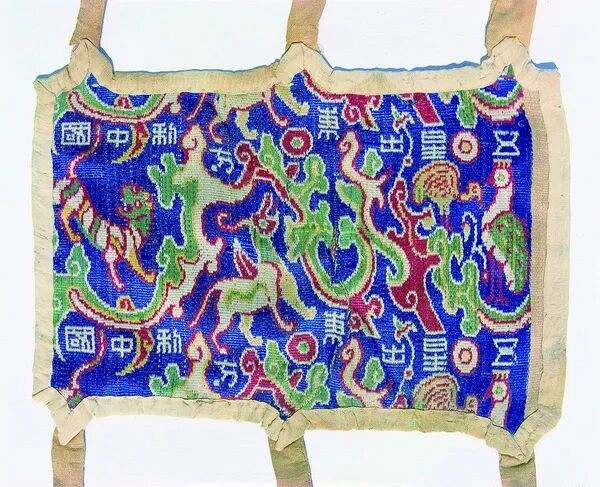
Image above: The “Five Stars Rising in the East” Shu brocade armband, currently housed in the Xinjiang Uygur Autonomous Region Museum
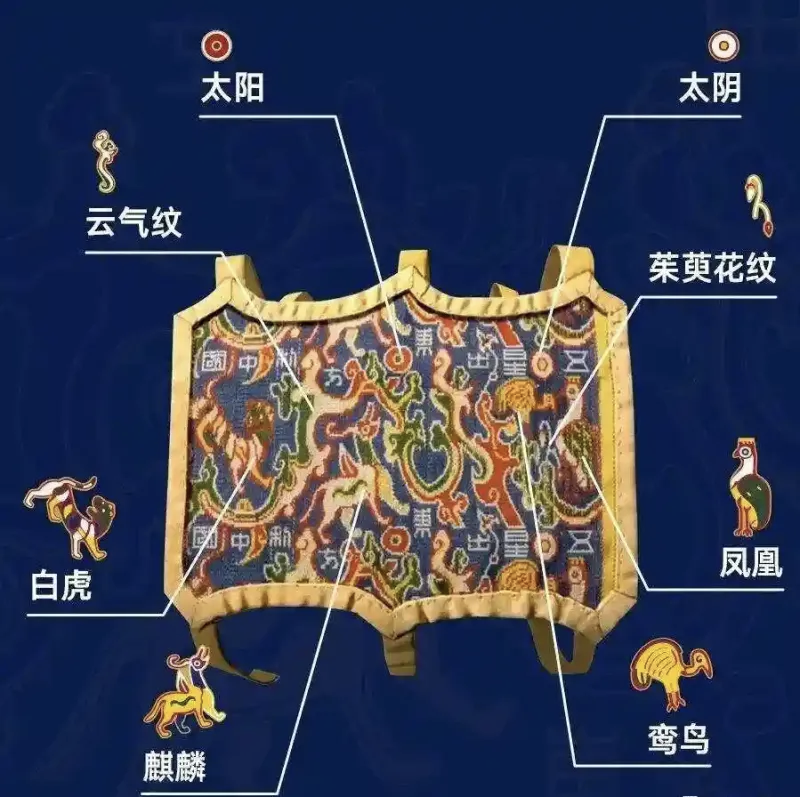
Archaeologists determined that the brocade armband is made of Shu brocade and features auspicious patterns such as phoenixes, qilins, white tigers, and auspicious clouds. It was woven by a specialized agency under the Han central government and bestowed upon the noble leaders of the ancient Kingdom of Jingjue in the Western Regions. Shu brocade was known for its exquisite quality and high value—”an inch of brocade worth an inch of gold”—and could only be produced in Chang’an (modern-day Xi’an) and Chengdu at the time.
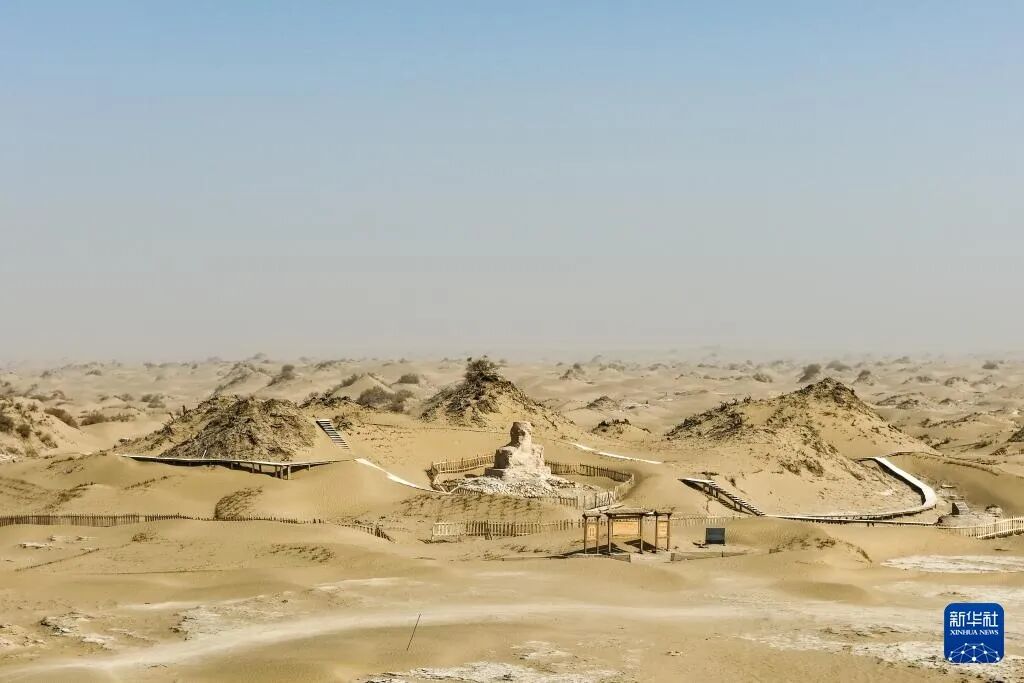
The Niya Ruins, located in today’s Minfeng County of Hotan Prefecture, are the archaeological remains of the Jingjue Kingdom during the Han, Wei, and Jin dynasties. Situated along the southern route of the Silk Road, the ruins lie in a desert landscape and are buried beneath sand dunes—earning them the nickname “The Pompeii of the East.”
Yue Feng, Chinese team leader of the 1995 excavation and a researcher at the National Museum of China, recalled, “When we opened the coffin lid, the brilliantly colored brocade immediately came into view. The vivid blues, whites, reds, yellows, and greens were breathtaking. Clearly embroidered on the fabric were the eight large characters: ‘Five Stars Rising in the East.’ Thanks to the extremely arid environment of the Taklamakan Desert, the colors have been preserved for nearly 2,000 years.”
The phrase “Five Stars Rising in the East” originates from ancient Chinese astrology. The “five stars” refer to the five major planets—Mercury, Venus, Mars, Jupiter, and Saturn. “The East” denotes a specific position in the sky according to Chinese celestial divination, while “China” geographically refers to the Central Plains region around the middle and lower reaches of the Yellow River. The phrase implies that the simultaneous appearance of the five planets in the eastern sky is an omen favorable to China’s military endeavors.
Scientists have predicted that a rare planetary alignment, known as the “Five-Star Convergence,” will occur again on September 9, 2040.
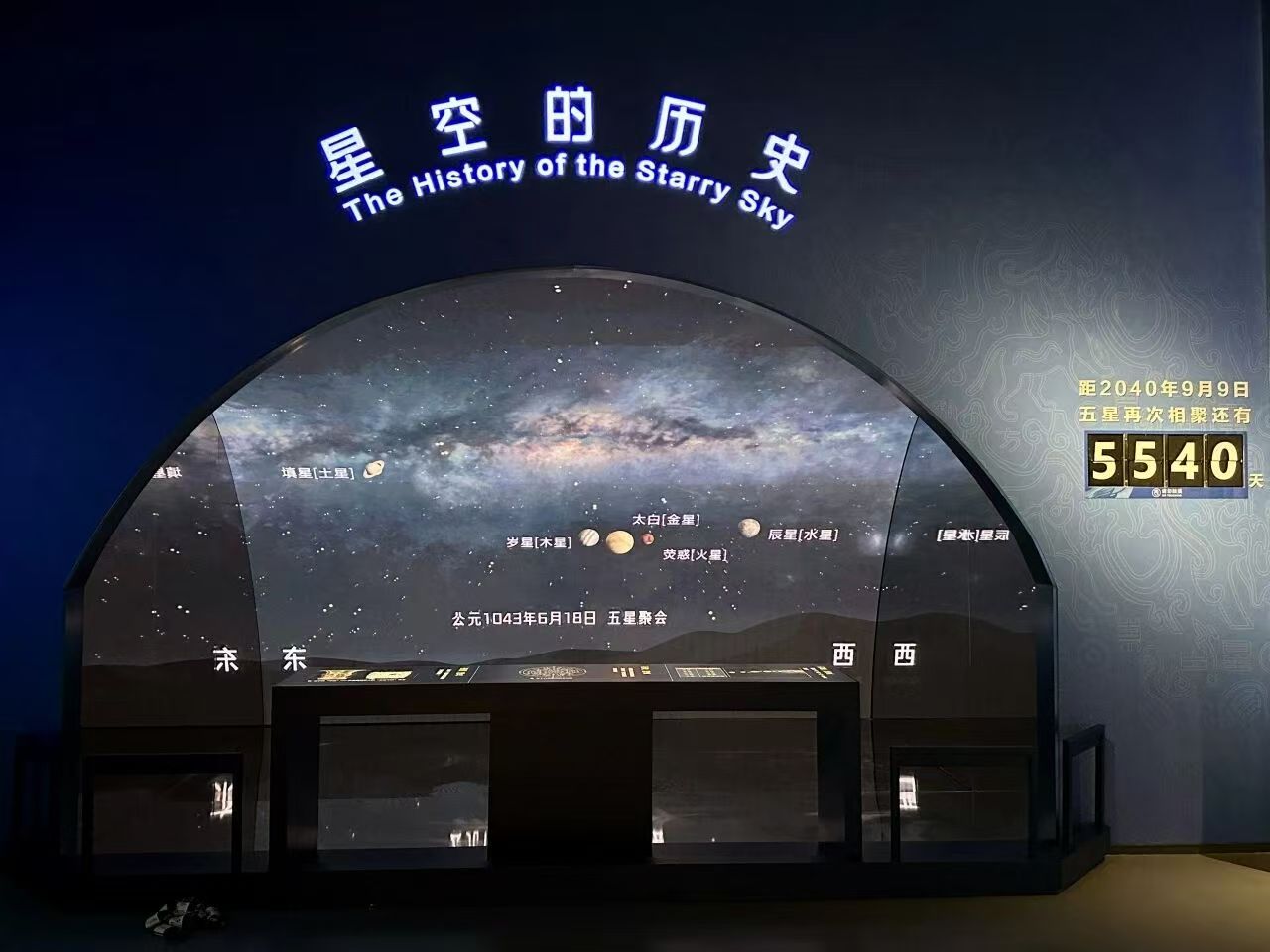
Image above taken at the Xinjiang Museum in July 2025
The discovery was named one of China’s Top Ten Archaeological Finds of 1995 and was later included in the first batch of cultural relics prohibited from leaving the country. Its historical, artistic, and scientific value is beyond measure.
Today, the phrase “Five Stars Rising in the East” has evolved into a prominent cultural IP. A dance drama titled Five Stars Rise in the East, inspired by the relic, premiered in 2022 and made its international debut in December 2025, touring in Toronto and Ottawa, Canada.
| Source: China News Service; National Ethnic Affairs Commission
| Images: Xinhua News Agency; National Cultural Heritage Administration; Xinjiang Museum
| Editor: LeZhi
About Luxe.CO Silk Culture Division
In March 2025, Luxe.CO officially launched its Silk Culture Division, dedicated to promoting Chinese silk heritage. The goal is to deepen high-level industry readers’ understanding of the richness and potential of Chinese silk culture, and to support the revitalization and modernization of the Chinese silk industry.
In addition to consistently producing original, high-quality content, Luxe.CO will initiate a series of carefully curated cultural and industrial activities, including heritage tours, forums, workshops, and art exhibitions. Following a first-principles approach, the initiative traces the origins of silk—from culture to commerce, from raw materials to craftsmanship, from history to the present, from China to the world—integrating the entire value chain. It aims to uncover the essence of silk culture and craftsmanship and to reinterpret and communicate it from a fresh perspective.
Contact the Luxe.CO Silk Culture Division: silk@luxe.co

![From Luckin Collaboration to Debut in Italy, Shu Brocade Goes Viral This Summer! [Luxe.CO Silk Culture Column]](https://cdn.luxeplace.com/wp-content/uploads/2025/09/%E5%BE%AE%E4%BF%A1%E5%9B%BE%E7%89%87_20250828141820_343_3.jpg)