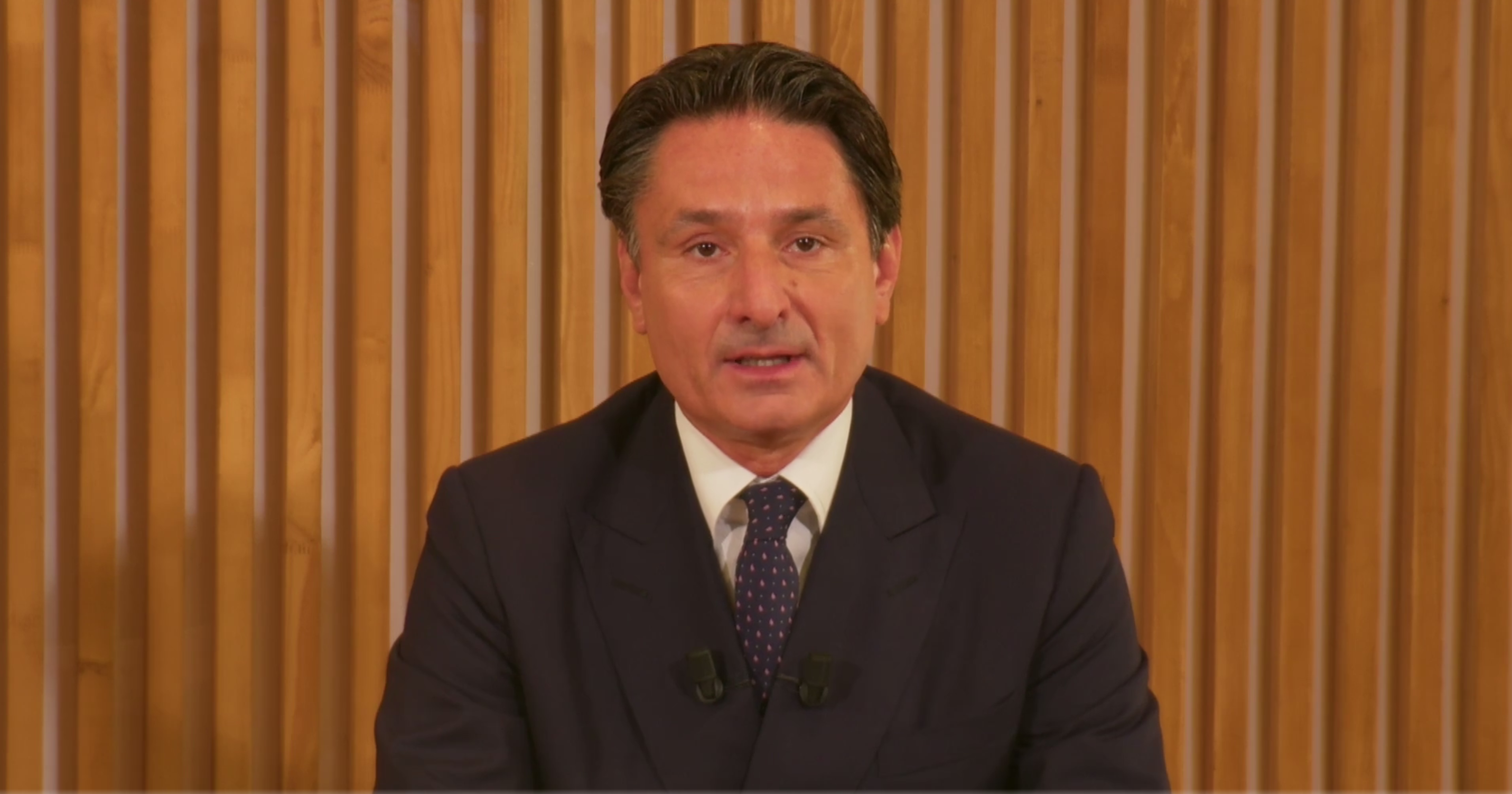
At the 2025 annual results conference call just concluded by French luxury giant Hermès, Executive Chairman and CEO Axel Dumas shared his latest observations and reflections on the market in the Chinese Mainland. Luxeplace has distilled four key takeaways:
-
Entry-level customers are declining, while high-net-worth clients remain more resilient
-
China store expansion strategy: growing at our own pace, not stop-and-go
-
The rise of Chinese local brands is a good thing; we do not want to be the only brand in the world
-
The Chinese Mainland market will definitely come back
- Entry-level customers are declining, while high-net-worth clients remain more resilient
Financial data show that Hermès achieved 5% full-year growth in Asia-Pacific excluding Japan, led by the Chinese Mainland (at constant exchange rates), with year-on-year growth accelerating to 8% in the fourth quarter. Against the backdrop of generally negative growth across the industry, these figures appear particularly resilient. Axel Dumas revealed the shift in customer structure behind the data: entry-level customers are declining, while spending by high-net-worth clients has become more stable.
Axel Dumas said, “We have always been making progress in China, growing every year, perhaps a little more slowly than in the past, but we are indeed growing.
What I see in Hermès’ ‘small stores’ in the market is the recognised level of activity at Hermès, with clients continuing to visit. The quality clients who generate a ‘value effect’ are purchasing expensive products, while aspirational clients are fewer; they are not our largest customer group.“
Category performance further confirms this trend: “In China, we see leather goods performing very well, serving as a very solid pillar. Then we have two other divisions performing strongly as well: womenswear and jewellery. In other words, these are all high-value divisions for us.”
-
China store expansion strategy: growing at our own pace, not stop-and-go
In terms of store openings in China, Hermès adheres to the principle that less is more:
“As part of the strategy we have followed in China over the past 10 years, we have said that we should not open too many stores; we try to enter one new city each year. We have stuck to that. Sometimes, considering construction issues, for example, when we opened a very large store in Shanghai, we might not open another one the following year.
So today we have 32 stores in China, maintaining a fairly stable position. It will grow at our own pace, gradually. What is certain is that we take a long-term view. We are not stop-and-go. Interestingly, regarding the situation in China, over the past few years, we have not cancelled a single project. We have continued to advance our plans in line with our established principles.”
The company disclosed that in December 2025, the expanded Hermès boutique at Changsha IFS reopened, while the Four Seasons Shoppes in Macao, China, completed renovation and expansion in June. In addition, the Taikoo Li Sanlitun project in Beijing is progressing, with new developments expected in 2026.

-
The rise of Chinese local brands is a good thing; we do not want to be the only brand in the world
When discussing the rise of Chinese local brands, such as the trendy toy Labubu mentioned by analysts, Axel Dumas responded:
“I think it’s great. I am not the kind of person who takes pleasure in others’ difficulties. I believe that the more successful our industry is and the more successful brands there are, the better it is for all of us.
So I think it is a good thing that China is nurturing local brands that offer products very different from ours. For example, Labubu and Chinese local jewellery are also very different, very distinctly Chinese in character. It represents a different kind of craftsmanship, which I find very interesting and fun.
There was an article in The New York Times titled: If there were no Birkin, could Labubu exist? If you think about it carefully, it’s quite interesting. You can also see some Chinese brands entering Europe; in sportswear, there are brands that are already strong in China and are now conquering markets beyond China.”
Axel Dumas emphasised:
“We do not want to be the only brand in the world, nor do we want everyone to buy Hermès. No! The more brands there are, the greater people’s appetite becomes, and at some point that appetite will be valuable for Hermès.”
-
The Chinese Mainland market will definitely come back!
Regarding the impact of the macroeconomy on luxury consumption in China, Axel Dumas also offered his own perspective:
“I think one thing has changed since the early 2010s: people’s willingness to spend on luxury goods is not linked to GDP, but rather closely related to changes in the stock market and the property market. In fact, that is what you are seeing in China: GDP continues to grow, but people have many concerns about wealth and financial investments, and we see China’s financial markets recovering.
“What I believe is that we have returned to what the 21st century originally looked like. Since I became CEO, there has been an issue every two years (SARS, Fukushima in Japan, the Paris attacks…). So there is a problem somewhere in the world every two years, which is why we adopt this geographically balanced strategy… I believe the Chinese market will come back. They will come back.“
| Source: Group financial report, conference call
| Image source: Company official website
| Editor: LeZhi