Before Qeelin was established, the global fine jewellery landscape lacked an iconic brand rooted in Chinese tradition yet designed with an international vision.
This synergy was driven by Qeelin Founder and Creative Director Dennis Chan, who has spent decades at the intersection of design and heritage. At the end of 2024, Chan travelled to a Dong Village in Zhaoxing, Guizhou for field research, a journey documented in a short film.
The morning mist over the Dong village set a quiet scene. A drum tower stands at the heart of the village, while the Grand Song of the Dong resonates through the lanes. The sounds of silversmiths, the work of embroiderers by the water, and the swaying of indigo-dyed cloth define the daily rhythm. These scenes represent a cultural heritage that remains active and evolving.
This was not a spontaneous visit.
In 1997, Dennis Chan stepped into the Mogao Caves in Dunhuang, where the Eastern spirit of the murals left him deeply moved and inspired his original aspiration to create a fine jewellery brand representing China. In 2004, Qeelin was officially founded. Dennis Chan transformed the auspicious symbolism of the Wulu into the modern minimalist design of Qeelin’s first iconic Wulu Collection.
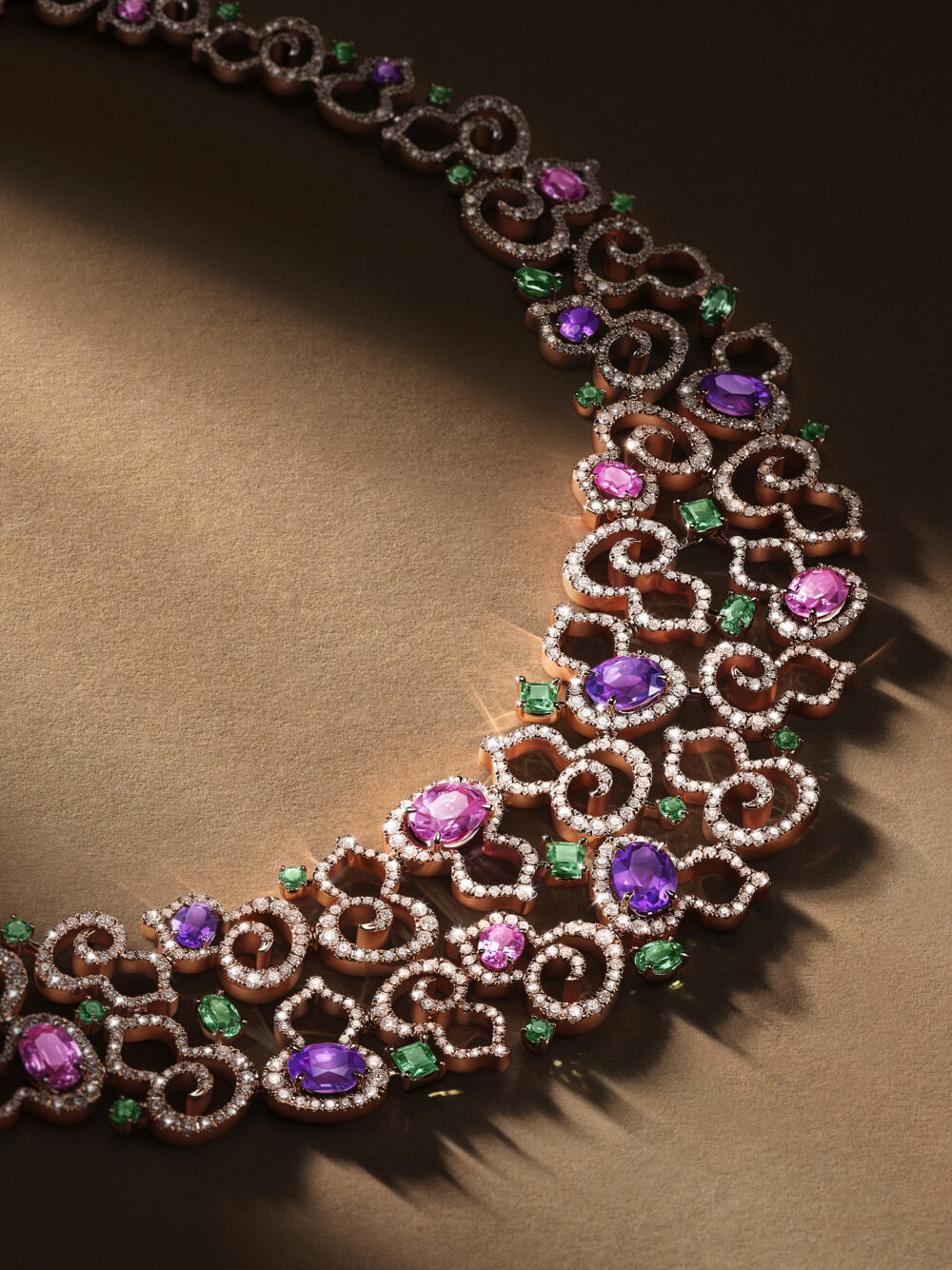
Wulu Wulu Fine Jewellery Collection
For nearly three decades, he and his local team have drawn creative nourishment from China’s fertile aesthetic soil with respect and gratitude, naturally integrating motifs such as the Wulu, Ruyi, panda, goldfish, and lion dance into contemporary jewellery design.
Their philosophy is to allow traditional culture to take root in contemporary life, rather than merely drawing inspiration from the past.
As Dennis Chan noted at the end of the film, “We must pass it on.” For cultural heritage, the true mission has never been limited to static “protection,” but lies in dynamic “transmission.” Taking the Dong village as a living practice, Qeelin seeks to answer an industry question: can a fine jewellery brand become one of the most fitting contemporary storytellers of cultural heritage? And how should a brand rooted in Eastern culture give back to this fertile aesthetic soil?
Preservation of the Cultural Ecosystem
In Chinese philosophy, gratitude begins with observing nature. Only by seeing how heaven and earth nourish all things selflessly, and how all beings exist in cycles of mutual return, can one understand the natural order of “giving, receiving, and repaying.”
Dennis Chan grew up in Hong Kong and has lived and worked in Global for many years. He is an artist and designer with a distinctly cross-disciplinary background. Beyond jewellery, he has long explored sculpture, photography, and industrial design, with works exhibited at institutions including the Louvre and the MoMA.
This diverse perspective has given him a more pragmatic understanding of culture and creativity: ” It’s not easy – like walking a tightrope. It’s about the yin-yang balance between heritage and modernity, but the origin remains 5,000 years of Chinese culture.”
Founded in the Southern Song dynasty, the Zhaoxing Dong Village is one of the largest Dong villages in China. Its greatest treasure is not any isolated old building, but an entire living cultural system that continues to function today: silverwork, embroidery, and indigo dyeing remain part of local daily craftsmanship; Grand Song of the Dong, as a “history without writing,” continue to be passed down orally during festivals and gatherings; and drum towers and flower bridges remain central spaces for public life in the village. This “living heritage” forms the micro-ecosystem on which Dong culture depends.
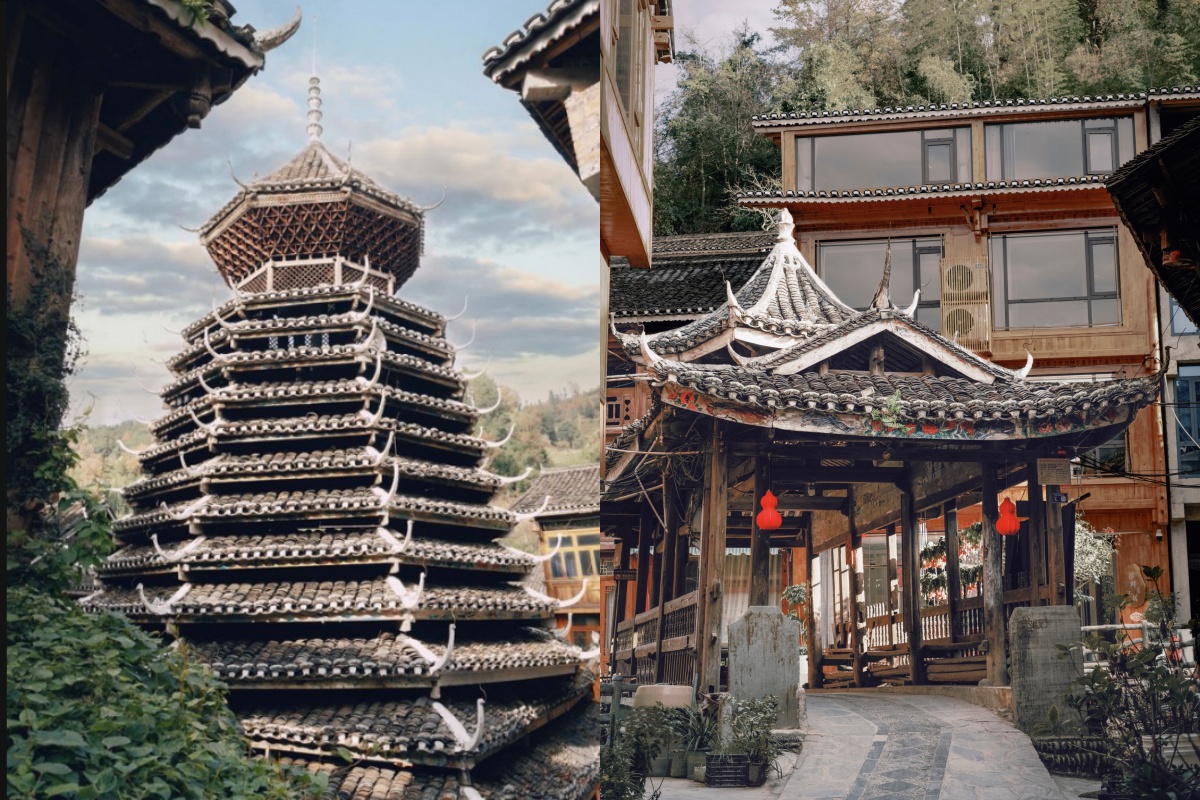
As the spiritual landmark of a Dong village, the drum tower inherits the stilt-style architectural tradition of the pre-Qin period and is built using nail-free mortise-and-tenon timber construction. It is both a living fossil of architectural craftsmanship and the centre of village discussions, festivities, and gatherings. Flower bridges span streams and connect villages, combining functions of transport, rest, and social interaction. They embody the Dong people’s simple philosophy that “where there is water, there must be a bridge; where there is a bridge, there must be a pavilion.”
At the end of 2025, Qeelin officially sponsored the restoration of the Lituan drum tower and flower bridge in Zhaoxing.
This aesthetic soil deep in southeastern Guizhou inspired Dennis Chan’s field research. With respect and gratitude, he and his team hoped to do something for it, making Qeelin’s sponsorship of the restoration of the Lituan drum tower and flower bridge a natural step.
At its core, this is an act of protecting and expanding this cultural ecosystem. Restoration is not intended to seal it away, but to allow old buildings to continue serving as places where villagers gather, sing, and communicate in a new era. Only when the next generation is willing to enter the drum tower and walk across the flower bridge will cultural memory remain unbroken.
Guided by this philosophy, Qeelin’s deep engagement with China’s aesthetic soil and aesthetic symbols extends far beyond this Dong village. In 2024, the brand partnered with the Dunhuang Grottoes Conservation Research Foundation of China and the Dunhuang Academy to provide long-term support for the “Study on the accessories and jewelleries of the Dunhuang Caves in Sui and Tang dynasties” project. Before that, it had also drawn creative nourishment from the “Golden Dragon Parade” folk tradition on the Yulong River in Yangshuo, Guilin, and the Jinnan Weifeng Luogu of Linfen, Shanxi…
Cultural Transmission through Jewellery
Protecting cultural roots allows Eastern civilization to be recognized on the world stage.
Qeelin’s parent company, Kering, has long been committed to supporting humanities initiatives around the world. Its official website offers a precise definition of Qeelin: ” the name is neither Chinese nor English, but universal, and thus embodies both Qeelin’s Chinese roots and its mission. “
In 2013, Qeelin became the first Chinese brand ever acquired by Kering. As China’s first fine jewellery brand, Qeelin opened its first boutique in 2019 at Place Vendome in Paris, the world’s foremost fine jewellery landmark, and launched “treasure box” Ginza flagship shop in Tokyo Japan, in 2024.
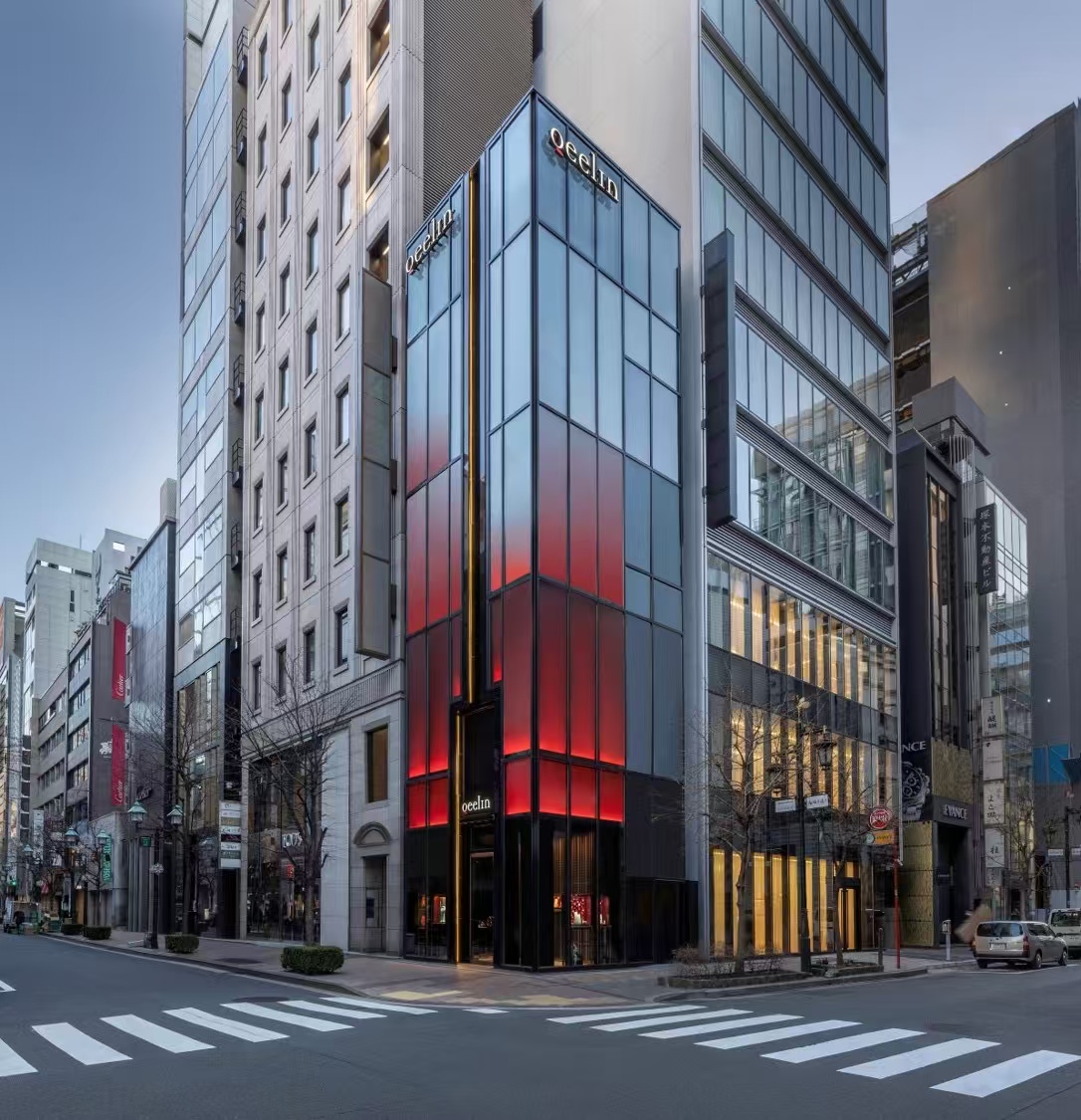
Qeelin’s “Treasure Box” Ginza Flagship store in Tokyo, Japan
In April 2026, Kering’s first-quarter results presentation disclosed the performance of the newly established “Kering Jewellery” division for the first time, explicitly noting that “Qeelin delivered strong growth, driven by the Asian market.” It is also the only luxury brand under Kering to rank among the TOP 10 of Luxe.CO Intelligence’s Luxury Brand China Power Rankings 2025.
As the fine jewellery brand representing China in the global luxury arena, Qeelin’s Eastern aesthetics, humanistic depth, and spiritual resonance are creating deeper connections with a broader global context.
This on-site field research in the Dong village allowed Qeelin’s cultural expression to move beyond surface-level symbolic interpretation and take root in a real humanistic setting, ultimately crystallising in Qeelin’s 2026 Fine Jewellery Collection.
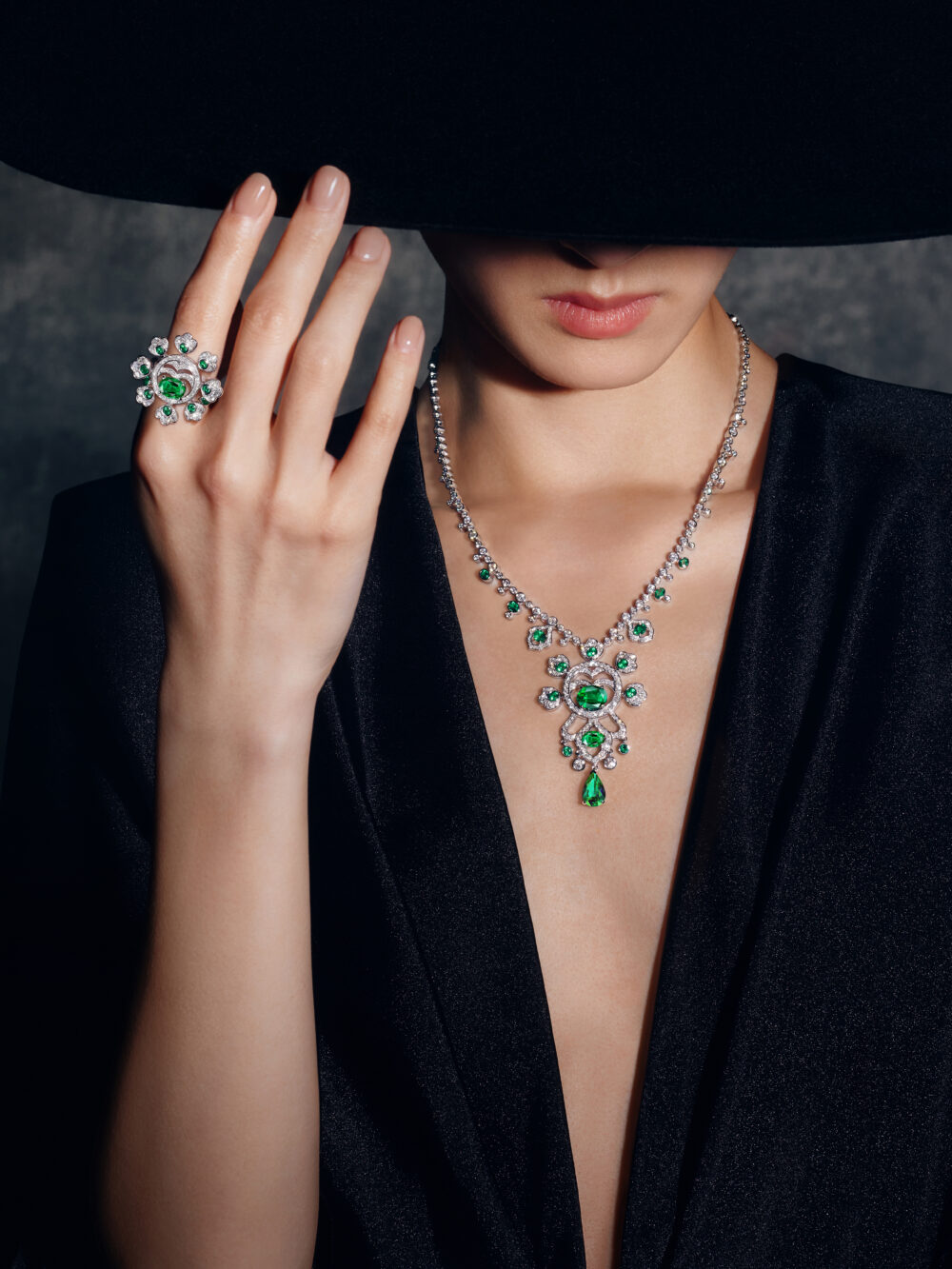
Spider Flower Fine Jewellery Collection
Fine Jewellery: A Fitting Storyteller of Cultural Heritage
“Qeelin is the first to present to the international luxury aficionado precious jewellery with a very strong Chinese heart. ” This is Dennis Chan’s most direct definition of the brand.
Qeelin’s 2026 Fine Jewellery Private Exhibition at Ziyunxuan in Beijing brought this cultural narrative full circle. It marked the brand’s most diverse, substantial, and valuable fine jewellery presentation to date. From its founding aspiration to the expression of its creations and its brand narrative, the exhibition presented to audiences a highly dimensional and consistent Eastern aesthetic brand.
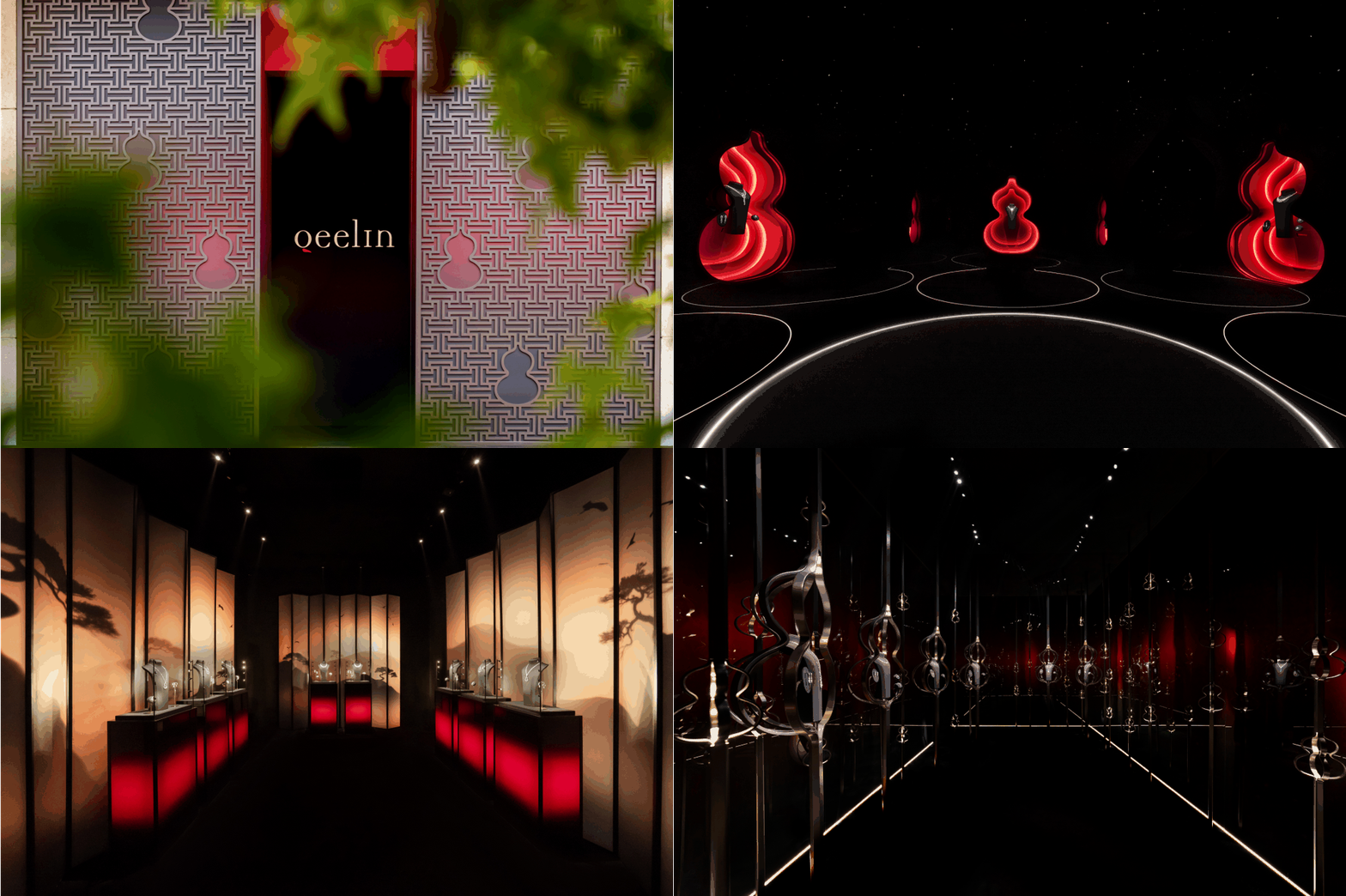
Qeelin’s 2026 Fine Jewellery Private Exhibition
In the fine jewellery industry, both in China and globally, Qeelin was among the first to open up a contemporary jewellery narrative around the Wulu motif. It is one of the foremost fine jewellery brands to deeply integrate Chinese cultural totems with modern aesthetic logic. As Christophe Artaux Chief Executive Officer of Qeelin said, “We do not directly take Eastern elements such as the Wulu and use them as they are. We are willing to keep using artistic creation to bring different interpretations to these motifs.”
With the confidence of an Eastern aesthetic brand that is “complete in itself,” Qeelin continues to look inward. Its inner stability and richness are resonating with a growing number of high-net-worth clients.
– Reconstructing Jewellery Motifs Through Eastern Philosophy
Chinese and Western aesthetics have long followed different paths: Western art tends toward realism, seeking the precise reproduction of form, light, shadow, and structure, with an inherent sense of monumental solemnity and eternity; Chinese art values expressive spirit, emphasising chi, spirit, and vivid resonance, conveying the vitality of life through artistic conception. As Chinese painter Wu Guanzhong once said, “Western art is an art of ‘seeing’; Chinese art is an art of ‘imagining.'” Qeelin’s jewellery narrative this time is deeply rooted in the Eastern artistic tradition of meaning, chi, and imagination.
The spider totem is a shared cultural symbol in mythologies around the world. The Spider Flower Fine Jewellery Collection takes the spider as its creative core, a rare choice in jewellery design, while also carrying a unique cultural code of the Dong people.
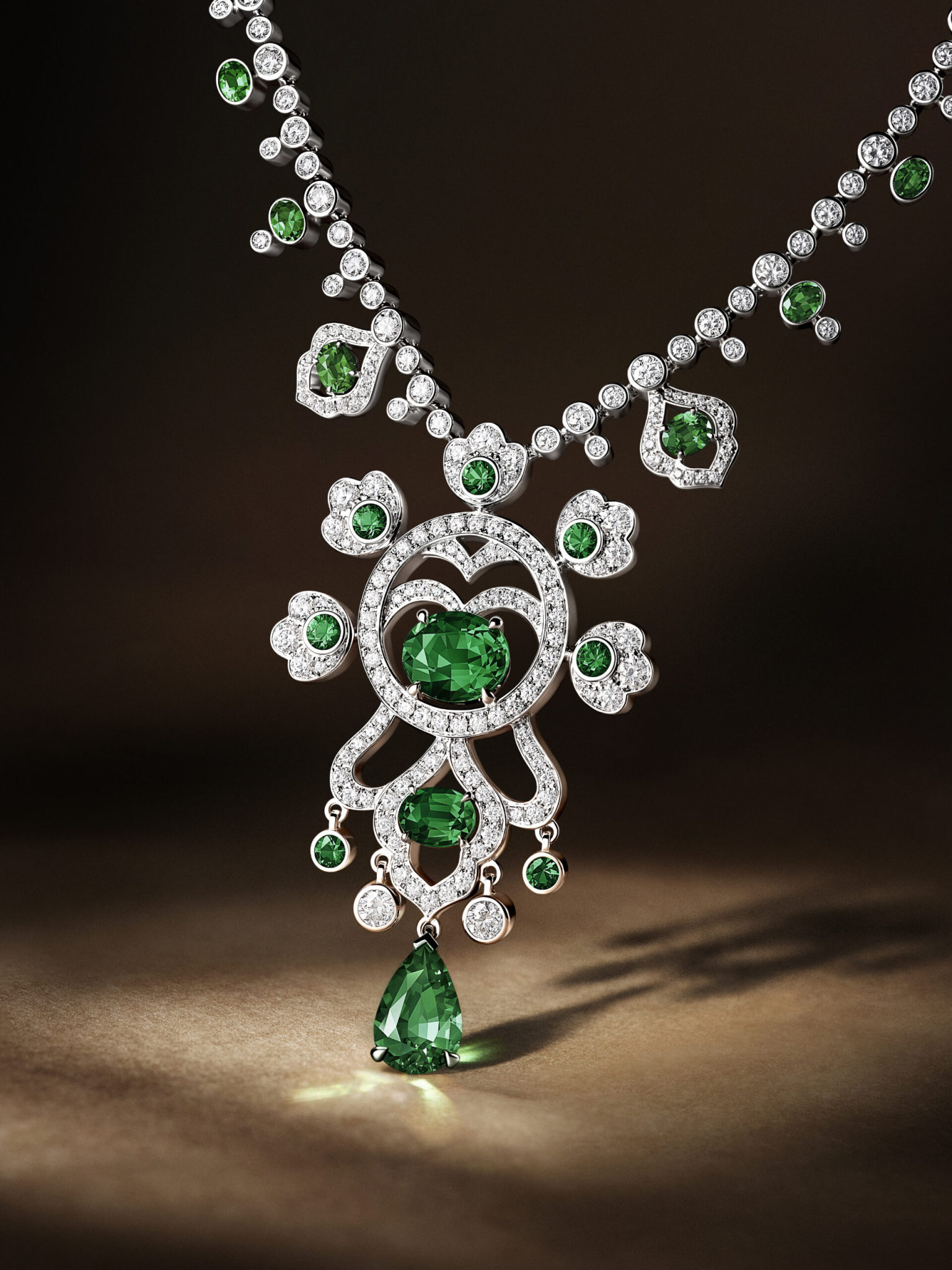
In Dong belief, the spider is the incarnation of the goddess Sa Tianba, who is said to have taught the people the art of weaving. The spider’s web symbolises the Dong people’s imagination of cosmic order. Through deconstruction and re-creation, Qeelin uses pavé-set diamonds to evoke the flowing shimmer of a spider’s web, precisely capturing the intricate geometric texture of Dong brocade and transforming ethnic belief into wearable jewellery art.
The Dong Chi Fine Jewellery Collection, meanwhile, seeks to translate the more abstract concept of “Chi” in Dong philosophy into wearable jewellery form. Echoing the flowing “8” motif of Qeelin’s iconic Wulu silhouette, its continuous water ripple and spiral patterns outline a tangible symbol of Eastern chi.
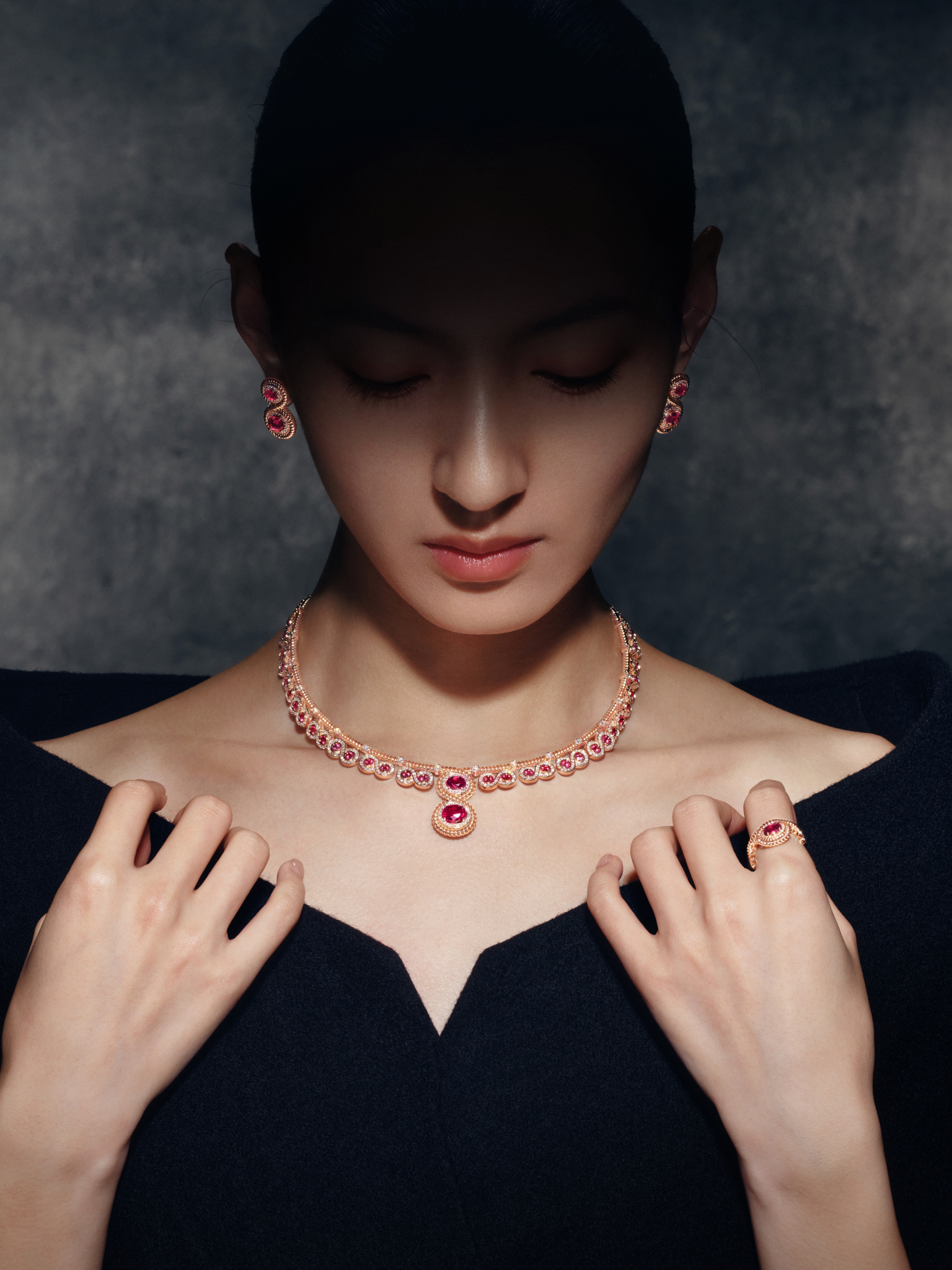
In Dong philosophy, Chi is the life force of the universe: the pulse of heaven and earth, the breathing rhythm of mountains and rivers, and the connection that keeps all things in eternal circulation. The design uses a flowing “8” motif to echo the iconic Wulu silhouette, symbolising the balance of heaven and earth and the ascent of auspicious energy; its continuous water ripple and spiral patterns carry the Dong people’s ancient reverence for water, turning abstract philosophy into tangible jewellery lines.
– Carrying an Eastern Core Through Western Craftsmanship
In the West, jewellery is often seen as “miniature architecture that can be worn.” Contemporary Chinese fine jewellery brands are using the rigorous architectural language of Western structure to enfold Eastern expressive cultural symbols.
Dennis Chan once said, ” Chinese pride is getting stronger, and our customers like our combination of Chinese design and international execution with this modern element of playfulness and versatility. ” The integration of Dong cultural elements into fine jewellery is by no means superficial “ethnic-style decoration.” Rather, through deconstruction and re-creation, it forms an Eastern expression that is both contemporary and international.
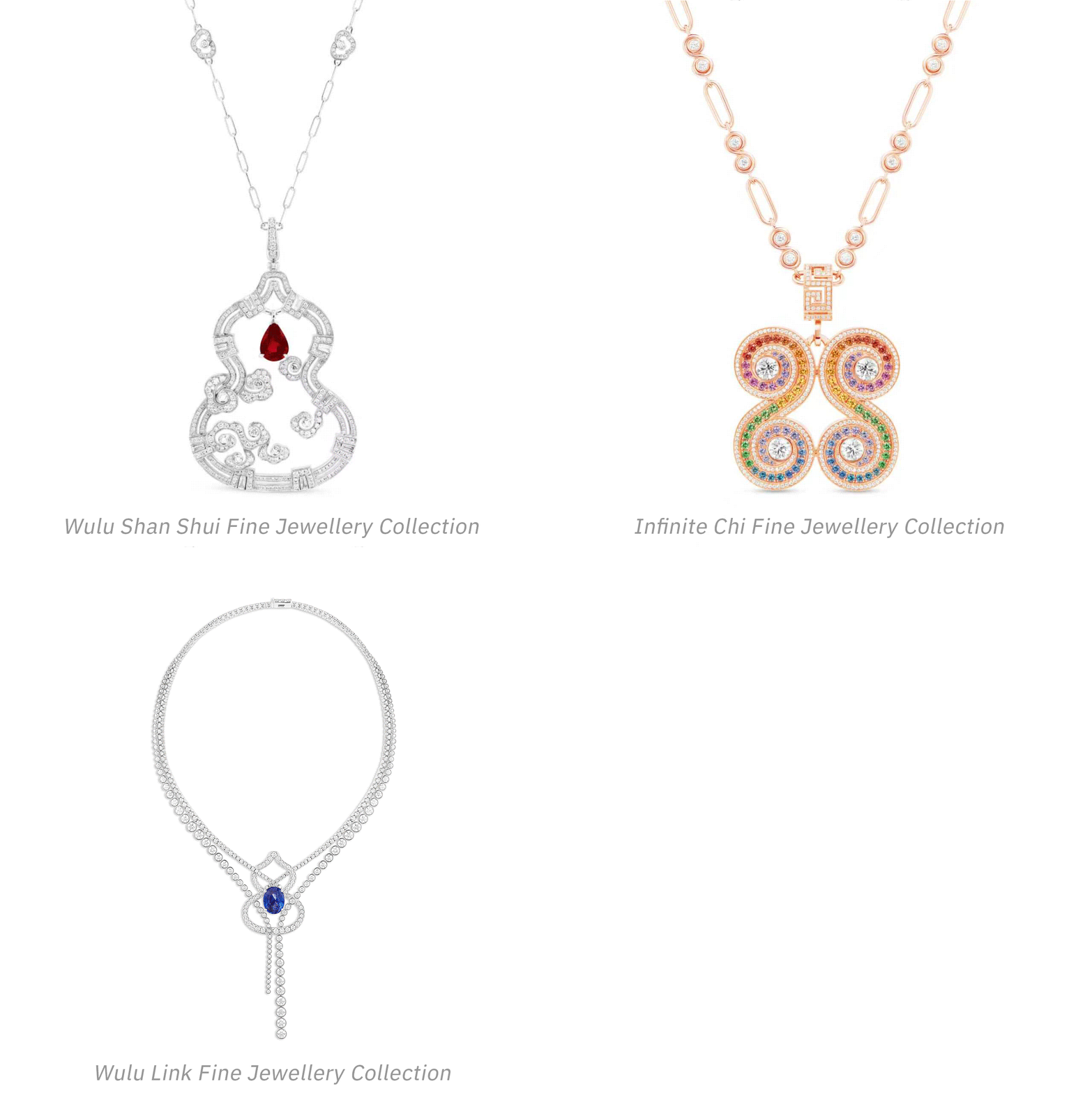
In the Wulu Shan Shui Fine Jewellery Collection, the thirteen-tiered dense eaves that define the Dong drum tower are transformed into a highly ordered geometric silhouette. Emerald pendants at the base move nimbly with the wearer, precisely capturing the exuberant atmosphere of Dong celebrations. This deconstruction and translation of traditional architecture allow ethnic culture to take on a sleek, international quality within a contemporary jewellery context.
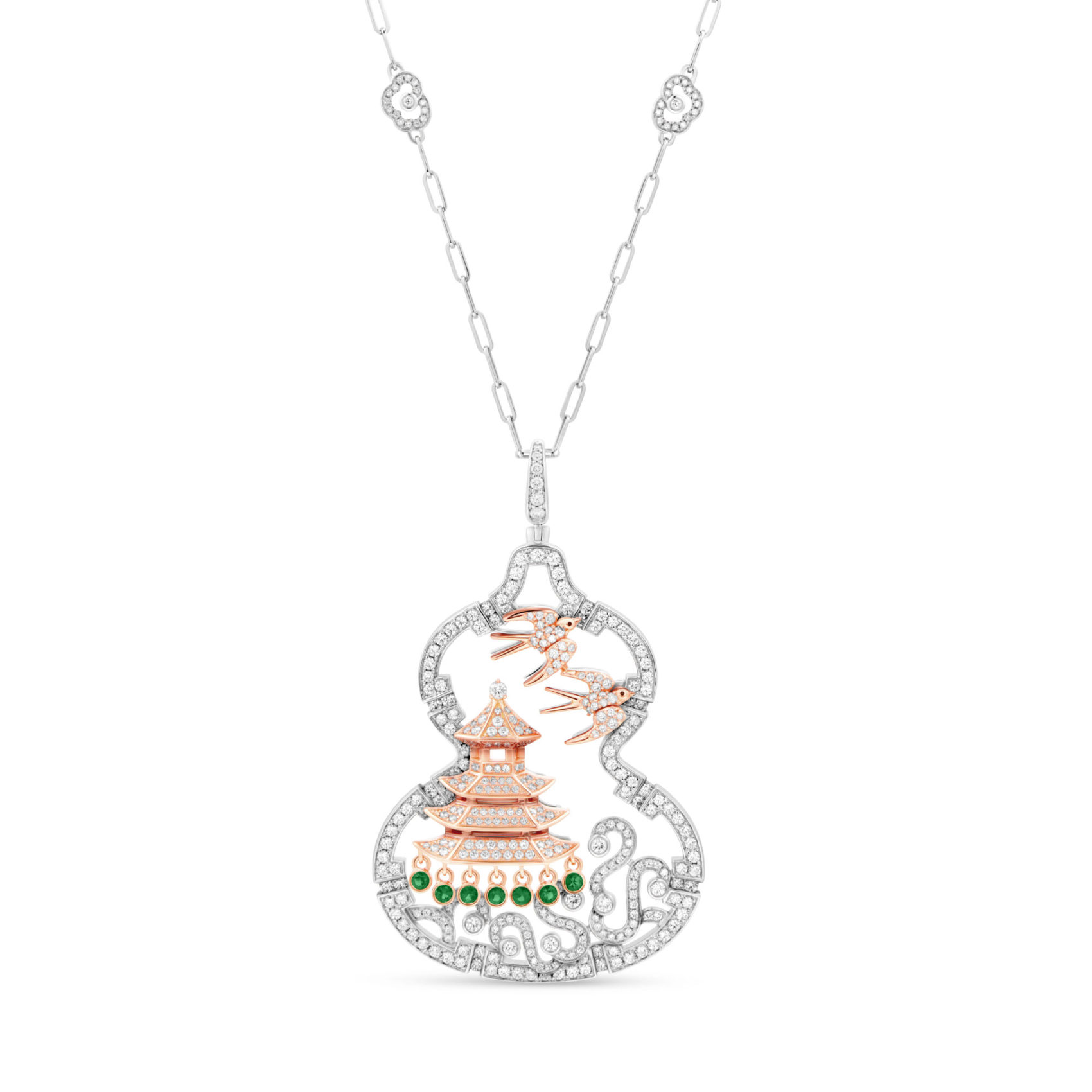
Wulu Shan Shui Fine Jewellery Collection
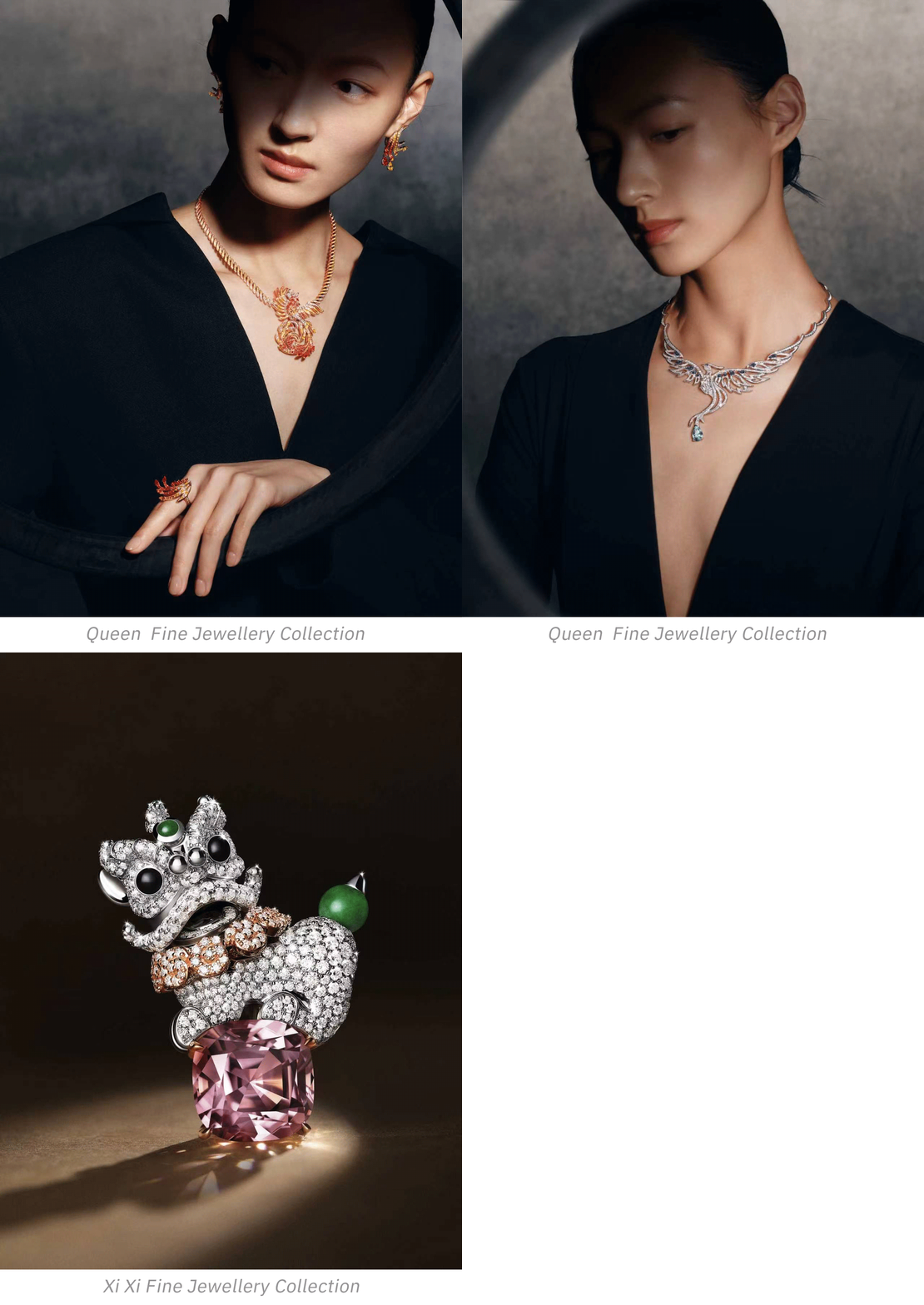
This structural experiment in “dynamic beauty” is taken a step further in the Queen Fine Jewellery Collection and Xi Xi Fine Jewellery Collection. Through precise handcrafted hinge mechanisms, the phoenix’s wings sway lightly with the wearer’s movement, while the little lion’s jaw and tail tremble nimbly as the wearer walks. The mechanical logic of biomimicry gives life to precious metals and stones, echoing the core theme of this fine jewellery collection: ” A Realm Alive with Radiance “.
Whether it is the diamond “clapper” in the Ling Dong Fine Jewellery Collection that sounds softly with each step, or the diamond ribbons in the Wulu Fairy Fine Jewellery Collection that seem as light as clouds, like the dance of a Dong goddess, both prove that when structural logic is sufficiently practical and precise, it can perfectly accommodate Eastern aesthetics’ pursuit of “dynamic rhythm,” allowing jewellery to become truly flowing art.
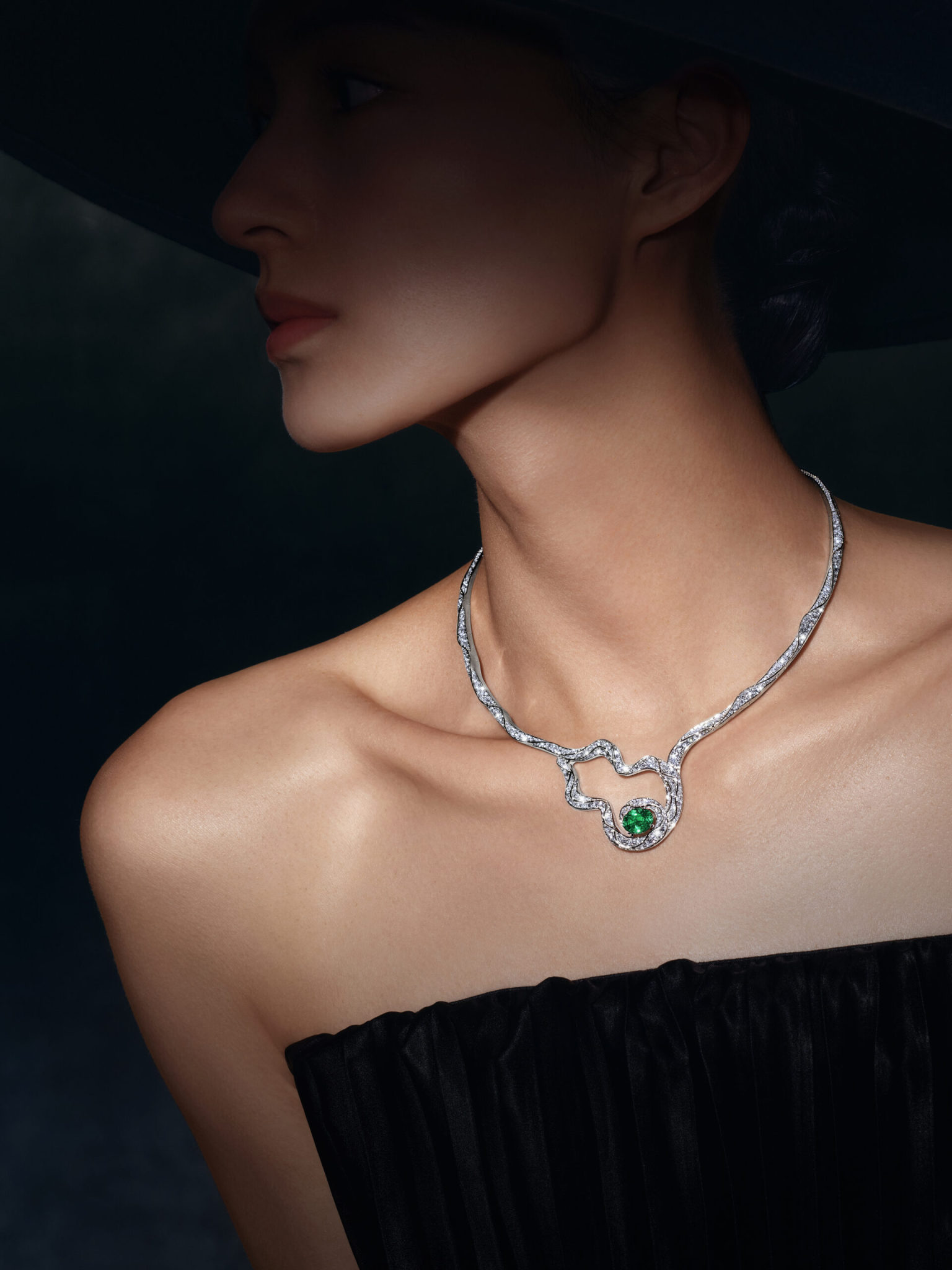
Wulu Fairy Fine Jewellery Collection
-Endowing Heirloom Value Through Rare Gemstones
A series of rare gemstones presented as the finale of the exhibition offers tangible support for the cultural meanings explored by the brand through their collectible, heirloom qualities.
At the heart of the Wulu Shan Shui Fine Jewellery Collection is a 2.14-carat pear-shaped ruby from Mozambique, like a rising sun amid the mountains and waters of a Dong village, capturing the most moving image of nature.
The Infinite Chi Fine Jewellery Collection completes a precise creation of the spectrum: rainbow-like gradients of coloured sapphires, green garnets, and London blue topaz are interwoven and arranged, with each gemstone rigorously selected and matched for hue, brightness, and saturation. The spiralling interplay of the “Chi” motif and the “Hui” motif is transformed into an intensely modern beauty of “infinite circulation.”
The Wulu Link Fine Jewellery Collection necklace is set with a 14.08-carat oval-cut sapphire from Sri Lanka, while the Wulu Treasure Fine Jewellery Collection ring features a 2.91-carat Burmese “pigeon’s blood” ruby as its centre stone… In Qeelin’s creations, these rare treasures are no longer isolated assets, but the core of cultural storytelling, endowing the transmission of intangible cultural heritage with a value worthy of being passed down.
Conclusion
The land of China has nurtured a deep and fertile aesthetic soil, with countless Eastern aesthetic images and cultural symbols still waiting to be explored. Only with respect and gratitude can one fully draw upon its beauty.
As Dennis Chan said, ” The concept hasn’t changed: to bring Chinese heritage to the modern world. “
Following its support in 2024 for the “Study on the accessories and jewelleries of the Dunhuang Caves in Sui and Tang dynasties “, Qeelin has gradually built a long-term and stable path for cultural preservation: moving from the one-way drawing of inspiration from Chinese civilisation to actively engaging in the research, protection, and revitalisation of cultural heritage.
Qeelin’s journey suggests that fine jewellery can act as a medium for sharing Chinese culture globally. By moving from “static preservation” to “dynamic growth,” the brand demonstrates that jewellery is a fitting storyteller for turning cultural heritage into a shared global aesthetic.
丨Editor: Elisa

.jpg)