In 2026, understanding Asia’s beauty market means looking beyond the latest ingredients or brands to examine the different paths China, South Korea and Japan are taking to compete globally.
According to the China Association of Fragrance Flavour and Cosmetic Industries, China’s cosmetics sales across all channels reached RMB 1,104.245 billion (approximately USD 165.26 billion) in 2025, up 2.83% year on year. Chinese brands’ share of sales rose to 57.37%, marking a fifth consecutive year of growth. NIQ’s “K-Beauty Goes Global” report, published in 2026, found that global K-Beauty sales by value increased 53% year on year and 131% over two years. By comparison, Euromonitor data shows that premium beauty sales in Japan edged up just 0.4% in 2025.
These figures reflect the different stages of development of the Chinese, Korean and Japanese beauty industries: Chinese brands are exploring the next phase of global expansion, South Korea has established relatively mature export and distribution systems, and Japan needs to find new growth drivers for its mature market. As competition extends to R&D, supply chains, brand building and global retail networks, the contest in Asian beauty is shifting from individual products and trends to broader industry capabilities.
Taking place this November in Hong Kong, China, Cosmoprof Asia 2026 spans multiple stages of the value chain, from ingredients, R&D and manufacturing to brands and finished products, offering a panoramic view of these important industry trends.
China: C-Beauty Moves from Domestic Strength to the Global Test
Competition in China’s beauty market is shifting from rapid responses to trends towards a broader contest encompassing product efficacy, R&D capabilities, brand value and distribution efficiency. “Affordable, fast and trend-driven” no longer adequately describes C-Beauty today.
Lan Vu, Founder and CEO of globally renowned beauty trend forecasting agency BEAUTYSTREAMS, focuses on three main aspects in her observations of the Chinese market.
The first is premiumisation. Local brands’ value propositions now extend beyond value for money to include product efficacy, cultural expression and the ability to quickly translate consumer insights into products. Premiumisation is not simply a matter of raising prices. Whether product innovation delivers a tangible experience, and whether cultural expression resonates with consumers, also influence a brand’s ability to command a premium.
The second is social commerce. Content distribution, consumer education, community engagement and sales conversion are becoming increasingly integrated, shortening the journey from awareness to purchase for new products. Feedback from platforms also helps brands identify demand and adjust products more quickly. Whether this digital efficiency translates into lasting brand value, however, still depends on product quality, sustained innovation and consumer trust.
The third is the modern application of concepts and ingredients associated with traditional Chinese medicine (TCM). Pearl powder and native botanical ingredients are being combined with biotechnology, formulation development and contemporary design. Their commercial value lies not in simply replicating tradition, but in using modern product design and scientific evidence to turn traditional resources into value that consumers can understand and recognise.
These capabilities also provide a foundation for international expansion. According to Euromonitor, Chinese colour cosmetics brands recorded a compound annual growth rate of approximately 70% in Southeast Asia between 2019 and 2024, while skincare grew at around 115%. Southeast Asia has consequently become an important starting point for many Chinese brands expanding overseas.
Moving from regional markets into the mature markets of Europe and the US, however, requires brands to address challenges involving local consumer needs, physical retail channels, regulatory requirements and lasting trust. In August 2026, PROYA announced plans to enter approximately 400 physical stores operated by US specialist beauty retailer Ulta Beauty that November, potentially becoming the first Chinese beauty brand to enter Ulta’s US stores.
For C-Beauty, the next step after establishing how to win in China goes beyond replicating domestic strengths in digital operations and product innovation. It also means testing whether those capabilities can adapt to different markets and translate into lasting brand recognition.
South Korea: K-Beauty’s Strengths Extend Beyond Trends
K-Beauty has established a relatively mature route to commercial success overseas, with its competitive strengths extending beyond individual hit products to product development, marketing communications, distribution partnerships and industry collaboration.
For years, Korean brands have excelled at translating beauty results into clear consumer language that is easy to share, with “glass skin” a prime example. Today, this emphasis on visible results is increasingly being combined with efficacy research, ingredient innovation and more clearly defined product positioning.
In her latest research article, “Four Asia Pacific Beauty Growth Engines Global Brands Need to Harness”, Lan Vu identifies three areas of development in the Korean market.
The first is a stronger emphasis on clinical research and evidence of efficacy in product development. Interest in ingredients such as exosomes, PDRN and tranexamic acid reflects the market’s appetite for skin science and efficacy-driven skincare.
The second is the evolution of anti-ageing towards “slow ageing”, with a focus on long-term skin health, barrier maintenance and managing skin condition, rather than pursuing only dramatic, short-term improvements.
The third is the extension of skincare principles into other beauty categories. Makeup products increasingly emphasise skincare ingredients and skin-nurturing benefits, while cushion compacts and complexion products are expanding beyond their traditional cosmetic functions. In haircare, ingredients such as peptides are being incorporated into scalp care, gradually bringing targeted efficacy and daily care together.
Industry data also reflects K-Beauty’s international expansion. According to South Korea’s Ministry of Food and Drug Safety, the country’s cosmetics exports reached USD 11.4 billion in 2025, while exports in the first quarter of 2026 increased 21.5% year on year.
Coordination across retail channels is another feature of its international expansion. In August 2026, Sephora and Korean beauty retailer Olive Young launched their global retail partnership in the US. According to an update from Olive Young, the first selection of 19 Korean beauty brands it curated has entered more than 580 Sephora stores across the US.
The partnership combines a Korean retailer’s product curation expertise with an international retail network, providing a new route for Korean beauty brands to expand into physical retail overseas. As its international reach grows, K-Beauty’s challenge is also shifting from consistently delivering popular products to nurturing brands that can sustain their businesses and continue evolving over the long term.
Japan: How Can a Mature J-Beauty Industry Find New Drivers of Global Growth?
Compared with the expansion underway in China and South Korea, Japan’s beauty market is distinguished by deep expertise in scientific research, quality and craftsmanship. Yet its established consumer base has not automatically translated into fresh growth momentum.
J-Beauty has long prioritised product reliability, technical rigour and the user experience. Lan Vu notes that Japanese consumers pay close attention to product quality and detail. The soft, plump complexion associated with “mochi skin” also reflects Japanese beauty culture’s emphasis on long-term care and skin barrier maintenance. These principles are increasingly intersecting with fields such as longevity science and skin research, finding expression through quality, daily rituals and carefully considered product experiences.
Fragrance and gender-neutral self-expression offer new directions for J-Beauty to explore. AI-assisted fragrance discovery tools and technologies such as AR and VR give consumers new ways to understand scents, ingredients and craftsmanship, while creating opportunities for brands to explore experiential consumption.

According to Mintel, per capita retail spending on facial skincare in Japan stands at USD 91.3, above China’s USD 38.6 and the US’s USD 27.3. Yet Euromonitor data shows that Japan’s premium beauty sales grew just 0.4% year on year in 2025. High per capita spending alongside limited incremental growth highlights the pressures facing a mature market.
Japan has also begun addressing this issue through industrial policy. In 2025, the country’s Liberal Democratic Party established the “J-Beauty Industry Research Group”. In 2026, the group put forward recommendations for an industry growth strategy, calling for stronger collaboration across sectors, improved public-private cooperation mechanisms and support for overseas expansion.
For J-Beauty, R&D and quality remain essential foundations. The next step is to translate scientific research, craftsmanship and long-term care principles into brand value that overseas consumers can understand, are willing to try and continue to recognise.
Premiumisation Is Being Redefined: Differences and Common Ground Across China, South Korea and Japan
The Chinese, Korean and Japanese markets demonstrate that Asia is not a single market with uniform demand, and that premiumisation rests on different notions of value.
According to “Four Asia Pacific Beauty Growth Engines Global Brands Need to Harness”, premium value in Japan is expressed more through precision, quality and carefully considered experiences. In South Korea, clinical research and efficacy innovation need to translate into tangible product experiences and benefits that are easy to communicate. In China, science and technology, local culture and product innovation provide important foundations for brand differentiation and the ability to command a premium.
Despite these different approaches, efficacy, ingredients, identity and experience are becoming shared consumer priorities. Digital technology is also evolving beyond a communications channel to play a role throughout the consumer journey, from product discovery and comparison to purchase.
Competition among Asian beauty brands is therefore extending beyond individual products or channels to encompass the coordination of content distribution, R&D, supply chains, retail networks and consumer relationships. Connecting these elements and establishing a sustained competitive advantage across different markets will be a key test.
Why Is Cosmoprof Asia an Ideal Window into Asia’s Beauty Industry?
China’s digital operations and local innovation, South Korea’s communication of efficacy and export systems, and Japan’s accumulated scientific expertise and quality management reveal different facets of Asia’s beauty industry.
Hong Kong’s geographical position connecting the Chinese Mainland, Southeast Asia and international markets makes it an important hub for observing exchanges across the region’s beauty industries. Held annually, Cosmoprof Asia showcases brands and products while also covering multiple stages of the value chain, from ingredients, formulations, packaging and manufacturing to finished products. It provides a tangible setting for understanding how industry capabilities translate into market competitiveness.
The event comprises Cosmopack Asia and Cosmoprof Asia. The former focuses on supply chain activities such as ingredients, packaging and manufacturing, helping the industry understand changes in product development and production. The latter covers brands and finished products, showcasing product design, market positioning and consumer trends. Together, they offer a view of the beauty industry’s development from different points along the value chain.
The 2026 edition centres on the global “WANTED” campaign, built around three themes: Rule-Breakers, Innovators and Fragrance Addicts. These focus respectively on industry innovation, technological advances and developments in the fragrance market.
Italy has been selected as the Country of Honour for this year’s edition. The Italian Trade Agency (ITA), together with the Ministry of Foreign Affairs and International Cooperation and the Italian personal care association Cosmetica Italia, will organise an Italian pavilion. It will showcase the Italian beauty industry’s strengths in specialist manufacturing, creative design and technological innovation, highlighting the European beauty industry’s accumulated expertise from production to product innovation.
Fragrance is one of the event’s key areas of focus. Developed in collaboration with the Xuelei Fragrance Museum, SCENT Museum will present fragrance culture through immersive experiences. CosmoLab will showcase the perfume development process, from formulation concepts to premium packaging. FRAGRANCE CREATIVE WORKSHOP will explore fragrance artistry and related craftsmanship through international brands and perfume creation.
In makeup, Cosmo Onstage will invite Chinese makeup master Mao Geping (MAOGEPING), Japanese makeup artist Megumi Sekine and international content creator Nikkie de Jager to give live demonstrations, showcasing makeup styles and techniques from different markets.
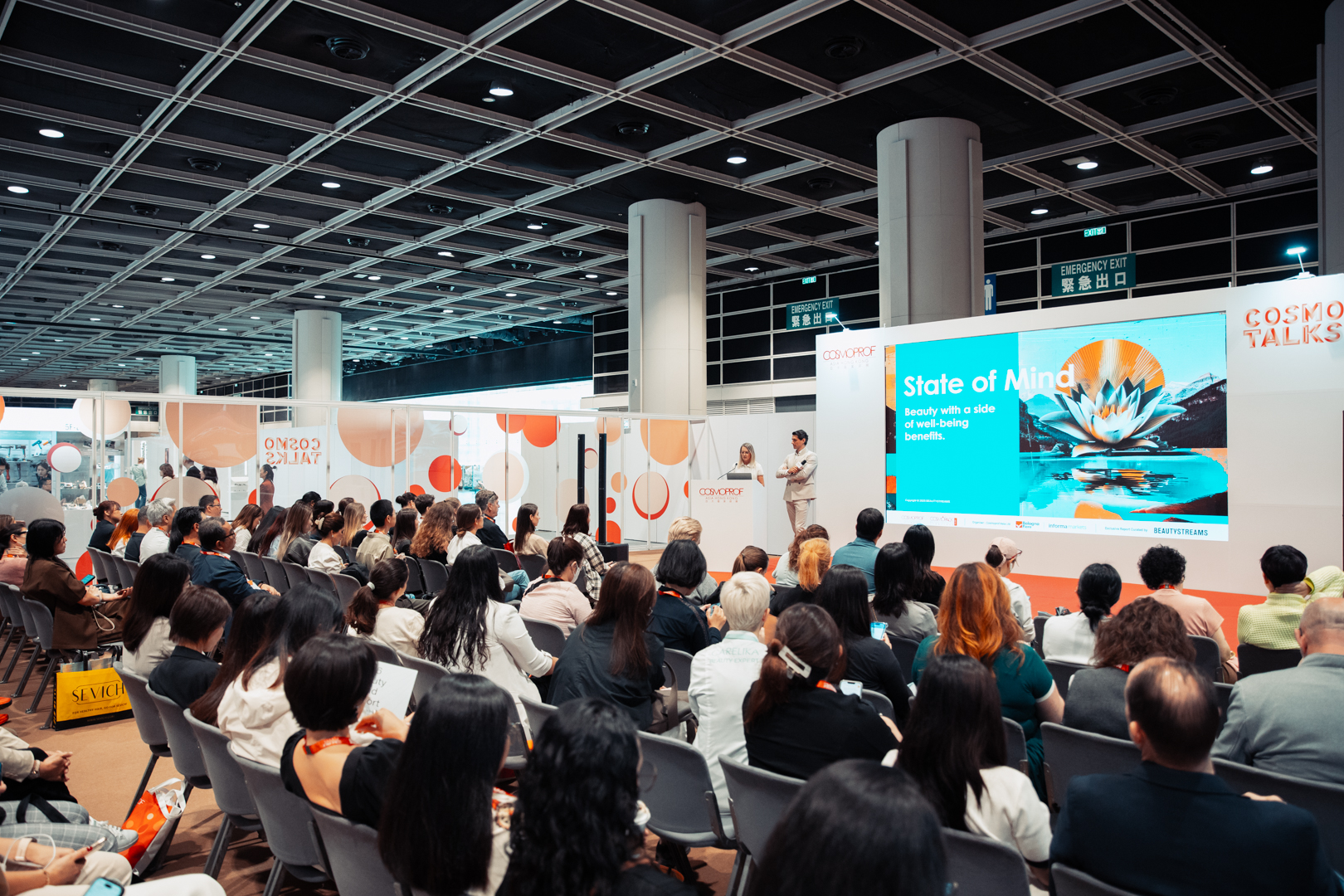
CosmoTalks and the Beauty Ingredients & Formulation Asia (BIFA) Symposium will bring together more than 80 international experts to discuss supply chain strategies, consumer trends and cross-disciplinary topics such as emotional wellness and regenerative aesthetics.
These programmes span ingredient technologies, product development, consumer experiences and market trends. For brands and professionals seeking to understand changes in Asia’s beauty industry, the event’s value lies both in discovering new products and in observing how different technologies, supply chain capabilities and market needs connect.
Conclusion: What Will Determine the Next Round of Competition in Asian Beauty?
As China, South Korea and Japan pursue increasingly distinct competitive paths, the key questions are whether brands can sustain product innovation, translate supply chain and R&D capabilities into product advantages, enter mainstream global retail networks and build lasting consumer trust across different markets.
C-Beauty is moving from domestic market strength to the global test. K-Beauty is expanding internationally through relatively mature export and distribution systems. J-Beauty needs to further mobilise its accumulated expertise in science, quality and craftsmanship to find new growth drivers.
The next phase of Asian beauty is therefore unlikely to be defined by any single “-Beauty” model. What is changing is how Asia’s beauty industry competes globally: from exporting individual products or trends towards broader capabilities encompassing R&D, supply chains, brand building and business models.
This is also what makes Cosmoprof Asia worth watching. The event reveals not only what is trending in Asian markets, but also how these products and trends move from ingredients, technology and manufacturing to brands and consumers, and how Asia’s beauty industry is redefining its global competitive position in the process.
| Image Credit: Cosmoprof Asia
| Editor: Luxeplace