On May 14, British luxury brand Burberry released its preliminary full-year results for fiscal year 2026 (52 weeks ending March 28):
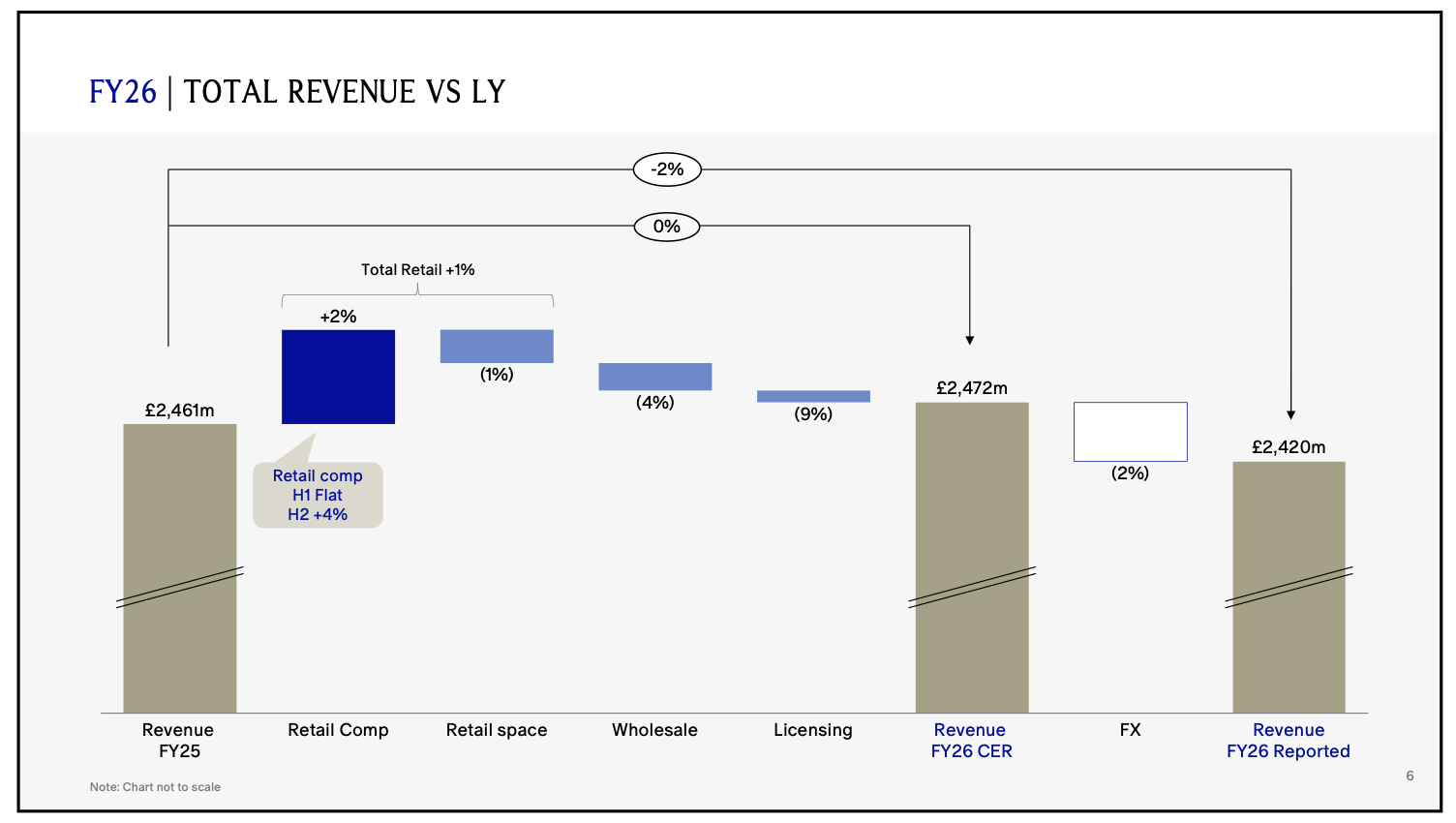
- Revenue declined by 2% year-on-year to £2.42 billion, remaining flat at constant exchange rates, with retail comparable store sales increasing by 2%.
- Adjusted operating profit surged by 528% year-on-year to £160 million, or up 551% at constant exchange rates, marking a significant turnaround from a £3 million loss in the previous fiscal year.
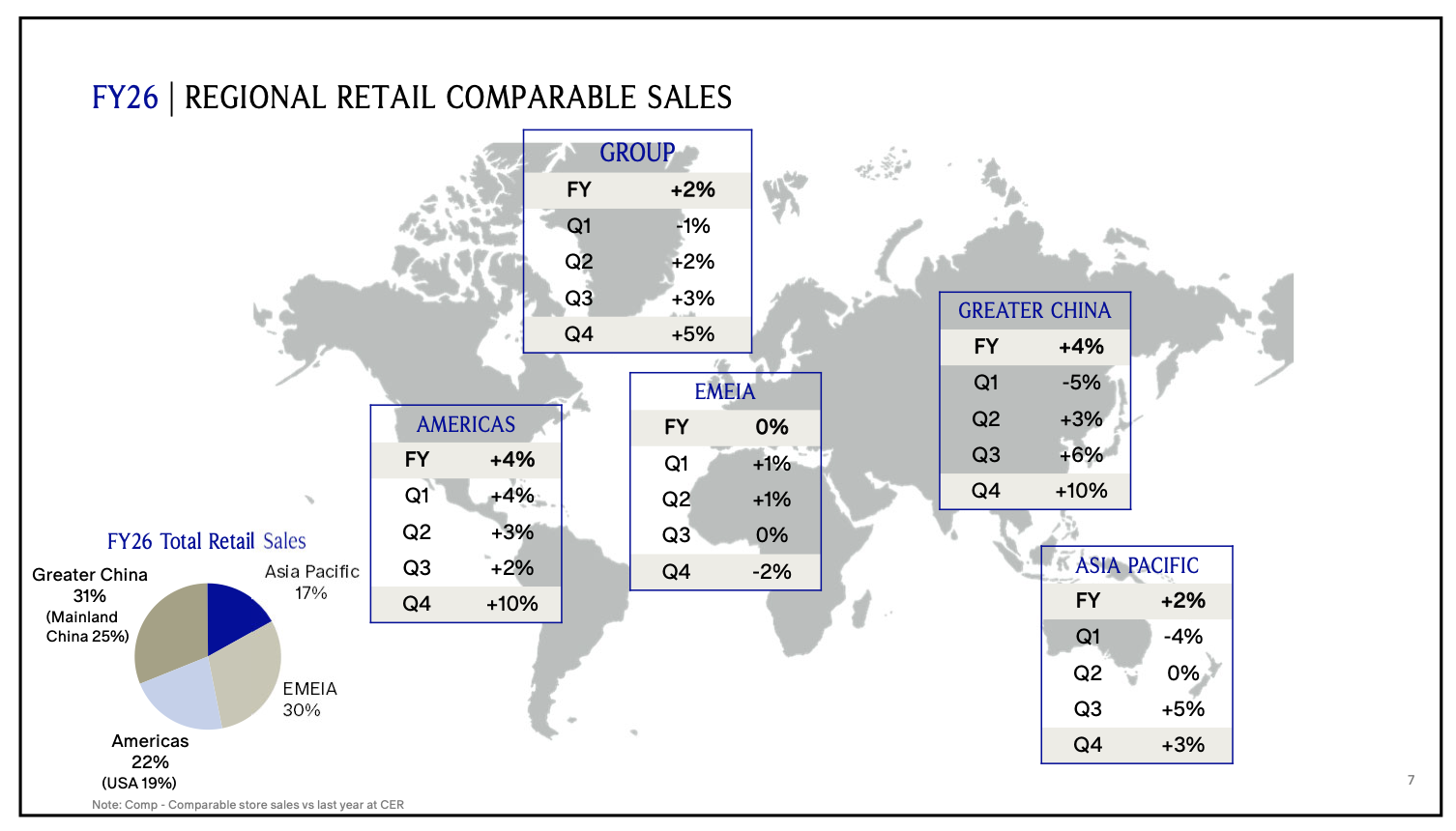
For the full year, sales in Greater China increased by 4%. In the second half, sales rose by 8%, offsetting the decline in the first half, while the fourth quarter saw a 10% increase supported by domestic consumption.
Chief Executive Officer Joshua Schulman stated, “This financial year marks a meaningful inflection point for Burberry. We’ve returned to profitable comparable sales growth, with a strong fourth quarter driven by momentum in Greater China and Americas. Our strategy is working and there are clear opportunities for further growth. As we look ahead, while mindful of the uncertain macroeconomic environment, our focus is on disciplined execution of Burberry Forward. With increased brand relevance and product authority, I am more confident than ever that Burberry is firmly positioned for long-term value creation.”
Overall, revenue met market expectations. However, weaker performance in Europe and the Middle East, affected by the Iran situation, dampened investor optimism regarding the acceleration of its transformation, leading to a decline in the company’s share price.
As of the close on May 14, the stock fell 6.84% from the previous trading day to £10.83, bringing its latest market capitalisation to £3.88 billion. Year-to-date, the share price has declined by 14.65%, while it has increased by 11.93% over the past year.
In fiscal year 2026, Burberry resumed comparable sales growth starting from the second quarter (July–September 2025), with improvements quarter by quarter throughout the year. Greater China and the Americas performed particularly strongly, both achieving double-digit growth in the fourth quarter.
On the product front, the brand continued to reinforce its leadership in outerwear and scarves, with both categories recording double-digit growth in the second half, and the growth momentum extending into other categories.
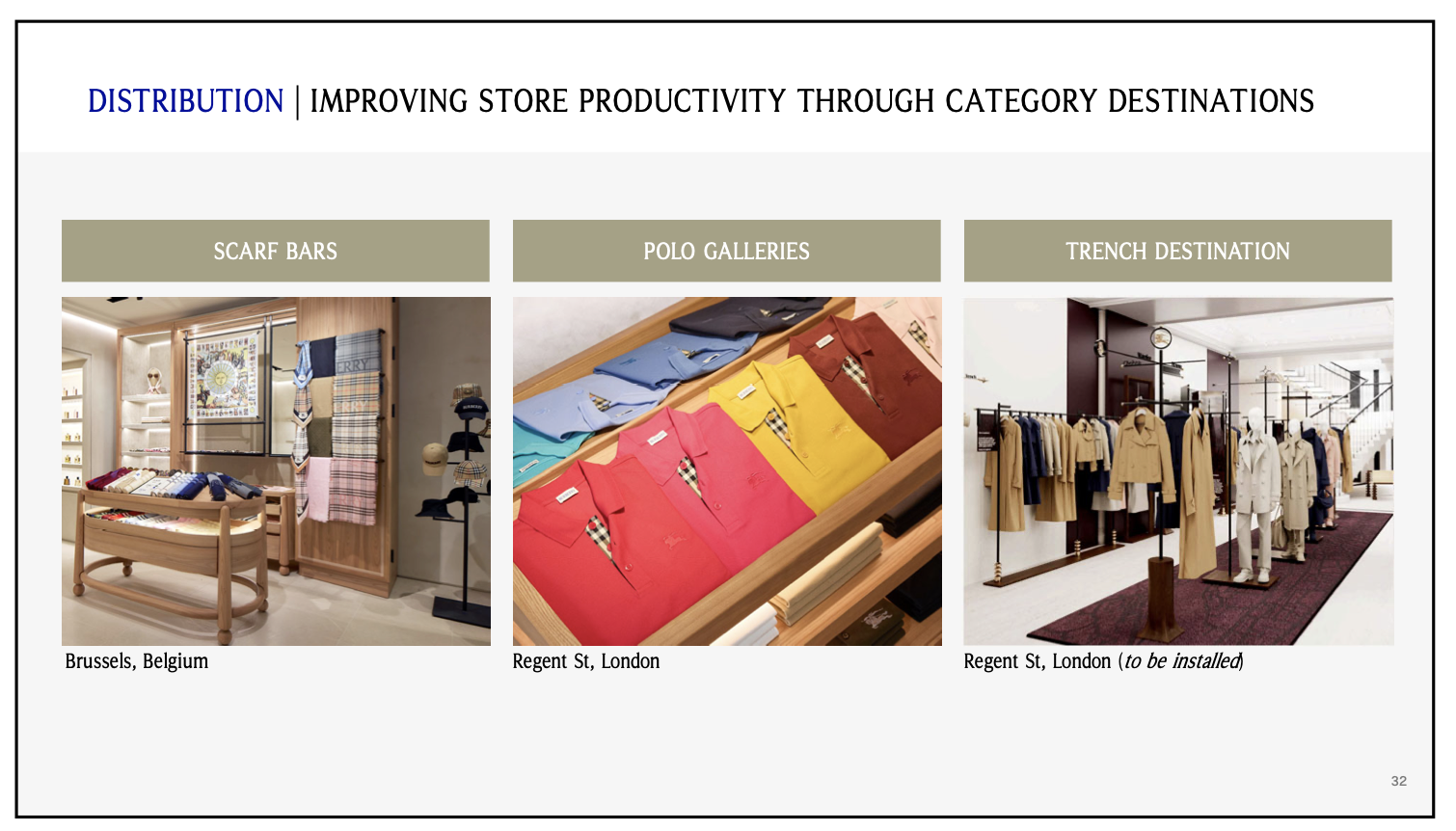
In addition, the brand continued to upgrade its retail experience, driving cross-category merchandising and improving store productivity. During fiscal year 2026, 200 “Scarf Bars” were launched, while dedicated “Polo Galleries” and “Trench Destinations” zones will be rolled out progressively in the current fiscal year.
Global travel demand has been subdued and costs remain high, dampening hopes for a full recovery of the $400 billion global luxury market this year. Profitability across the industry remains under pressure, deepening the cyclical pattern of post-pandemic boom and correction.
Since taking office in July 2024, Joshua Schulman has led the brand’s transformation, focusing on iconic trench coats and scarves. Leveraging Burberry’s 170-year heritage, the strategy aims to attract younger consumers while reversing years of underperformance through cost control.
Joshua Schulman noted that “overall interest in the Burberry brand is rising” and highlighted that the group has established a strong connection with Gen Z consumers.
In the fourth quarter, Burberry launched a series of marketing initiatives targeting Gen Z, driving a 5% year-on-year increase in comparable store sales. Comparable store sales grew by 10% in both the Americas and China, while the EMEIA region (Europe, Middle East, India and Africa) declined by 2%, and the Asia-Pacific region increased by 3%.
Joshua Schulman stated that in both China and the United States, the brand leveraged local festive campaigns to drive engagement and customer acquisition, while continuing to roll out tailored localised initiatives to sustain momentum.
He emphasised that “winning in the Chinese market is critical. It is our largest market, contributing over 30% of retail sales. Over the past year, Greater China has led all regions in new customer acquisition, with Gen Z delivering strong double-digit growth.
We have balanced investment in global tentpole events with localised content creation, refreshing Burberry in a culturally relevant way. Our Lunar New Year campaign launched in December successfully ignited growth momentum.
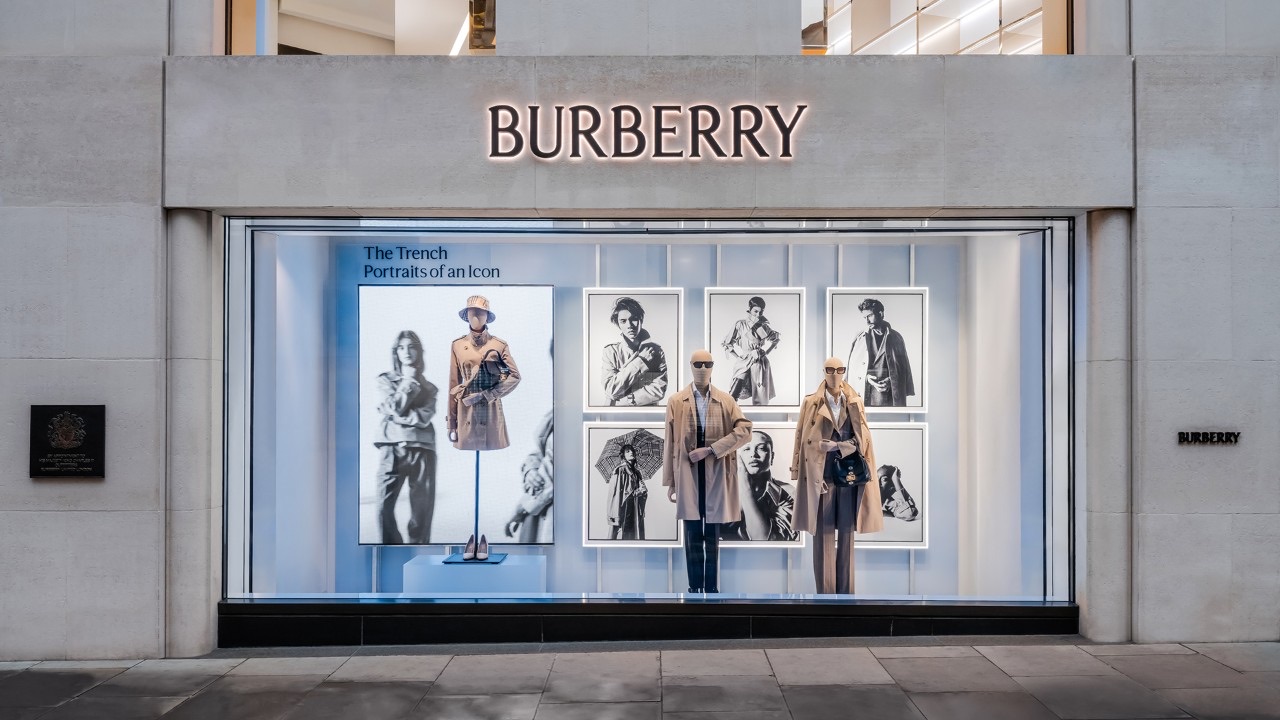
This was followed by the global ‘Portraits of an Icon’ campaign, which featured prominent Chinese celebrities. Together, these initiatives drove a 10% increase in comparable sales in the fourth quarter. Looking ahead, we will further enrich our marketing calendar in China, including the launch of the ‘Burberry Expeditions’ series — a documentary collaboration with China National Geographic, inviting local talents to explore China’s natural landscapes and historical landmarks while wearing seasonal outerwear.
In the second half, we will host a large-scale brand experience event in Shanghai to conclude our 170th anniversary celebrations. We look forward to maintaining our leadership in this critical market.”
In China, outerwear and scarves remain key growth drivers. Joshua Schulman specifically noted that over the past two years, Burberry scarves have become a viral phenomenon on Chinese social media, effectively attracting a new generation of young customers.
He also stated during the investor call that Burberry is optimising its operating system, including refurbishing its trench coat factory in northern England to meet rising demand, while maintaining strict inventory control. The company will also continue to refine its pricing strategy to ensure value for money within a luxury positioning.
In addition, Burberry has appointed William Jackson, founder of Bridgepoint (BPTB.L), as chairman, who will succeed Gerry Murphy within the year.
Full-year performance by region:
- EMEIA: Comparable store sales flat year-on-year
- Americas: Comparable store sales up 4% year-on-year
- Greater China: Comparable store sales up 4% year-on-year
- Asia-Pacific: Comparable store sales up 2% year-on-year
In fiscal year 2026, Burberry adjusted its regional segmentation as follows: Greater China includes the Chinese Mainland, Hong Kong SAR, Macau SAR, and Taiwan region; Asia-Pacific includes the rest of Asia, covering Japan, South Korea, Southeast Asia, Australia, and New Zealand.
Full-year performance by channel:
- Retail: Revenue declined by 1% year-on-year to £2.056 billion, up 1% at constant exchange rates
- Wholesale: Revenue declined by 5% year-on-year to £303 million, down 4% at constant exchange rates; the second half saw a 3% increase at constant exchange rates, demonstrating core wholesale partners’ confidence in the group’s strategy
- Licensing: Revenue declined by 7% year-on-year to £61 million, down 9% at constant exchange rates, in line with expectations, mainly due to inventory clearance of legacy fragrances in the first half and the longer adjustment cycle required for licensees to implement the Burberry Forward strategy
Dan Coatsworth, investment director at AJ Bell, stated that “weak performance in the Middle East and Europe has concerned investors,” but added that the group’s overall transformation plan is beginning to show results.
Investor views remain divided on the sustainability of Burberry’s transformation and whether short-term improvements can translate into long-term growth. Rising energy prices have also dampened middle-class consumption appetite for apparel and leather goods.
Burberry’s Chief Financial Officer Kate Ferry echoed sentiments shared by other luxury executives, acknowledging pressure on in-store footfall but expressing satisfaction with in-store conversion performance. The company aims to return to an annual revenue scale of £3 billion or above.
Looking ahead to fiscal year 2027, Burberry expects to further advance its financial targets, achieving revenue growth and margin expansion, while closely monitoring geopolitical and macroeconomic uncertainties and their potential impact on consumer confidence.
|Source: official financial report, analyst call transcripts, Reuters
|Image Credit: brand official website, official financial report
|Editor: Luxeplace