McKinsey pointed out in its 2025 beauty industry report, “How Beauty Industry Players Can Scale Gen AI in 2025,” that generative AI (Gen AI) is expected to contribute between USD 900 million and 1 billion to the global beauty and fragrance industry.
Zooming in on the fragrance sector, 2025 is shaping up to be the “Year One of AI,” with related technological innovations deeply permeating every stage of the fragrance industry chain. This Luxeplace article explores how AI is accelerating transformation across three dimensions: product development, marketing insights, and customer experience.
Product Development: From Experience-Driven to Data Science
On the R&D front, AI is shortening time-to-market for new products and assisting perfumers in exploring olfactory territories beyond the limits of human imagination.
In October of this year, The Estée Lauder Companies opened its global innovation center in Paris — La Maison des Parfums. According to Franck Besnard, Senior Vice President of the Group, the center adopts a new R&D workflow in which AI monitors global trends, simulates consumer emotional preferences, and significantly accelerates regulatory approval for new products.
In this case, AI is not intended to replace perfumers or impose rules; rather, by combining chemical analysis, neuroscience, and sensorial modeling, it helps perfumers break conventional logic to predict and design formulas that better evoke emotional resonance. The final decisions always remain in the hands of the perfumers.

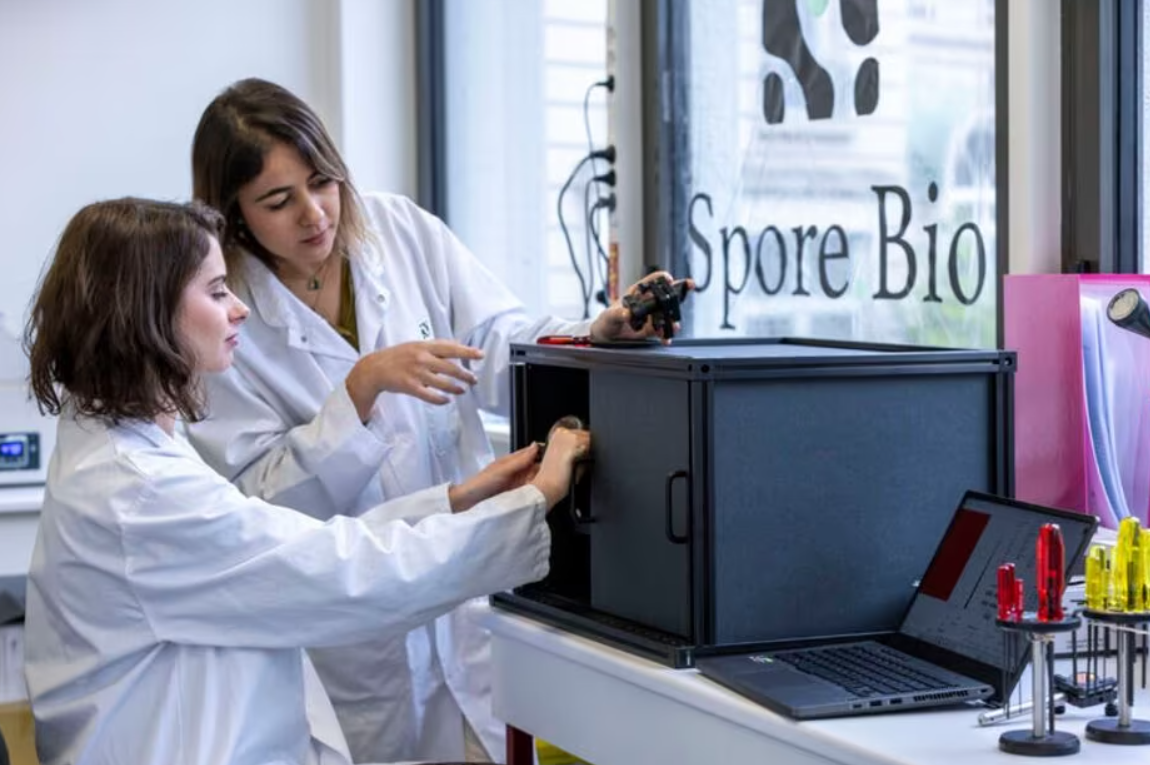
Startup company Osmo, founded in 2023, takes it a step further with the launch of the world’s first AI-powered intelligent fragrance brand — Generation.
Its core technology is an “Olfactory Intelligence (OI)” model capable of interpreting text or images and mapping them to scent characteristics to directly generate fragrance formulas. With perfumers’ guidance, the system integrates proprietary ingredients, advanced formulation tools, and real-time market intelligence to create samples on the spot, significantly enhancing precision and efficiency in development.
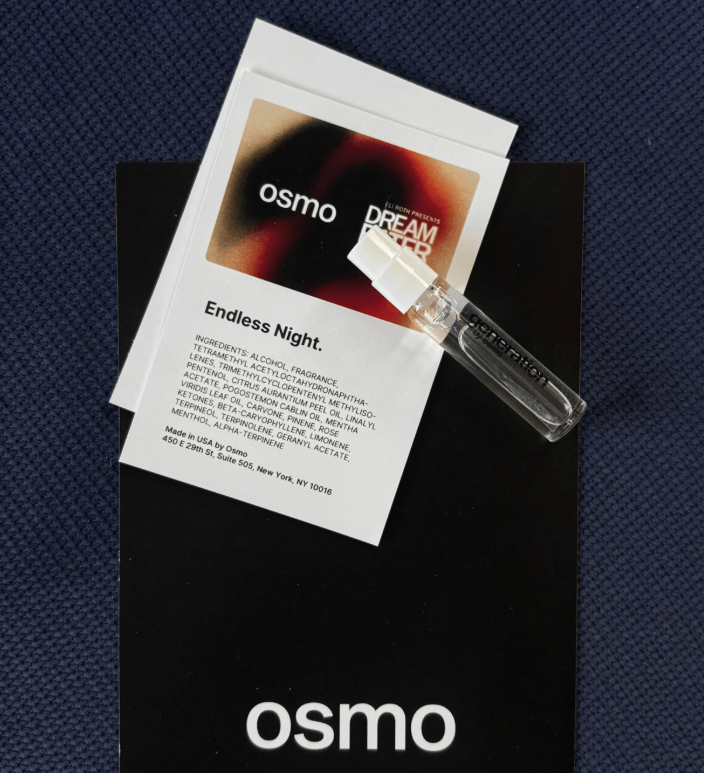
On the raw materials end, French microbiological testing startup Spore.Bio, backed by the Clarins family office Famille C Participations, has substantially reduced the risk of losses in the fragrance and cosmetics industry caused by bacterial contamination. Traditional microbial detection relies on petri dishes and takes 5 to 14 days; Spore.Bio leverages AI and machine learning to analyze bacterial spectral characteristics, enabling real-time detection and rapid alerts.
Marketing Insights: Precise Decision-Making and Scalable Creativity
For brands, AI adds value by accelerating decision-making and transforming massive, fragmented data into actionable strategies.
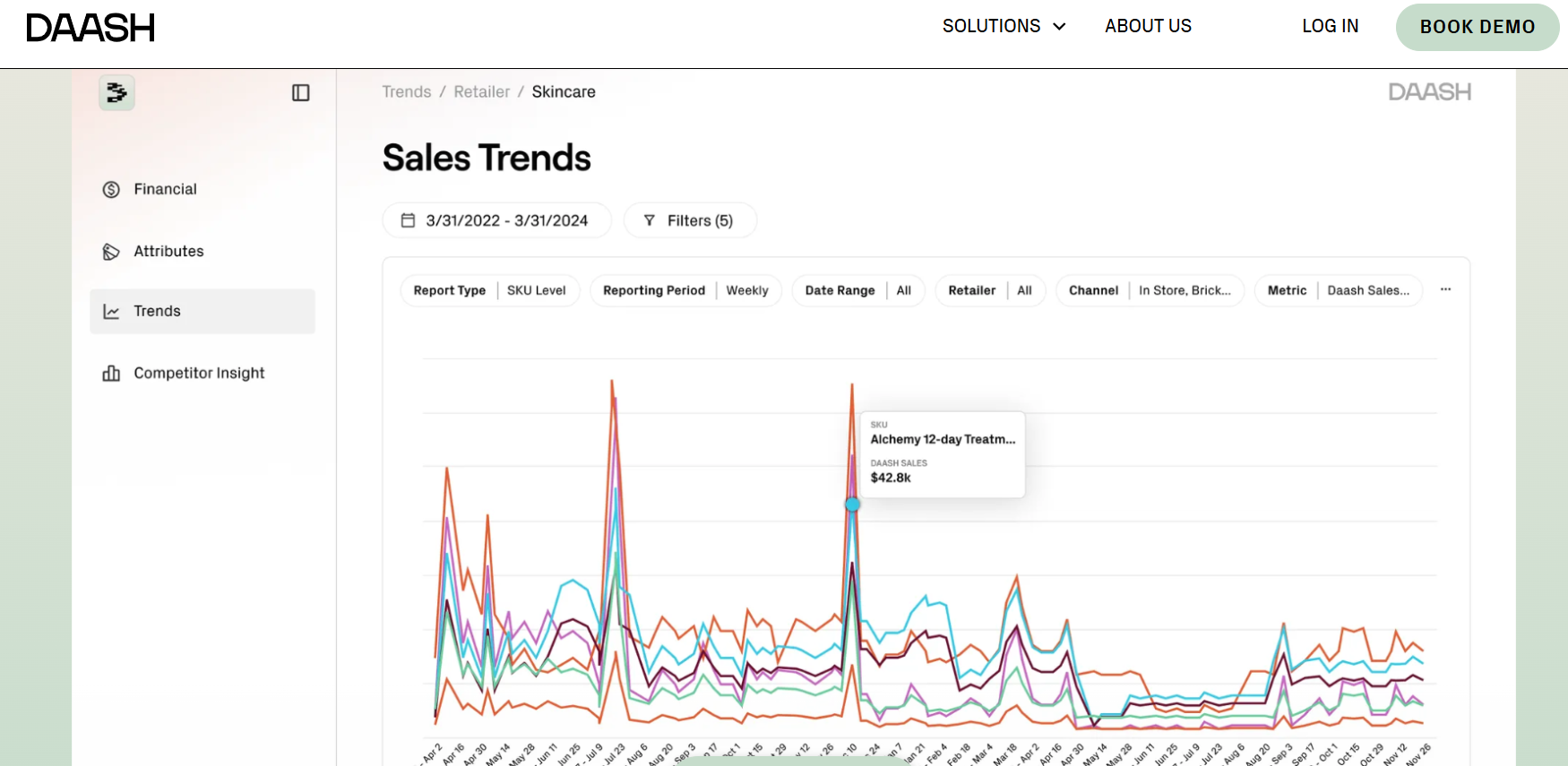
Daash Intelligence, an AI-powered business forecasting platform that monitors competitive dynamics in real time, updates retailer data weekly, and uses proprietary algorithms to estimate sales and market share. This resolves the longstanding challenge brands face in understanding “why market share rose or fell,” helping them pinpoint untapped niche markets weekly and dramatically shorten decision-making cycles.
The Estée Lauder Companies has partnered with Microsoft to implement ConsumerIQ, a data intelligence platform under Copilot Studio. This platform functions as a dynamic intelligence hub, enabling employees to obtain high-quality industry insights through natural language queries, aligning decades of internal expertise with today’s fast-changing market trends in real time.
In content creation, L’Oréal Group has teamed up with NVIDIA to build CREAITECH, a generative AI content platform that leverages NVIDIA AI technology for 3D digital rendering of products. This type of generative AI content platform enables faster and more cost-effective creation of marketing materials for social media and e-commerce, supporting global-scale marketing campaigns.

Customer Experience: Personalized Recommendations and Scent Visualization
Given the “invisible and unsmellable” nature of fragrances, brands are using AI to bridge sensory gaps in online shopping and to offer customized services.
As early as 2022, L’Oréal’s tech incubator and YSL Beauté partnered with neuroscience company Emotiv to create a fragrance experience device. Using a multi-sensor EEG headset, the system connects neural responses to fragrance preferences. The headset interprets EEG data via machine learning algorithms while consumers experience proprietary scent collections, helping them identify the perfume that best suits their emotional state.
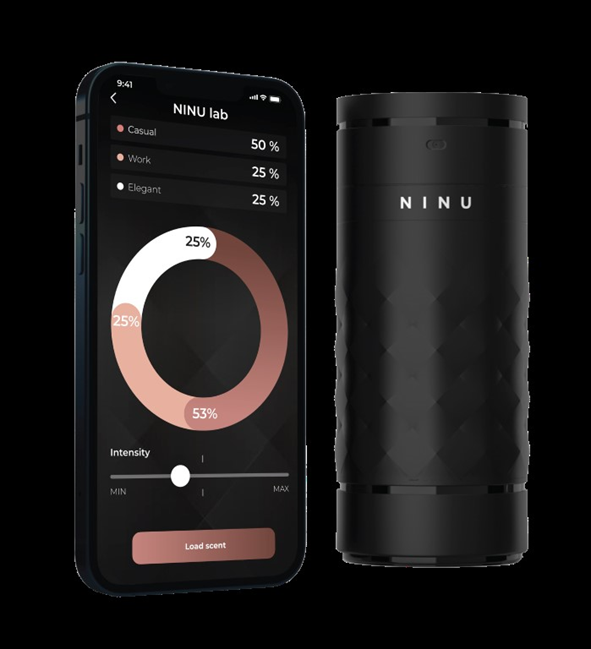
With the aid of AI, advanced fragrance personalization has evolved from simple recommendations to full customization. AI fragrance tech company Ninu launched a smart perfume bottle that connects with a mobile app, allowing users to create their own fragrances. The bottle contains multiple scent chambers, and users can tap their phone to adjust the ratio of components in real time. AI provides blending suggestions based on weather, mood, or occasion.
International fragrance and flavor giant Givaudan has recently focused on enabling consumers to experience fragrances beyond traditional scent trials through multisensory immersion, including visual, tactile, and auditory experiences. In 2023, it launched Myrissi™, a method of translating scent into visual patterns and colors. The technology originated from the French AI company Myrissi, acquired in 2021. Myrissi’s patented AI technology converts scents into chromatographic visuals and imagery linked to consumer associations, helping predict emotional responses. It is the first company to develop an Intelligent Sensory Translator specifically designed for fragrance, beauty care, and home care product development.
British niche fragrance brand Jo Malone London recently launched its Scent Advisor on its US and UK websites. Powered by Google Cloud AI, the assistant allows users to input descriptive keywords like “winter” or “warm,” which the AI translates into olfactory attributes to match and recommend the most suitable fragrances from the brand’s database.
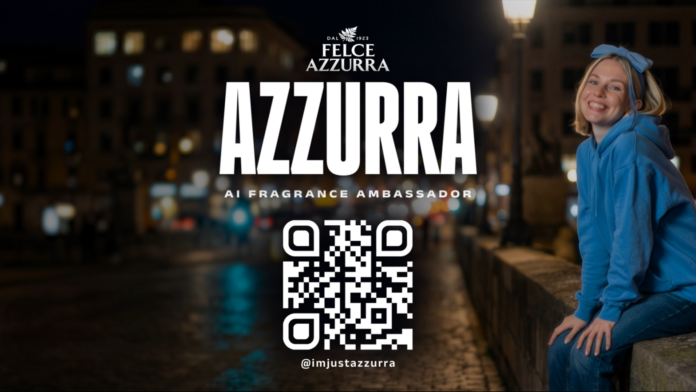
Similarly, Italian personal care group Paglieri created an AI-powered fragrance ambassador for its heritage perfume brand Felce Azzurra. This digital ambassador uses empathetic interaction and “olfactory mindfulness” to help users identify their emotional states and recommend corresponding perfumes.
AI applications in the beauty and fragrance industry are still in their early stages. What may seem novel and niche today could soon become standard — or be replaced entirely. The boundaries of what is possible continue to expand, and Luxeplace will continue to provide the latest insights into these emerging trends.
| Image Credit: Official websites of the respective brands
| Editor: LeZhi