Incense sticks, once confined to traditional ritual use and the refined pursuits of literati culture, are now undergoing a profound phase of commercial transformation and premiumisation.
As China’s olfactory consumption market continues to expand and mature, the rise of incense sticks reflects strong demand among domestic consumers for contemporary reinterpretations of traditional culture. Within a home fragrance sector historically dominated by Western concepts, incense sticks are carving out a distinctive new niche.
Luxeplace has observed that from domestic high-end fragrance brands deeply exploring the cultural heritage of Eastern incense traditions, to international professional fragrance houses accelerating localisation strategies, and even avant-garde fashion designers experimenting across disciplines, brands with diverse DNA and commercial approaches are all participating in this process of reinvention. Incense sticks are thus evolving into an important medium for daily rituals and emotional healing in modern urban life.
Domestic Fragrance Brands Delve Deeply Into Traditional Culture and Eastern Aesthetics
Chinese incense culture can be traced back to the pre-Qin period, when early forms primarily included loose incense, incense powder, and incense pellets. During the Song and Yuan dynasties, the prototype of incense sticks emerged, as artisans improved production techniques by mixing incense powder with natural binding agents, shaping and drying the sticks to reduce the impact of wind on open flames. By the Ming and Qing dynasties, alongside the industrial clustering of “incense capitals” such as Yongchun in Fujian, and the systematic documentation of formulas and rituals in incense treatises such as Xiang Cheng, the craftsmanship of incense sticks reached maturity.
Building on this deep cultural heritage, domestic fragrance brands have become the core driving force behind the revival of the incense stick category in recent years. By integrating traditional incense culture with contemporary commercial spaces, they have successfully brought incense sticks into the mainstream high-end spotlight.
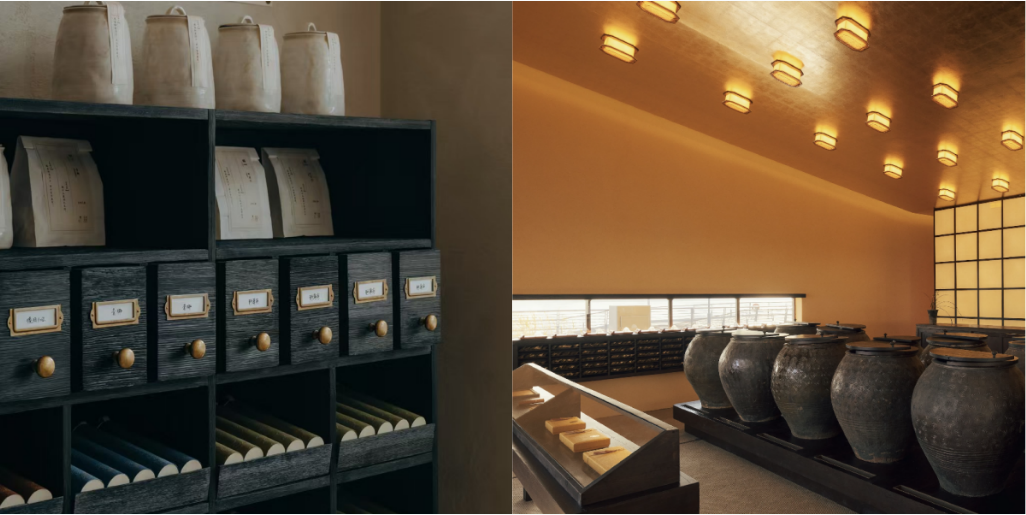
Chinese Zen-cool high-end fragrance brand Documents has adopted a sub-brand matrix strategy for deeper expansion, launching a new independent brand, “Gui Bao Xiang Ju”, focused on Chinese incense culture. At the end of April 2026, the brand opened its first exhibition space in South China at Shenzhen MixC World. Its signature concepts of “ancient Tibetan incense methods” and “natural ageing” trace their technical origins to the matured cellar-ageing techniques of incense sticks from southern Fujian regions such as Yongchun and Quanzhou during the Ming and Qing dynasties. Through an immersive cellar-style display, the brand breaks away from the traditionally solemn image of incense sticks, introducing a more relaxed and contemporary naming and visual system suited to urban lifestyles.
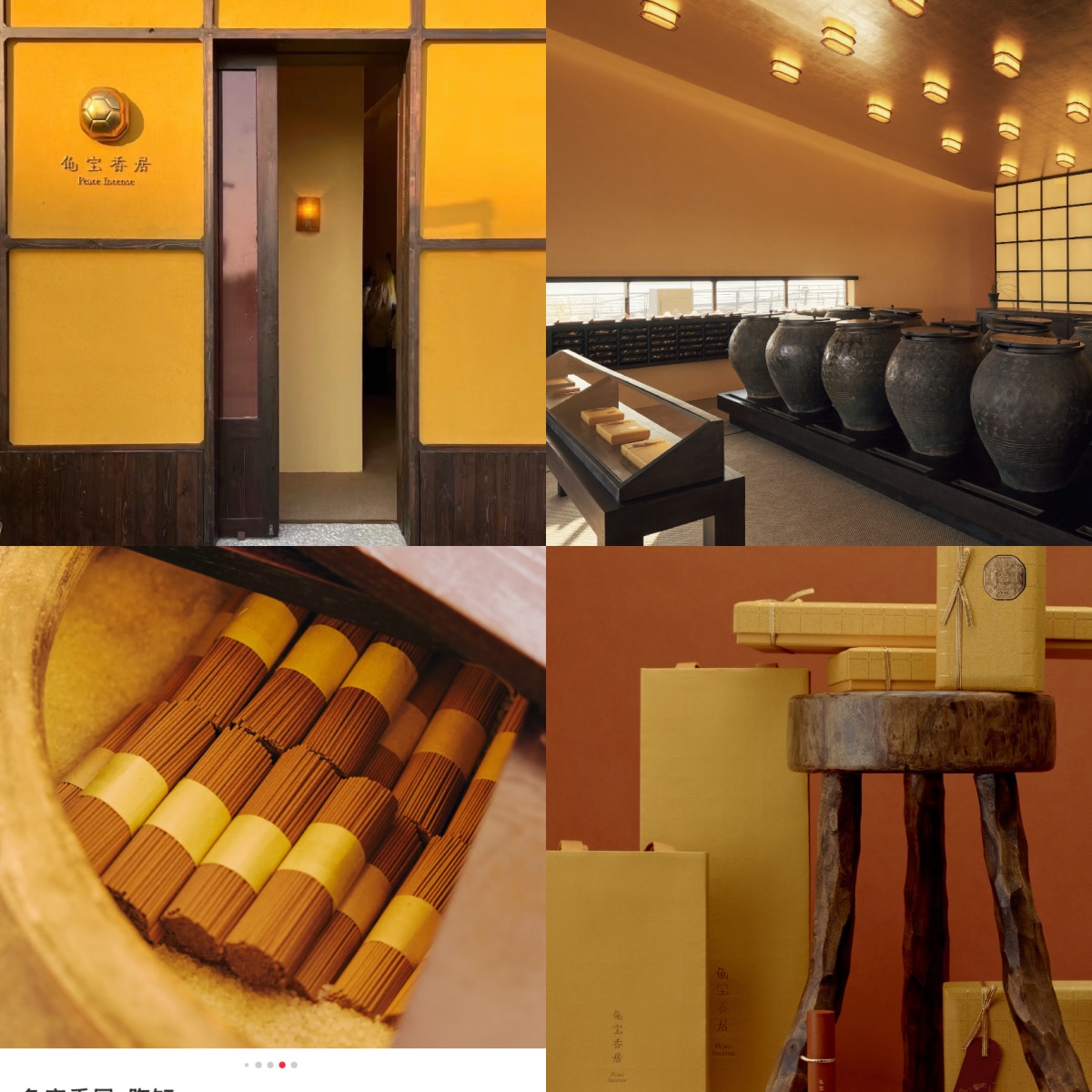
Representative Chinese oriental fragrance brand To Summer officially unveiled its newly developed standalone “incense stick” category space in late May — the first “To Summer Incense House“, located at No. 42 Guozijian Street in Dongcheng District, Beijing. Upholding the deep-rooted Eastern philosophy of “shared origins of incense and medicine”, the space uses natural aromatic materials and follows traditional incense-making methods, elevating incense sticks from a marginal product category to a strategic standalone category. A highlight of the store is the “Hundred Herbs Cabinet”, inspired by traditional Chinese medicine dispensaries, displaying various natural herbal fragrance materials. The scent-selection baskets are specially crafted from vintage rattan, offering an immersive experience that reflects the brand’s interpretation of Chinese incense culture.
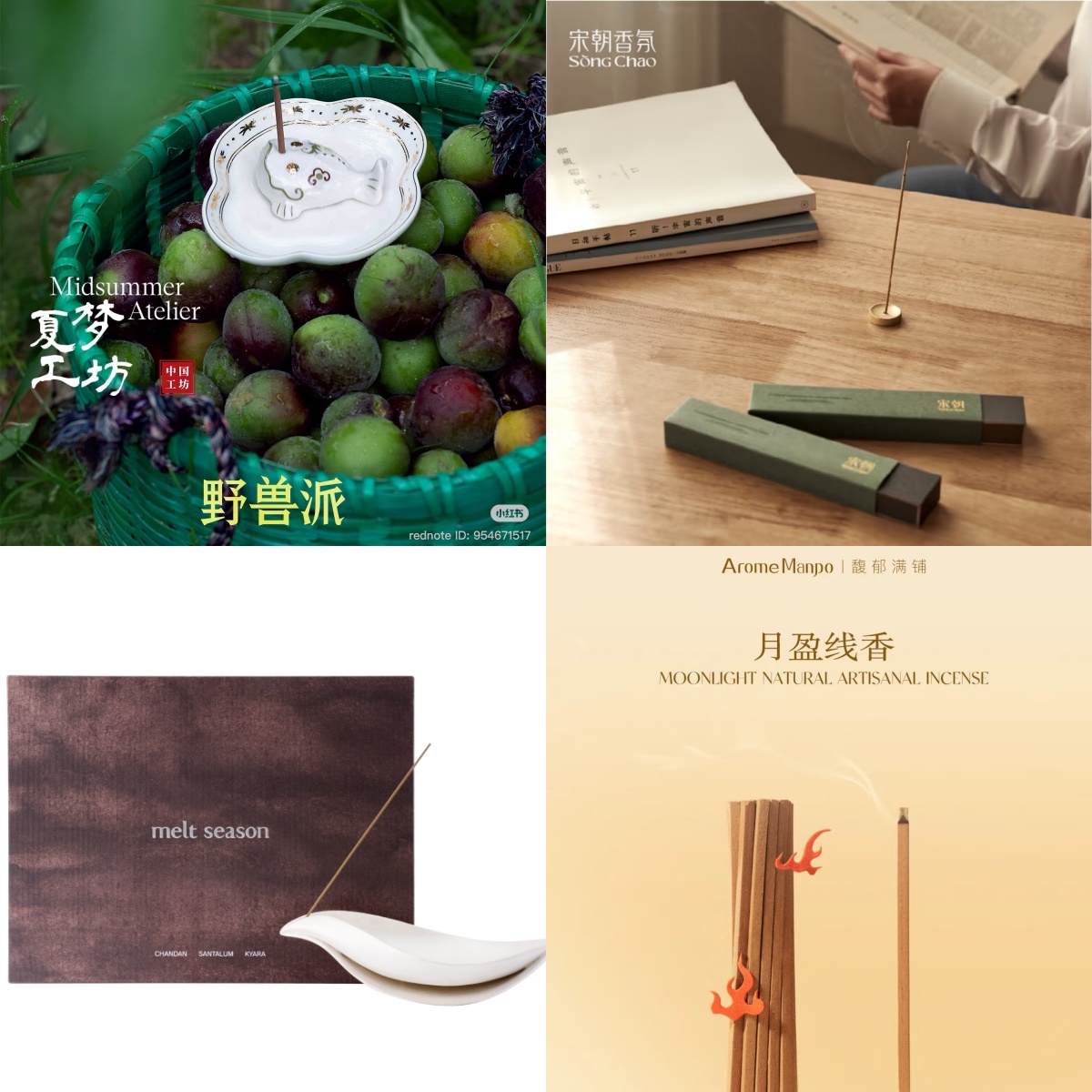
In terms of product innovation, Chinese lifestyle brand Beast has introduced a notable example. The brand incorporated a national intangible cultural heritage technique — Su-style preserved fruit craftsmanship — by combining the traditional plum paste process with incense stick production, launching “Plum Paste Incense Sticks” and opening up a new sensory dimension for incense.
Other Chinese domestic fragrance brands that have introduced incense stick categories include melt season, Song Dynasty Fragrance, and Fuyu Manpu.
International Brands Accelerate Entry Into China’s Incense Stick Market
The growth potential of China’s incense stick market has attracted a wave of global professional fragrance and lifestyle brands. Since 2025, overseas brands have significantly increased their presence in this segment, introducing incense sticks with distinctive exotic characteristics into the Chinese market.
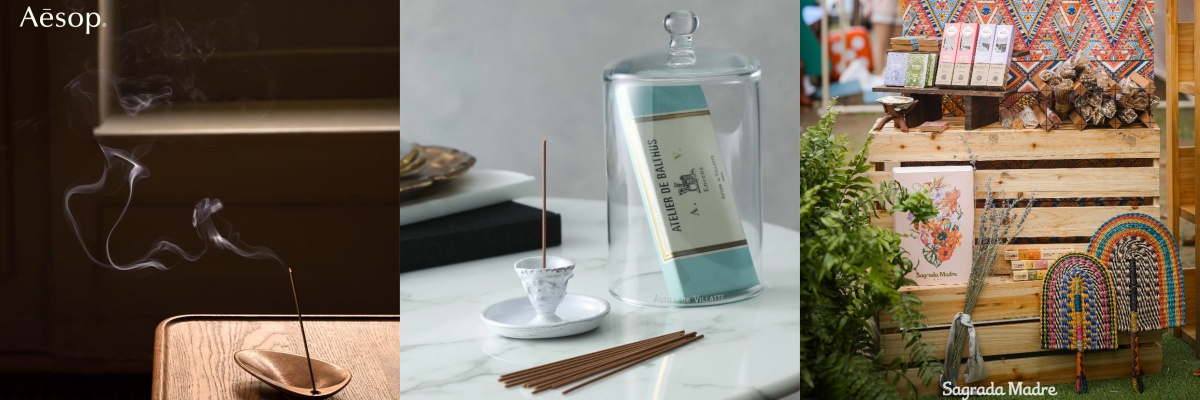
In the specialised incense segment, Argentine vegan fragrance brand Sagrada Madre, known for its unique incense craftsmanship, has rapidly expanded its offline retail network and distribution channels across China since 2025, driven by its plant-based, eco-friendly philosophy and distinctive South American aromatic materials. According to Luxeplace estimates, the brand has entered high-end commercial complexes in multiple cities including Beijing, Shanghai, Qingdao, Wuhan, Ningbo, Wuxi, Changchun, Hefei, Chengdu, Nanjing, Hangzhou, Harbin, and Shenzhen.
In the luxury lifestyle segment, French home fragrance and ceramics brand Astier de Villatte has opened its first China flagship store in Shanghai’s Fuxing West Lane, located on the ground floor of the first MAISON UMA WANG space curated by designer Uma Wang. The store introduces its globally inspired incense stick collections alongside handcrafted white ceramic incense holders, targeting high-end lifestyle collectors.
Meanwhile, some well-known skincare brands are also seizing this opportunity. Australian premium skincare brand Aesop has extended its signature botanical philosophy and home aesthetics into the solid incense category through the launch of a dedicated incense stick range.
In addition, niche overseas brands such as Spain’s century-old fragrance house Cereria Mollá 1899 and Swedish artistic fragrance brand LYDEEN are actively leveraging social media to build consumer awareness of incense aesthetics in China’s highly competitive home fragrance market.
Incense Sticks Emerge as a New Hotspot for Cross-Industry Collaborations in Fashion and Lifestyle
Notably, the boundaries of the incense stick category are being rapidly expanded by fashion designers and cross-disciplinary artists. Incense sticks are no longer merely a vessel for scent, but are becoming a cutting-edge medium for broader visual and aesthetic expression.
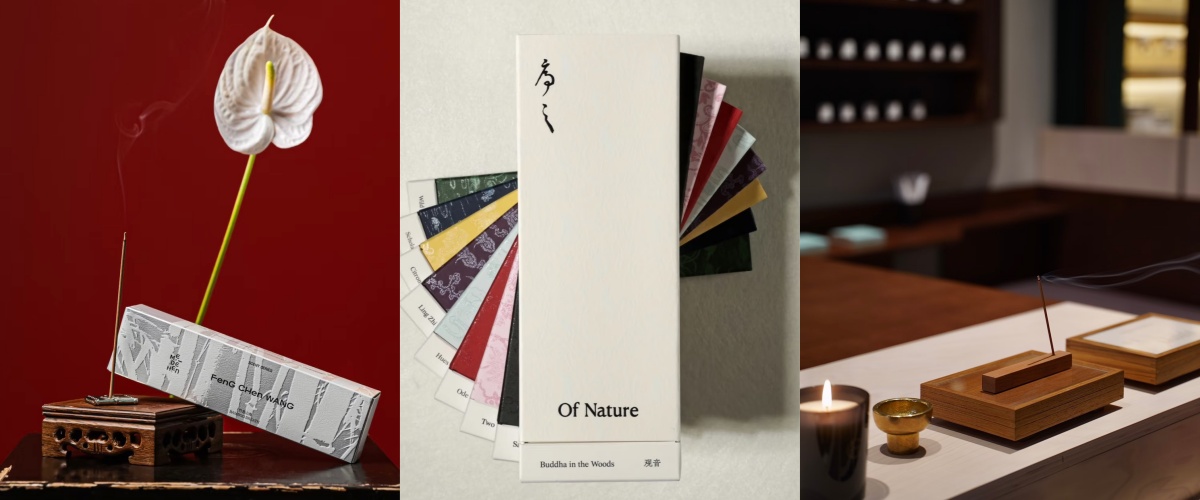
Chinese fashion designer brand Feng Chen Wang launched its first incense stick product, “Bamboo Breath Mountains and Seas”, at the end of 2025 as part of its lifestyle expansion, integrating the brand’s signature structuralism and natural landscape narratives into a single stream of rising smoke.
Chinese designer brand XU ZHI went further by launching its own fragrance brand “Of Nature“, debuting nine scented candles alongside nine incense stick fragrances of the same names. Its incense sticks draw on ancient formulas while innovatively using high-temperature monochrome glazed porcelain burners from Jingdezhen as carriers, creating a cross-disciplinary dialogue between traditional craftsmanship and avant-garde fashion design.
During the opening of its Shanghai flagship store, British high-end niche fragrance brand Perfumer H collaborated with Chinese wood artisan Haidi to create a portable incense holder box using traditional mortise-and-tenon joinery techniques.
Global Home Fragrance Market Expands, With Solid Burning Incense Showing Strong Growth
According to a 2024 consumer study by global fragrance and flavour company DSM-Firmenich on China’s home fragrance market, 63% of consumers already use home fragrance products in their daily lives. The average number of products owned across three mainstream categories — air fresheners, reed diffusers, and scented candles — stands at 3.1, 4.0, and 4.5 respectively. High-frequency, low-barrier usage scenarios are accelerating the shift of home fragrance toward daily and multi-scenario consumption.
Within this broader growth trend, incense sticks, as a distinctive subcategory, are demonstrating strong market dynamism. A recent report by Fortune Business Insights confirms a structural shift in global and Chinese olfactory consumption. While traditional scented candles and reed diffusers will continue to hold significant market share between 2025 and 2026, solid burning incense — represented by incense sticks — is growing at a notably faster rate, driven by its unique stress-relief properties and spatial scent diffusion performance.
From a consumer perspective, the middle class and the vast Gen Z population are becoming the core driving force. Compared with Western preferences for floral and fruity notes, Chinese consumers show a stronger inclination toward woody, oriental spicy, and herbal fragrances, providing a solid psychological foundation for incense sticks based on agarwood, sandalwood, and medicinal herbs.
In terms of usage scenarios, incense sticks have completely broken away from their traditional association with religious rituals. They are now widely used in everyday settings such as reading, yoga, mindfulness, and wellness practices, while also driving strong sales of related accessories such as incense burners and holders.
Future Outlook for Incense Sticks in China
Looking ahead, Luxeplace believes:
The consumption scenarios for incense sticks are becoming fully integrated into daily life. In the past, incense consumption was often limited to specific social groups or ritual contexts. Today, from enhancing focus during home working, to stress relief before sleep, to creating ambiance when hosting guests, incense sticks have fully moved beyond the confines of altars and tea rooms, becoming an essential tool for emotional regulation in modern urban living.
The strategic importance of offline physical spaces is rising significantly. Given the highly subjective and experiential nature of fragrance, brands are moving away from traditional counter models and investing heavily in standalone stores or pop-up spaces with strong spatial storytelling. Whether it is To Summer’s incense house set within a historic courtyard on Guozijian Street, creating an immersive Eastern sensory environment, or Documents’ cellar-inspired experiential display at MixC World, physical spaces are becoming key carriers of brand identity and enabling higher price premiums.
The convergence of “object aesthetics” and intangible cultural heritage is elevating both price points and emotional value. Recent examples show that competition in the incense stick category has already moved beyond perfumery itself. From Jingdezhen high-temperature monochrome glazed ceramic burners, to traditional cellar-ageing techniques, the philosophy of “shared origins of incense and medicine”, and crossovers with Su-style preserved fruit craftsmanship, brands are transforming each stick of incense into a collectible “contemporary artwork” imbued with cultural and emotional significance — and potentially shaping the future direction of premiumisation in China’s high-end fragrance market.
| Image Credit: official brand websites, WeChat accounts, Xiaohongshu
| Editor: Luxeplace