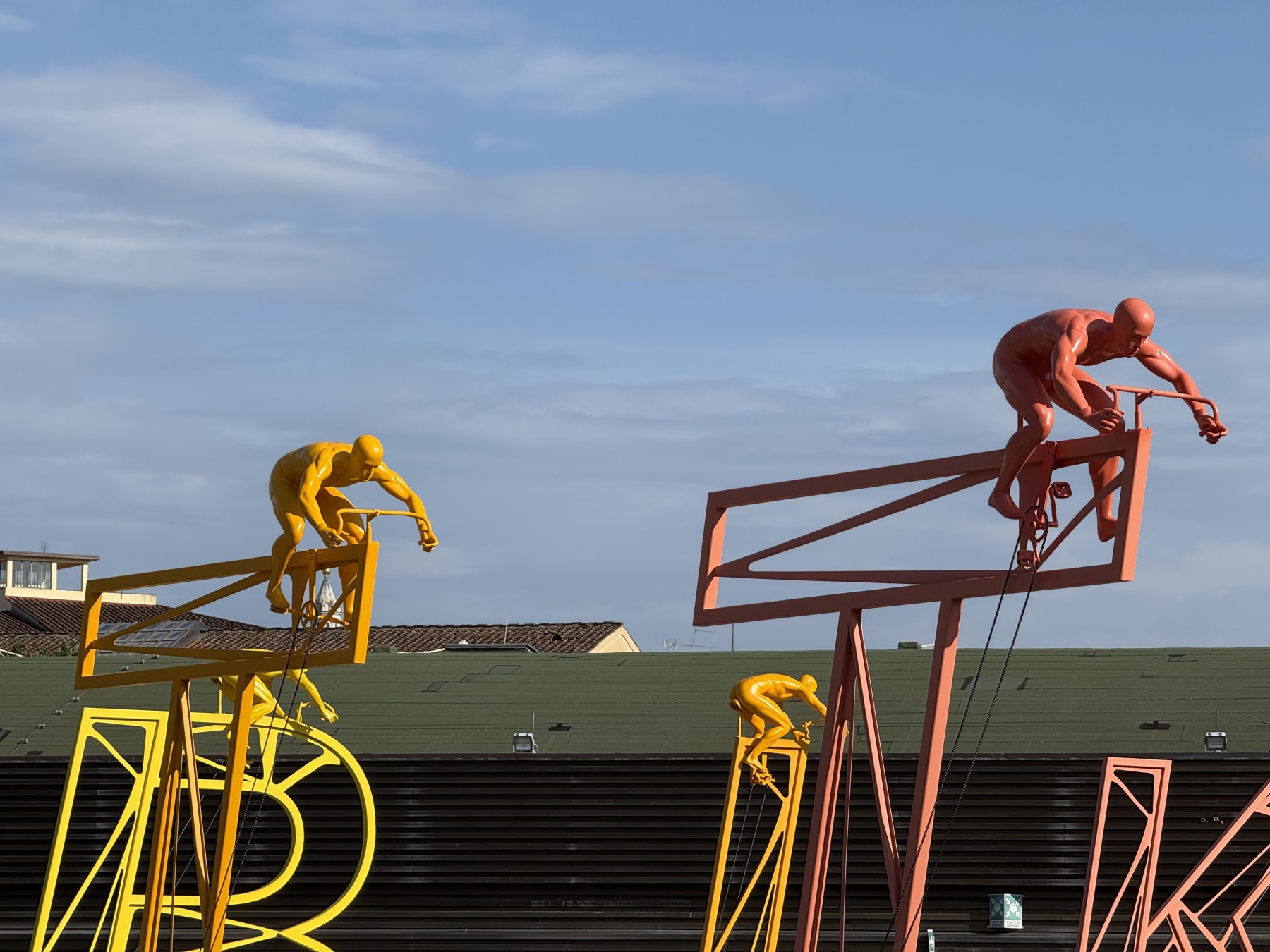
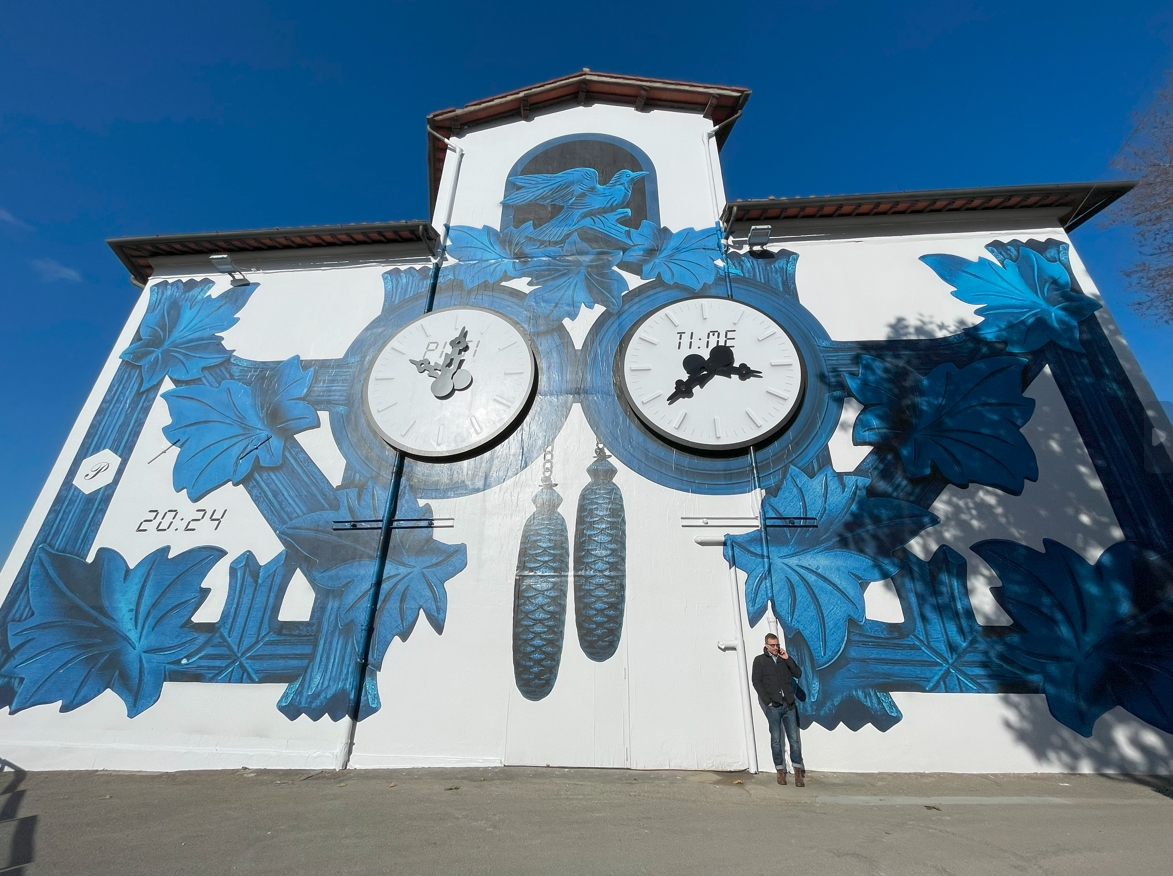
The 110th edition of Pitti Immagine Uomo took place as scheduled at the Fortezza da Basso in Florence, from June 16 to 19, 2026. Luxe.CO once again went deep into the fair to investigate the latest trends and brand dynamics in the global menswear industry.
This edition brought together 740 exhibitors from over 30 countries, with overseas brands accounting for approximately 45%. Total buyer attendance reached 11,000, while more than 14,000 visitors attended the event. Over 5,200 high-end distribution and retail professionals arrived from abroad, representing more than 90 countries and regions, with Germany, the UK, the US, Japan, and China leading the pack.
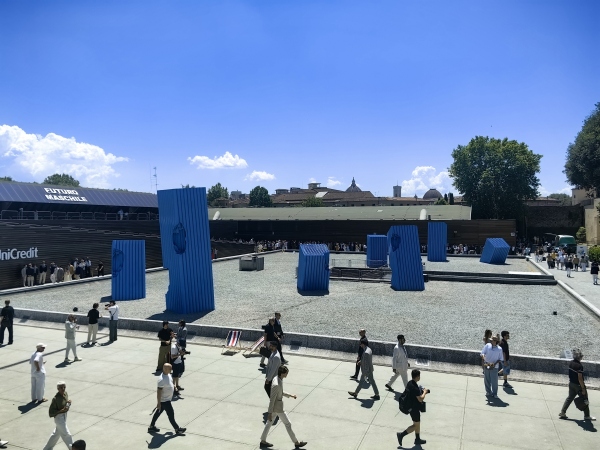
(Image: An art installation co-created by artists Philéo Landowski and Pascal Hachem, interpreting this edition’s theme “The Pool” — Photo by Luxe.CO)
When viewed against the backdrop of a global menswear industry under pressure, these figures take on a different significance. According to a report released by Confindustria Moda, Italian menswear industry recorded sales of 11.2 billion euros in 2025, a 2.2% year-over-year decline. However, as an indicator for the development of the global mid-to-high-end menswear industry, Pitti Uomo has managed to maintain its appeal.
“We have history, tradition, and expertise behind us, but we also have the tools to face the new challenges ahead, challenges that concern the entire fashion sector – elements that have allowed us, at every decisive moment, to redefine the very concept of a trade fair, transforming Pitti Uomo into not only a commercial event, but also a cultural promoter, a place for dialogue capable of generating new ideas, trends, and connections,” said Antonio De Matteis, President of Pitti Immagine.
Ivano Cauli, the newly appointed CEO of Pitti Immagine, compared Pitti Uomo to “the most vital compass for welcoming and guiding the dialogue between supply and demand.”
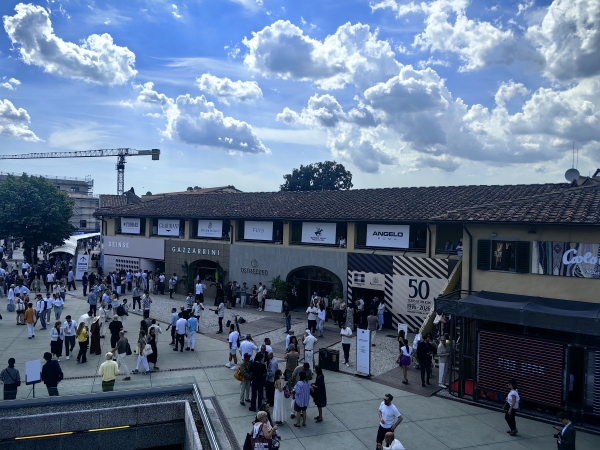
(Image: Interior view of the fair at Fortezza da Basso — Photo by Luxe.CO)
Six Sections Covering Hot Themes in the Menswear Industry
The fair was structured around six core areas:
- Fantastic Classic
This is the section where the most representative companies of formal menswear are concentrated, for an elegant wardrobe in constant evolution.
- Futuro Maschile
This is the laboratory of contemporary research menswear. Here, styles coexist and blend together, mixing tailoring, innovative fabrics, and luxury details.
- Dynamic Attitude
This is the section that brings to the stage sport and streetwear collections within which brands propose innovative outfits and vintage references.
- Superstyling
This is the section that looks beyond, anticipating trends through unconventional aesthetic choices: new silhouettes and genderless cuts.
- I Go Out (Upgraded to OUTOPIA)
This is the section that comprehensively illustrates the stylistic potential of progressive outdoor wear, bridging fashion and lifestyle. For this edition, it is enriched by the special collaboration with Vanish Magazine.
- Hi Beauty
This is an exclusive space dedicated to avant-garde fragrances.
In addition, the fair featured country- and region-specific sections such as J∞Quality (manufacturing excellence Made in Japan), PROMAS (the creativity and dynamism of French menswear), and CODE KOREA(focusing on Korean design).
Notably, the CHINA WAVE (New Frontier of Chinese Menswear) project, a collaboration between Pitti Uomo and the China National Garment Association (CNGA), celebrated its fifth edition. Six Chinese brands collectively exhibited in the Costruzioni Lorenesi space:
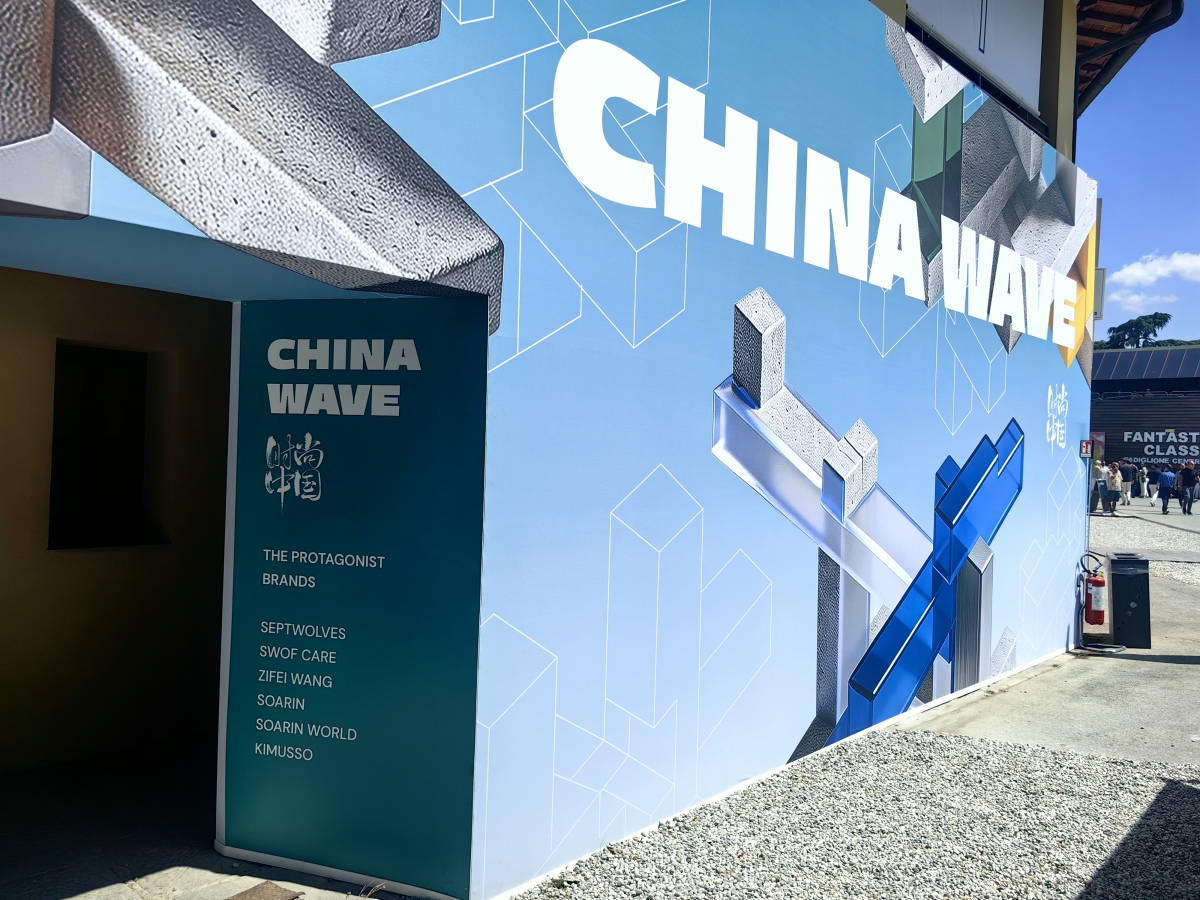
(Image: Exterior view of the CHINA WAVE section — Photo by Luxe.CO)
- SEPTWOLVES participated in Pitti Uomo with its business travel jacket collection and new 2026 products, marking its second appearance at Pitti Uomo in half a year.
- ZIFEI WANG, founded in 2014, blends Eastern aesthetics with genderless design and has also been selected for the official Milan Fashion Week schedule in September 2026.
- SWOF CARE, a fashion hat brand, interprets the aesthetic of headwear craftsmanship through intricate workmanship.
- SOARIN, founded in 2015, reinterprets vintage through a trendy lens; its pioneering Chinese-style brand, SOARIN WORLD, redefines vintage and traditional Chinese culture from a contemporary perspective.
- KIMUSSO entered the avant-garde womenswear market with a sustainable design philosophy.
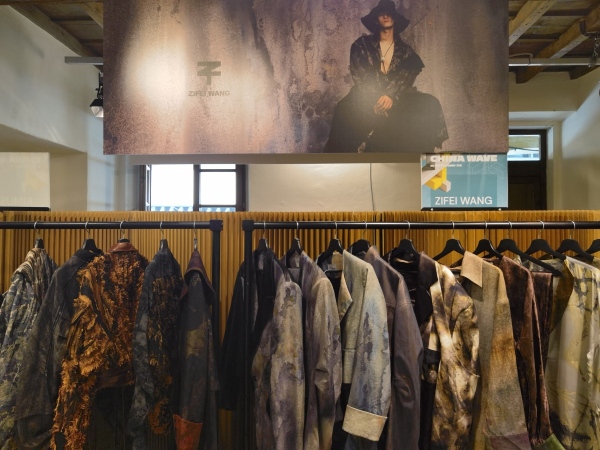
(Image: Chinese designer brand ZIFEI WANG — Photo by Luxe.CO)
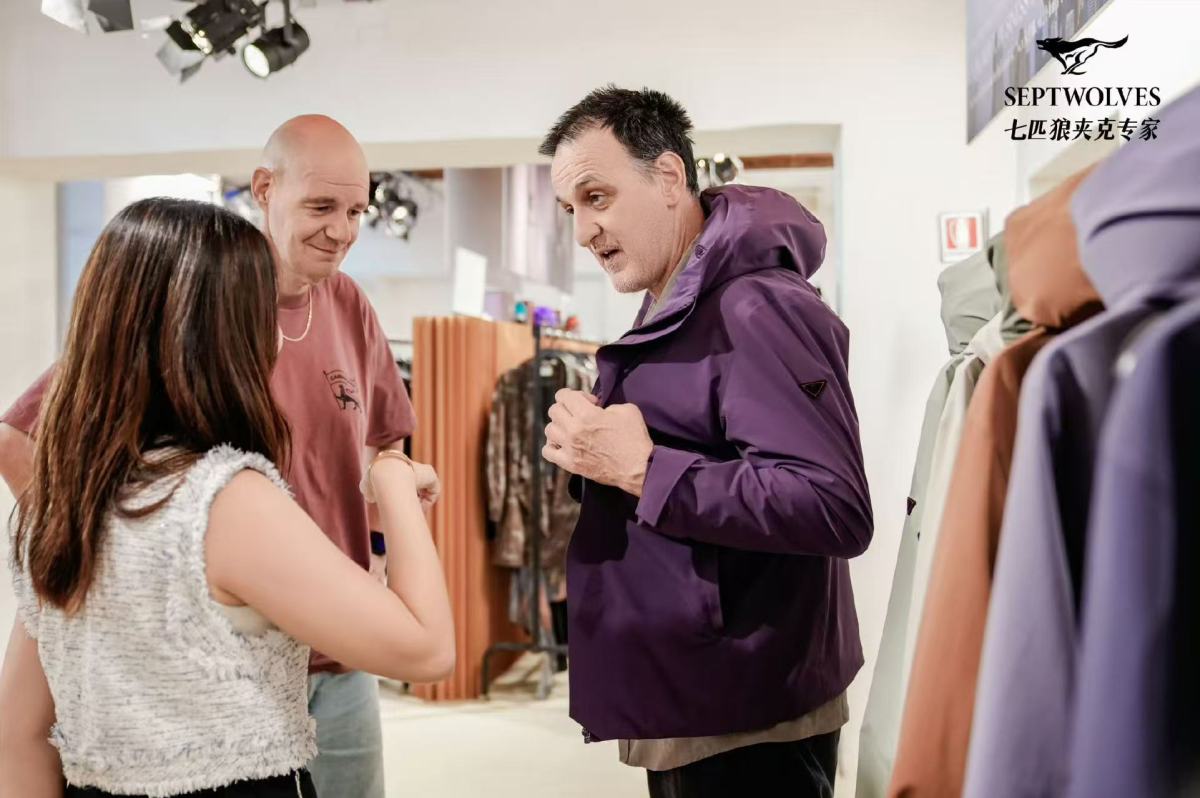
(Image: SEPTWOLVES booth — Source: Brand Weibo)
“No Sharp Rise, Naturally No Sharp Fall”
During the fair, Brunello Cucinelli shared a set of data in an interview: the brand has grown by an average of 12% annually since its listing in 2012, and its total revenue in the first quarter of 2026 reached 369 million euros.
“A fair percentage, which has allowed us to proceed at a steady pace. With no sharp rise, there is naturally no sharp fall,” reflects Brunello Cucinelli. “It helps us to remain a relatively small company: we’re more agile and manageable, even in such challenging times, “continues Cucinelli.
Beyond data, Cucinelli emphasized, “We’ve never wanted to display logos. For me, this has helped our garments be perceived as independent of trends and fads: the public sees them as long-lasting investments, worth spending on.”
This philosophy has been directly translated into the Spring/Summer 2027 collection. Cucinelli described the designs for this season as a “mix-and-match”: pressed jeans with a nice shirt and tie, worn-in cotton trousers with a piqué polo shirt and a suede safari jacket. The lines are softer, the trousers are ankle-length.
“Each item is designed to integrate and match pieces from past collections: I am still wearing jackets from four or five years ago. Since I like them, why stop wearing them?”
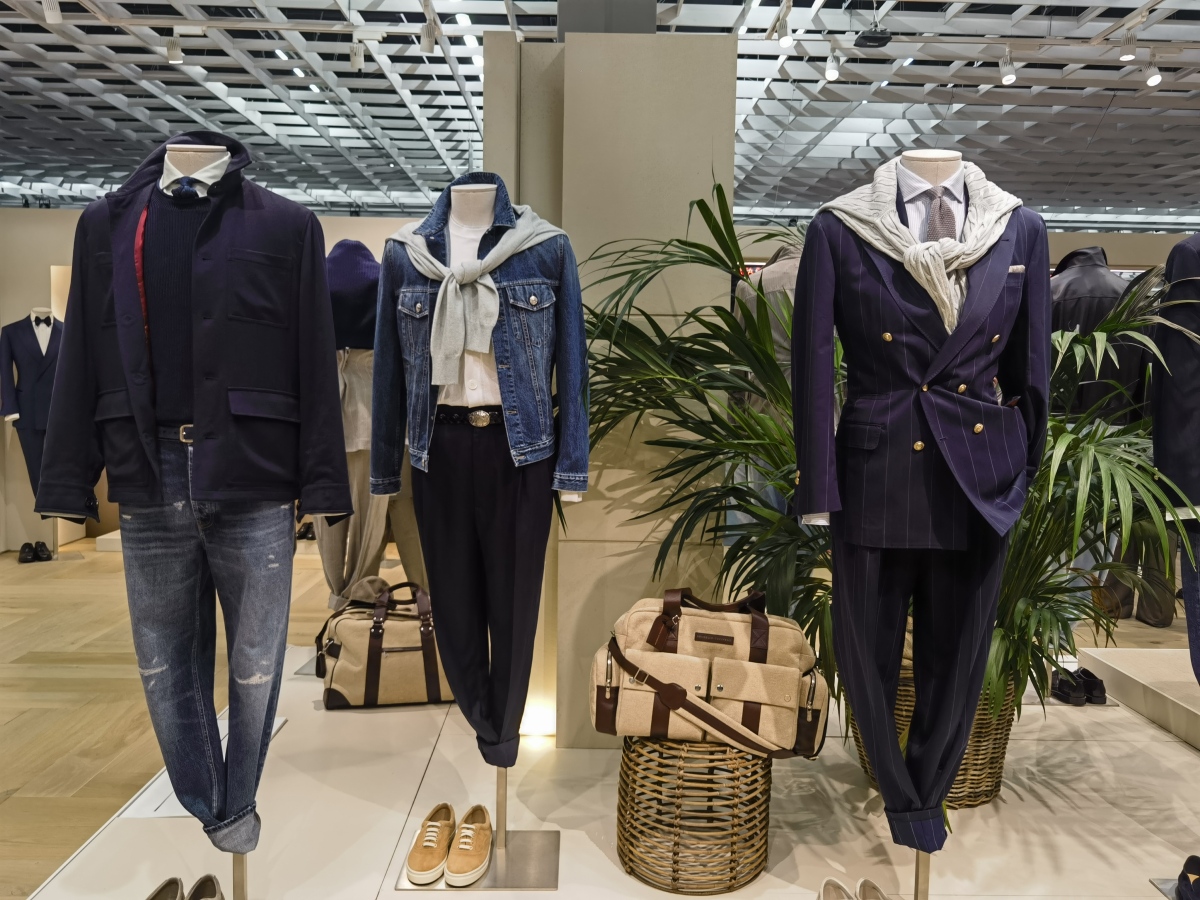
(Image: Brunello Cucinelli Spring/Summer 2027 Collection — Photo by Luxe.CO)
An increasing number of brands are beginning to implement similar subtractions.
Luigi Bianchi Sartoria emphasized “essential tailoring” — lines are more relaxed, minimalism dominates, and absolute simplicity is pursued in everything from shirt jackets to double-breasted blazers in wool, linen, and silk blends. Latorre, on the other hand, introduced a double-breasted, four-button jacket under the concept of “Soffio”, practicing subtraction throughout the entire collection.
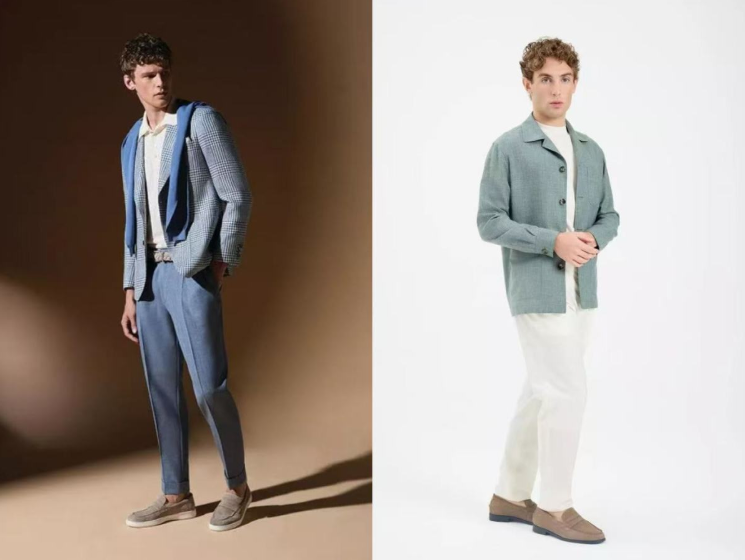
(Image: From left to right: Italian menswear brands Luigi Bianchi Sartoria and Latorre — Official Brand Websites)
Outdoor Lifestyle is Fully Reshaping Everyday Menswear
At this edition of Pitti Uomo, outdoor and sportswear once again became one of the most dynamic sectors of contemporary menswear. Some traditional casual wear brands also leveraged coastal vacation and sports elements such as “sailing” and “surfing” to showcase a more vibrant new style.
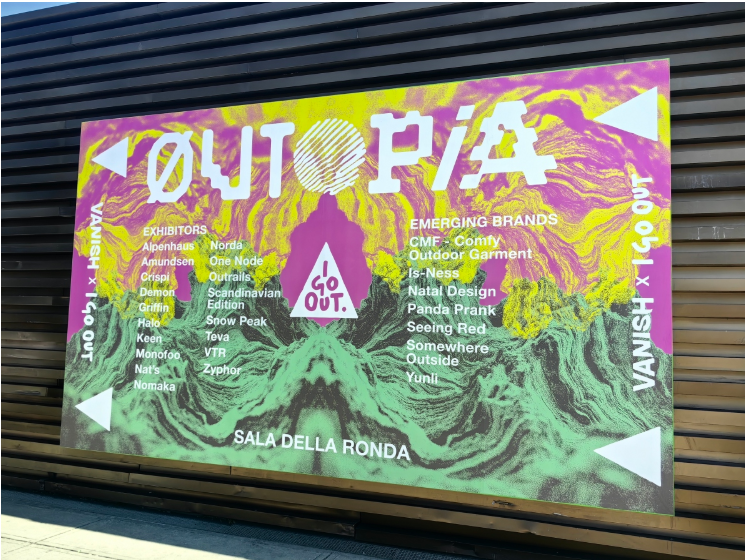
(Image: The “OUTOPIA” project billboard — Photo by Luxe.CO)
The “OUTOPIA” project, curated by the pioneering outdoor magazine Vanish, restructured the I GO OUT area. The project brought together established outdoor brands like Snow Peak, Keen, and Norda, alongside rising forces such as CMF Comfy Outdoor Garments, IS-NESS, and the Chinese sneaker brand Panda Prank.
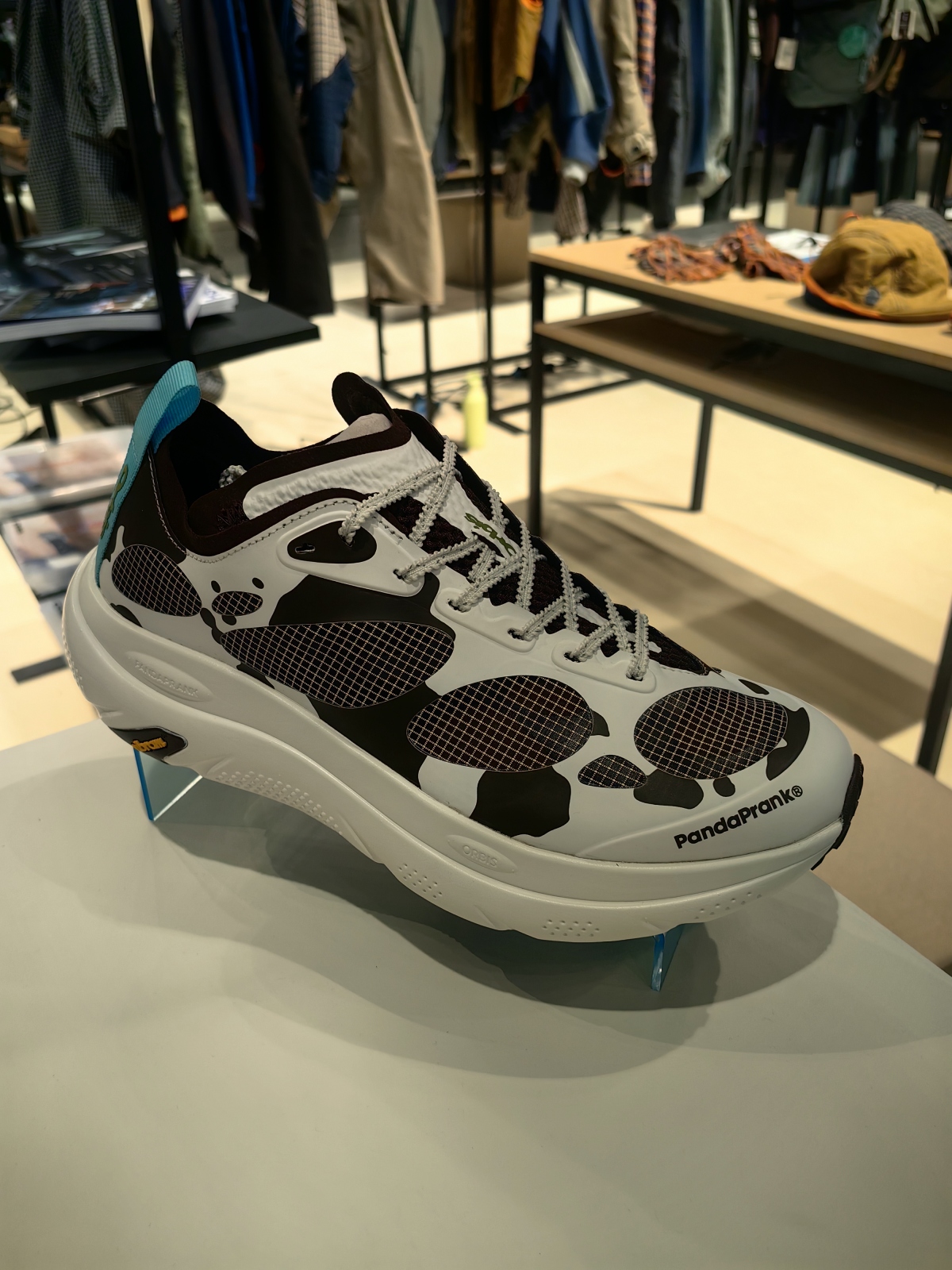
(Image: Chinese sneaker brand Panda Prank — Photo by Luxe.CO)
Concurrently, this edition of the fair released multiple trend signals for the outdoor wave:
Outdoor functional apparel has moved beyond purely professional settings, increasingly becoming part of everyday wardrobes. The premium American outdoor brand Woolrich, in its Spring/Summer 2027 collection, focused on natural materials, lightweight fabrics, and technical construction, ensuring garments adapt seamlessly to daily life while retaining their outdoor spirit.
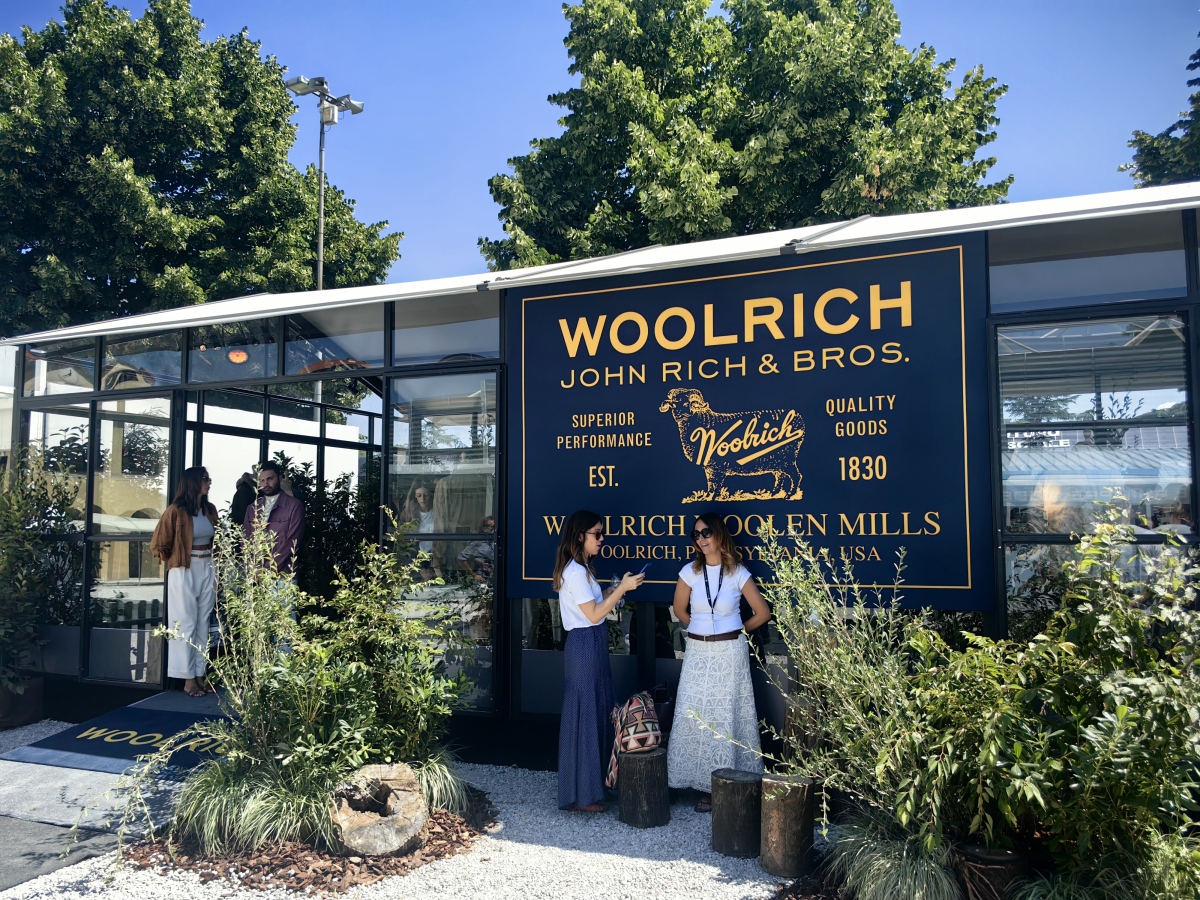
(Image: WOOLRICH exhibition area — Photo by Luxe.CO)
Revealing multiple facets, outdoor aesthetics continue to evolve in an increasingly diversified direction. The “Sun-Bleach” process developed by Korean brand JiyongKim harnesses natural elements such as sunlight, wind, and rain to create distinctive textures and fading effects on garments, pushing outdoor aesthetics into the realm of artistic expression. Meanwhile, American brand Sundek brought the spirit of 1960s California surf culture to the exhibition, with its Golden Wave collection employing sun-faded tones to evoke the gradual erosion of fabric by sunlight and seawater.
Following its return to Pitti Uomo last year, the Italian retro-sneaker brand Atlantic Stars returned. Anchored by Italian craftsmanship and retro aesthetics, the products are well-crafted and feature bright color schemes. While replicating classic styles, the brand also newly introduced the currently trending thin-soled shoes.
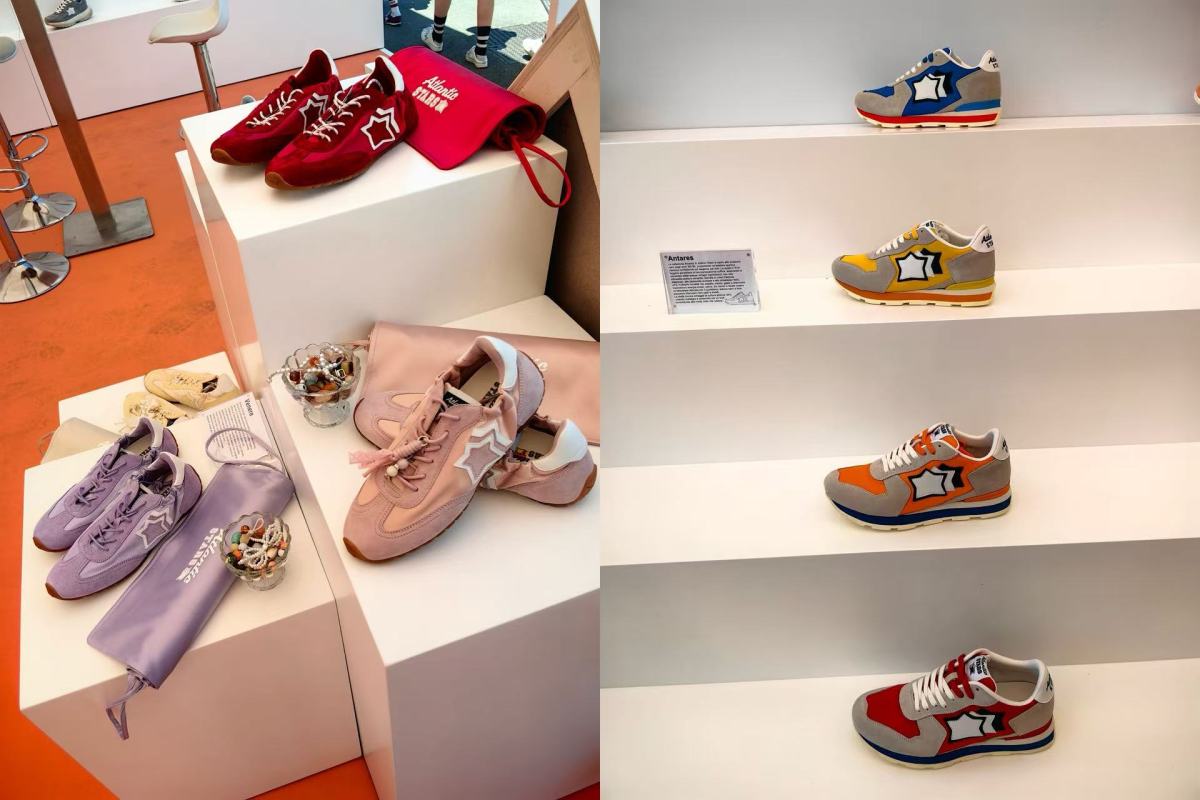
(Image: Atlantic Stars booth — Photo by Luxe.CO)
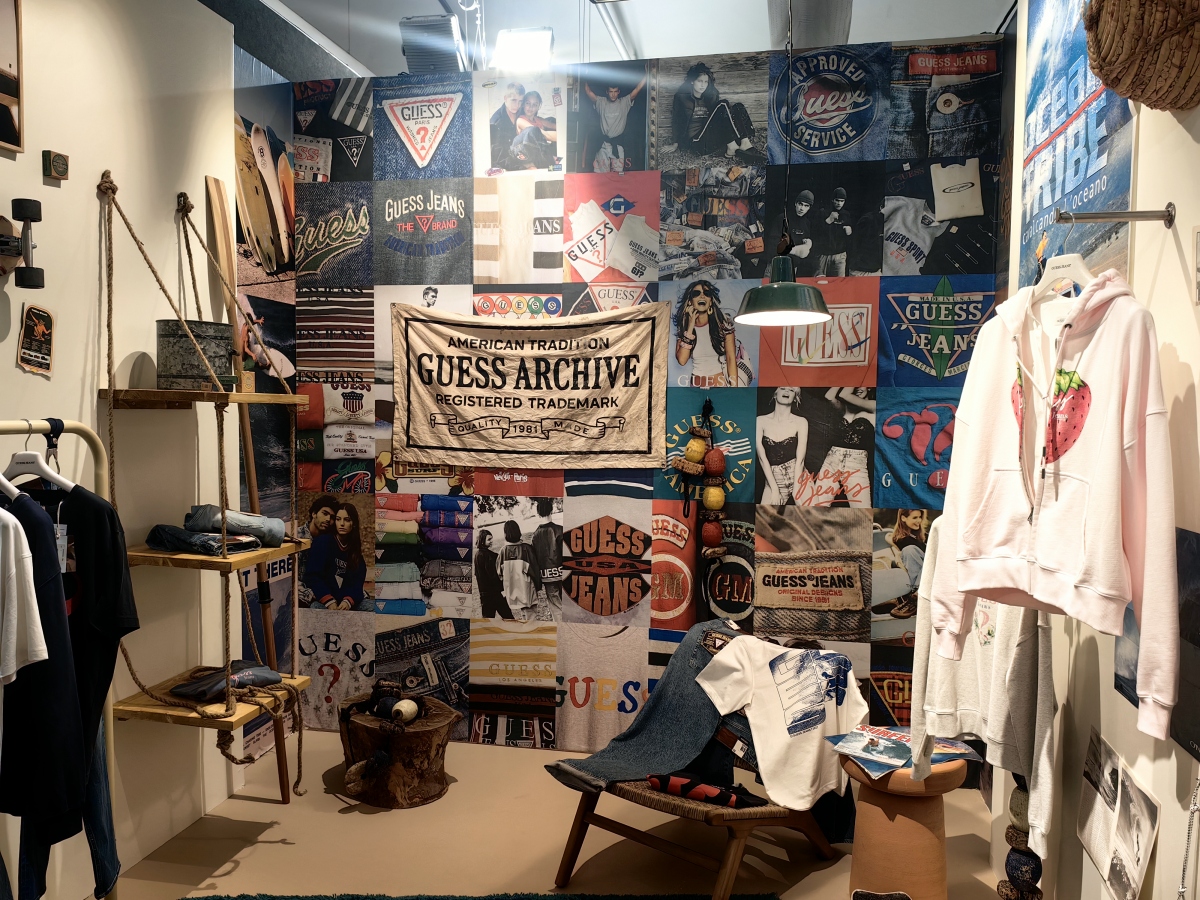
(Image: Guess Jeans set up a large independent display space themed around California surf culture — Photo by Luxe.CO)
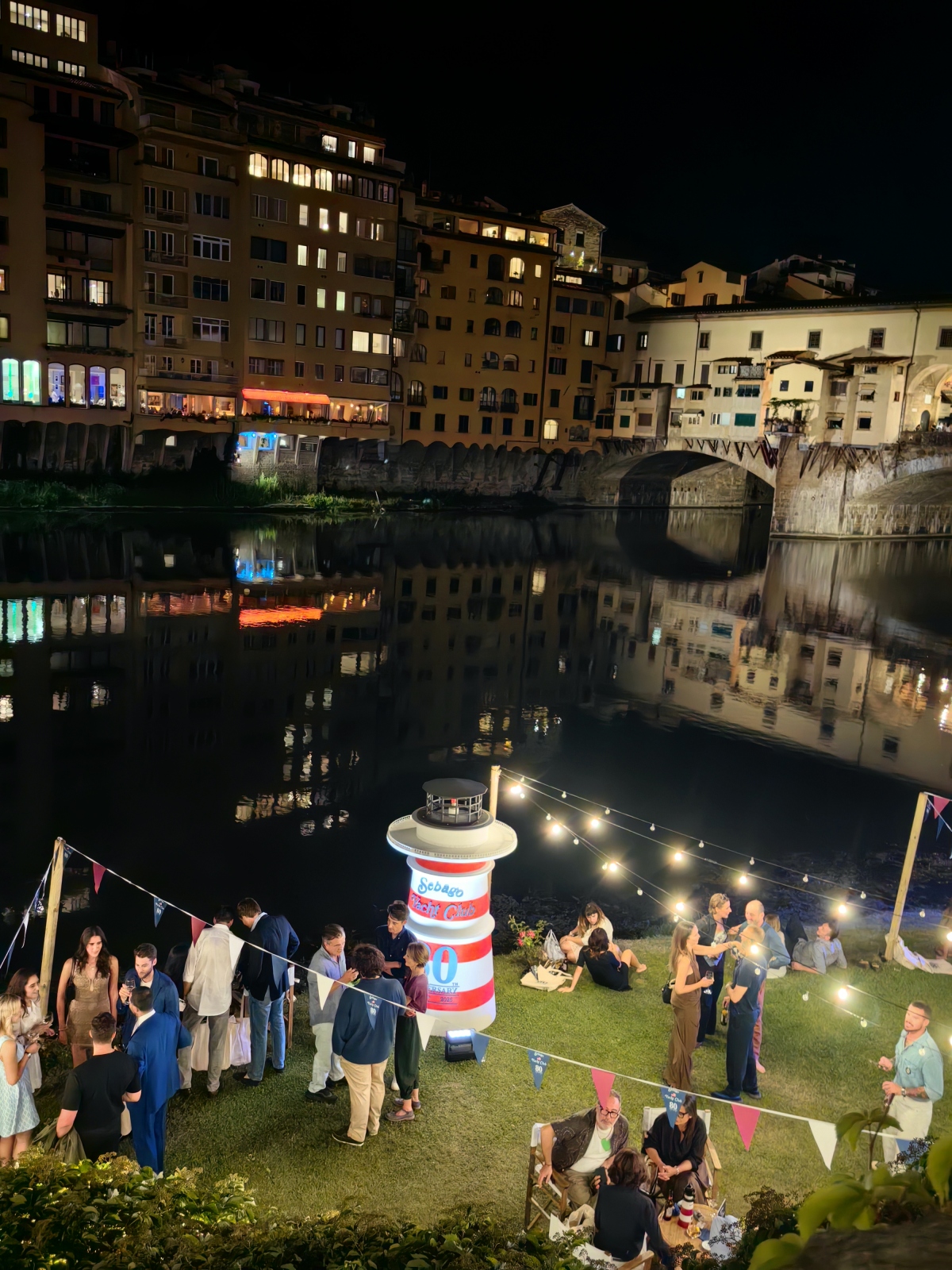
(Image: Classic American boat shoe brand Sebago hosted a hospitality event by the river in Florence — Photo by Luxe.CO)
Fabric as Narrative: Materials Move from “Behind the Scenes” to “Center Stage”
The prevalence of loose silhouettes has not diminished the demand for high-quality fabrics; instead, it has led consumers to focus more on the “drape” and “skin-friendliness” of garments. Linen remains a key summer element, widely appearing in suits, shirts, and trousers, as evidenced by the collections of brands such as Brunello Cucinelli, Xacus, and Olymp.
In Brunello Cucinelli’s Spring/Summer 2027 collection, natural fabrics such as linen and cotton blends occupied a prominent place. Meanwhile, Xacus’s core project, “The signature linen,” exclusively uses top-tier linen produced between Normandy and Belgium.
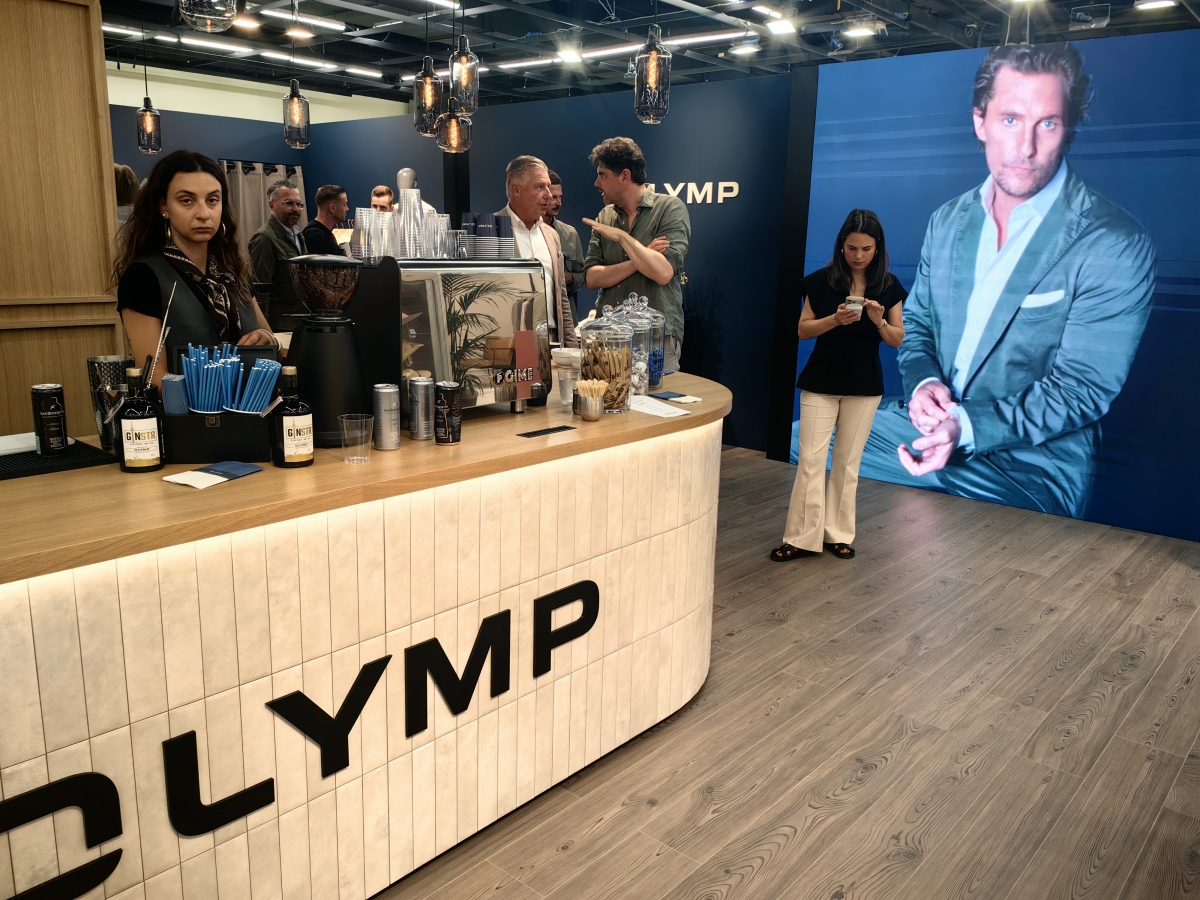
(Image: Premium German shirt brand Olymp’s booth prominently featured its brand ambassador announced last year — Hollywood superstar Matthew McConaughey — Photo by Luxe.CO)
At the same time, more brands are starting to build their identities through innovative fabric combinations, pursuing richer textures and a more premium touch while remaining lightweight and breathable. The Danish brand Gabba exhibited lightweight, chunky knitwear with floral patterns, while Paul & Shark adopted a slub-knit technique, representing attempts at differentiation at the fabric level.
As a global leader in high-end yarns and a direct supplier to global luxury brands such as Hermès, Chanel, and Louis Vuitton, the premium Chinese yarn group Consignee participated in Pitti Uomo for the fifth consecutive year. This time, they presented an immersive textile art exhibition titled “Suspended Grounds” in the core Cavedio area of the Central Pavilion.
This marks the second deep collaboration between Consignee, Sara Sozzani Maino (Creative Director of Fondazione Sozzani in Milan), and rising designer Galib Gassanoff. With the core creative concept of “textiles becoming surfaces, surfaces becoming language,” they built a purely non-commercial creative art platform. More than ten knitwear art pieces combined 3D knitting with fabric texture recreation processes. They constructed a color system using ivory white, misty gray, pure black, and the signature high-vis red, suspending the fabrics mid-air using the loom’s original wooden structures, allowing the yarn material itself to become the main subject of the narrative.
This collaboration not only demonstrated the creativity and R&D strength of Chinese textile craftsmanship but also pushed materials from being a product’s “support system” to the center of high-end brand narratives, endowing them with deeper cultural connotations.
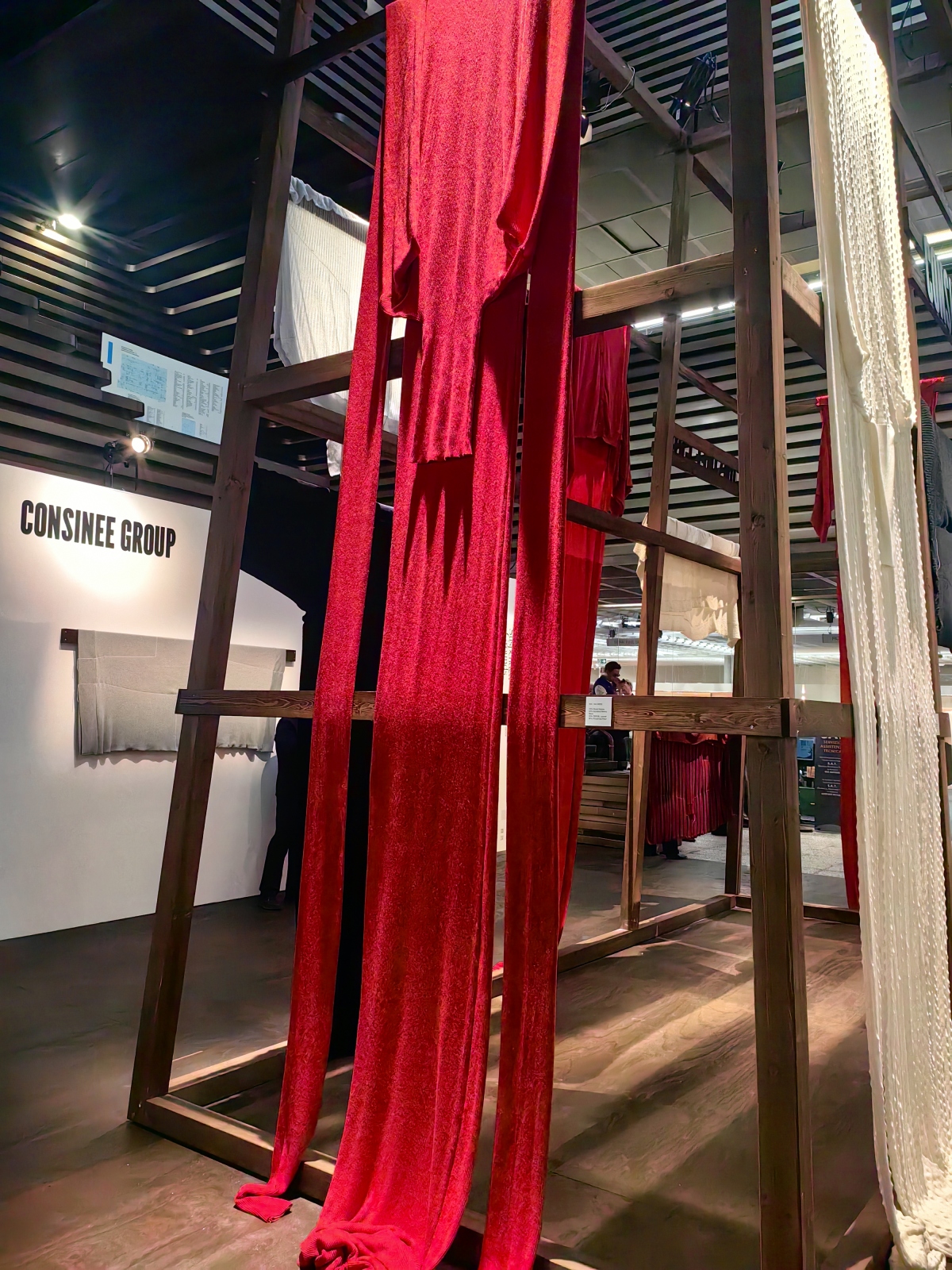
(Image: Consignee’s “Suspended Grounds” exhibition — Photo by Luxe.CO)
| Image Credits: All photos taken on-site by Luxe.CO unless specified otherwise.
| Editor: Luxeplace