The French high jewelry Maison Boucheron has recently unveiled its first flagship store in the Chinese Mainland, located in Shanghai’s Xintiandi. Following its Paris flagship at 26 Place Vendôme and its Tokyo Ginza flagship, this marks the brand’s third global flagship location—ushering in a new chapter of its global strategy.
At the opening, Luxe.CO sat down with Hélène Poulit-Duquesne, Global CEO of Boucheron, for an in-depth conversation. “I remain full of hope for the Chinese luxury market and believe that 2026 will bring a strong rebound,” she said.
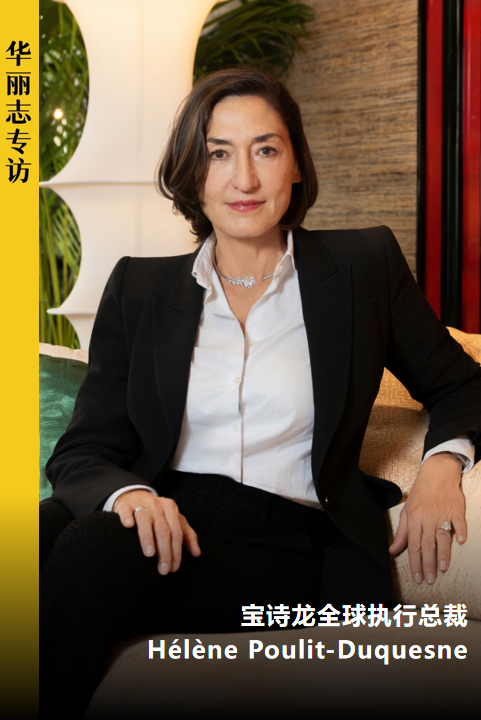
Since taking the helm in 2015, Hélène Poulit-Duquesne has identified Asia—especially the Chinese Mainland—as a key strategic market for the brand. Since entering the market in 2018, Boucheron has expanded to 17 boutiques across the region.
In this exclusive interview, she shared the vision behind the Shanghai Xintiandi flagship, while offering insight into the brand’s development and her observations on both the Chinese and global jewelry markets:
- “Compared to mall boutiques, a streetfront flagship allows us to fully narrate the brand’s story”
- “The desire for high-value products will never disappear”
- “The foundation of innovation is staying true to the brand’s DNA”
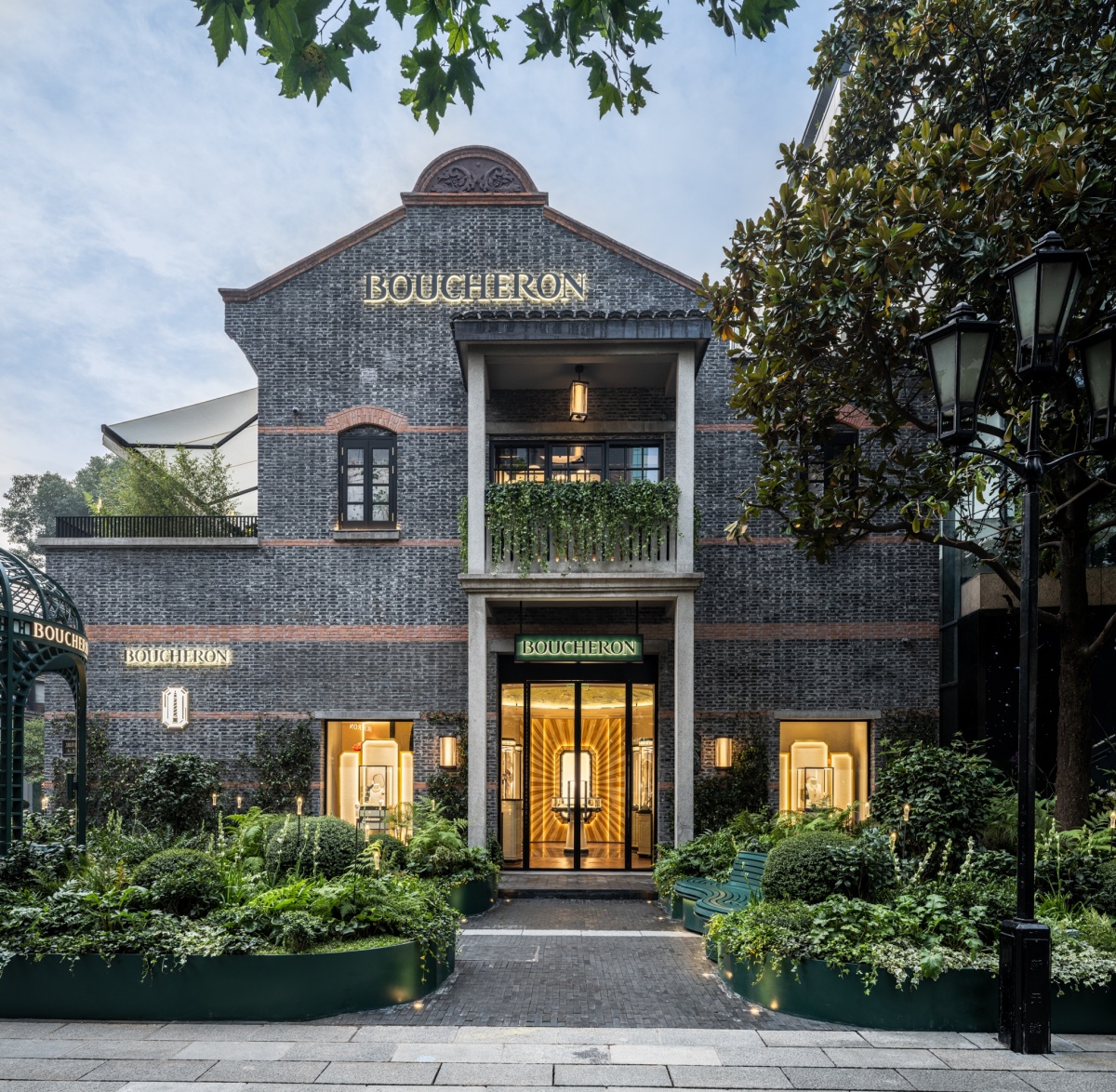
Boucheron’s Shanghai Xintiandi flagship spans 278 square meters in a streetfront shikumen (stone-gate) building that fuses traditional Chinese and Western styles. While preserving the building’s architectural integrity, Boucheron has elegantly integrated Art Deco elements such as symmetry, metallic accents, and emerald-cut motifs.
“Compared to mall boutiques, a streetfront flagship allows us to fully narrate the brand’s story”
Luxe.CO: Why did you choose Shanghai Xintiandi as the location for your third global flagship store? What unique experiences does a street-level boutique offer compared to a mall-based one?
Hélène Poulit-Duquesne: We had long wanted to open a true flagship store in China—especially in Shanghai. To us, that means a spacious, street-level boutique set within a historical building that honors the past while breathing new life into it.
I actually visited Xintiandi about three years ago and was immediately drawn to it. I particularly love the shikumen architecture—it’s a blend of traditional Chinese and Western styles. This style dates back to the late 19th century, aligning with the historical context of Boucheron’s first flagship at 26 Place Vendôme in Paris. Xintiandi itself is a vibrant, lively city center where people gather and shop—a place full of youthful energy.
A streetfront flagship offers a completely different experience than a mall boutique. Even if you have a large, multi-floor store inside a mall, it can’t provide the same storytelling space. Here, we have the room to present the full narrative of Boucheron.
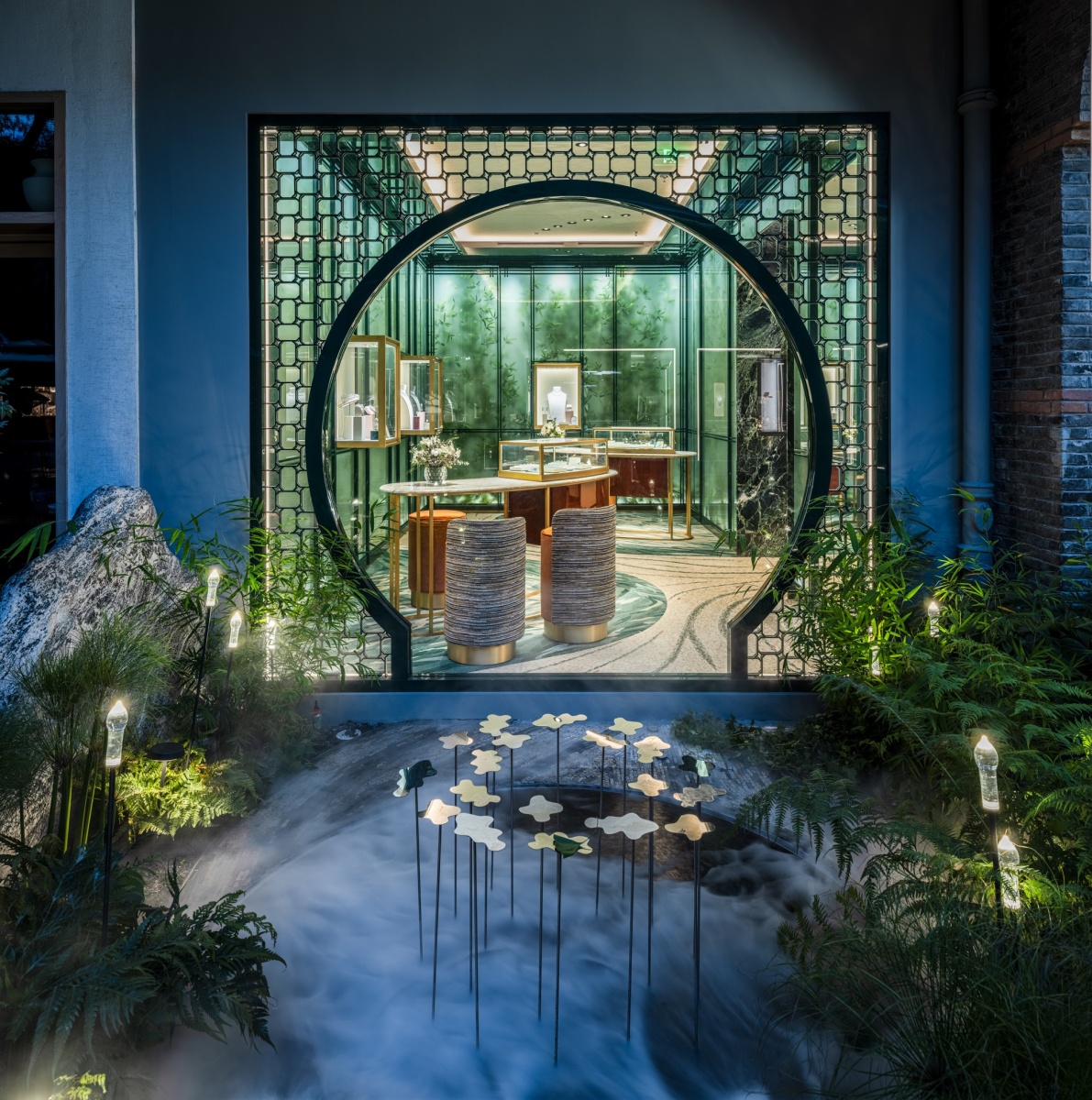
The Chinese courtyard in Boucheron’s Shanghai Xintiandi flagship is accentuated with a classical moon gate. This is also Hélène Poulit-Duquesne’s favorite feature of the boutique.
Luxe.CO: In terms of urban culture and site selection, what are the shared considerations between the Xintiandi flagship and the one at Place Vendôme in Paris?
Hélène Poulit-Duquesne: At the heart of both boutiques is a shared philosophy: we chose to inhabit historical buildings and preserve aspects of their original character so we could tell the Boucheron story within. Creating a warm, home-like environment is also central to our retail concept. We want our VIP clients to feel relaxed and welcomed—as if they’re guests in our home.
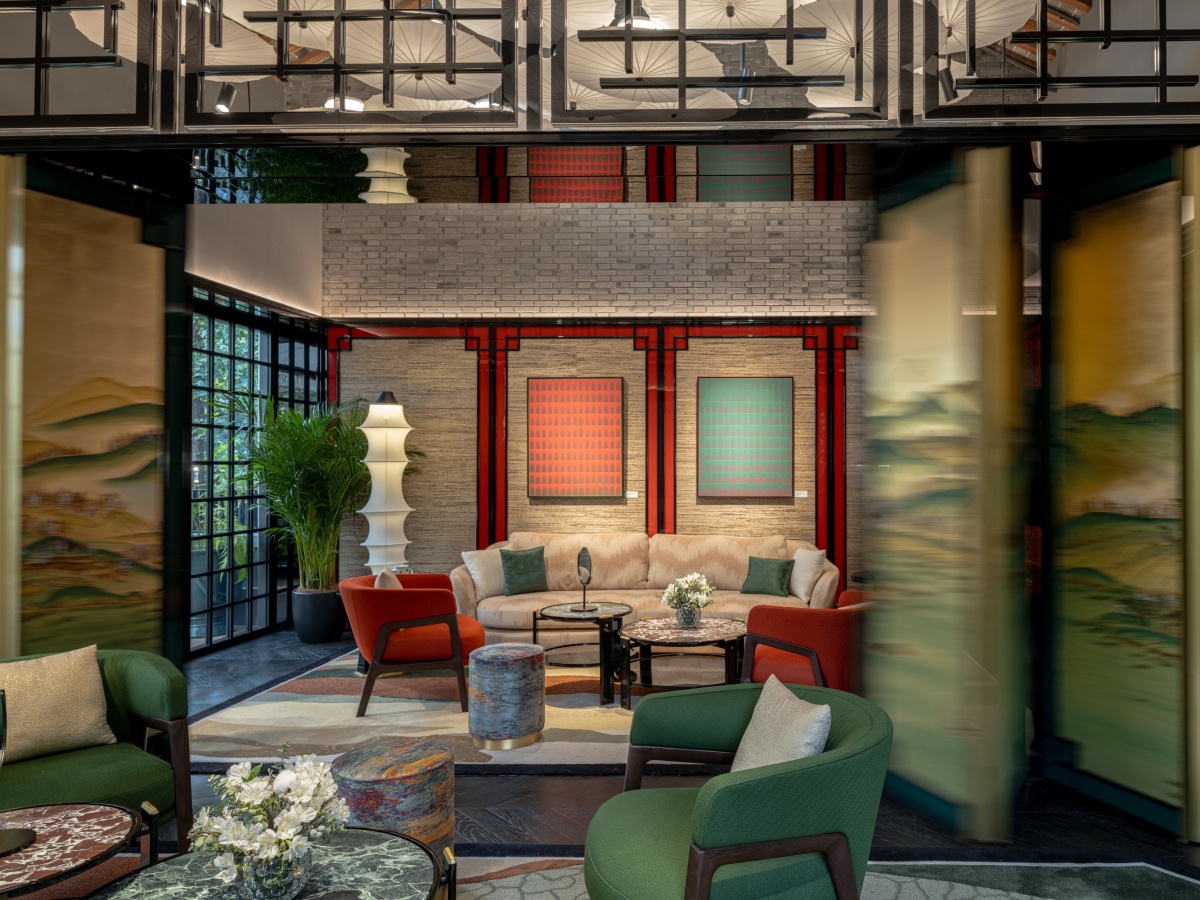
Boucheron VIP salon, Shanghai Xintiandi flagship
Luxe.CO: The flagship incorporates many elements of Chinese culture, and we noticed the presence of various artworks in the space. How did Boucheron approach integrating local culture?
Hélène Poulit-Duquesne: From the outset, our design concept for this flagship was to pay tribute to Chinese culture. All of our designs are created in-house, and they follow an Art Deco framework—this style has a natural affinity with Chinese architecture. In fact, our retail concept has always included Chinese elements through Art Deco. For example, the “Chinese cabinet” featured here in Xintiandi also appears in our boutiques in Paris, Geneva, and London, though in different lacquered colors.
In Shanghai, we took it a step further by combining Chinese culture with another major Boucheron theme: nature. Alongside a French garden, we created a traditional Chinese garden.
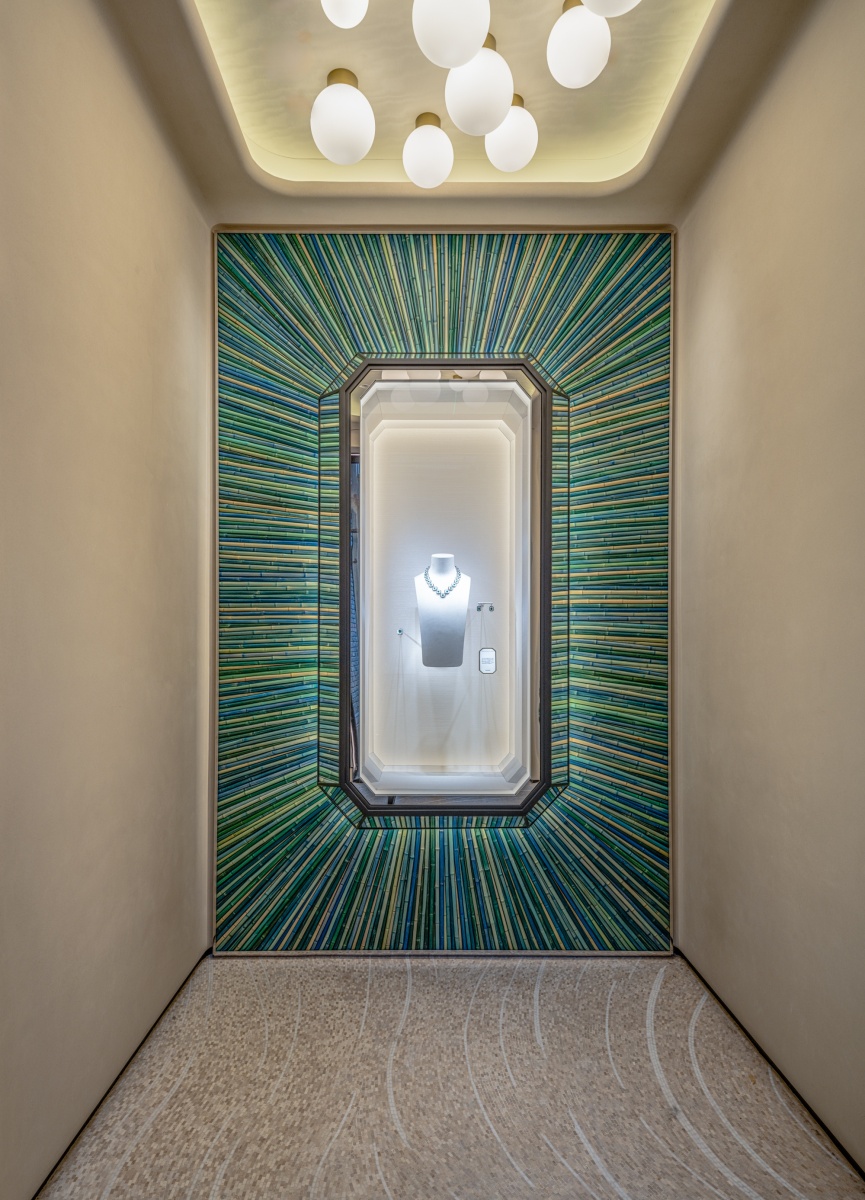
Artist Lin Jiayu created a bamboo-structured sculptural display cabinet for Boucheron’s Shanghai Xintiandi flagship.
We also invited artists from both China and France to contribute. For example, French artist Claire Nicolet, who once spent four months living near the Forbidden City in Beijing, came to Shanghai this August. She spent a month hand-painting the ceiling of the main salon inside the flagship boutique.

Hand-painted ceiling in the main salon by artist Claire Nicolet for the Boucheron Shanghai Xintiandi flagship.
“The Desire for High-Value Products Will Never Disappear”
Luxe.CO: Looking back at Boucheron’s journey in the Chinese Mainland, what would you say has been the brand’s most important strategic decision? And where will your focus lie in the coming years?
Hélène Poulit-Duquesne: Our most critical decision was to maintain a clear strategic focus: to continuously shape the Quatre collection into a truly iconic line. For any jewelry Maison, having a strong, recognizable icon is essential.
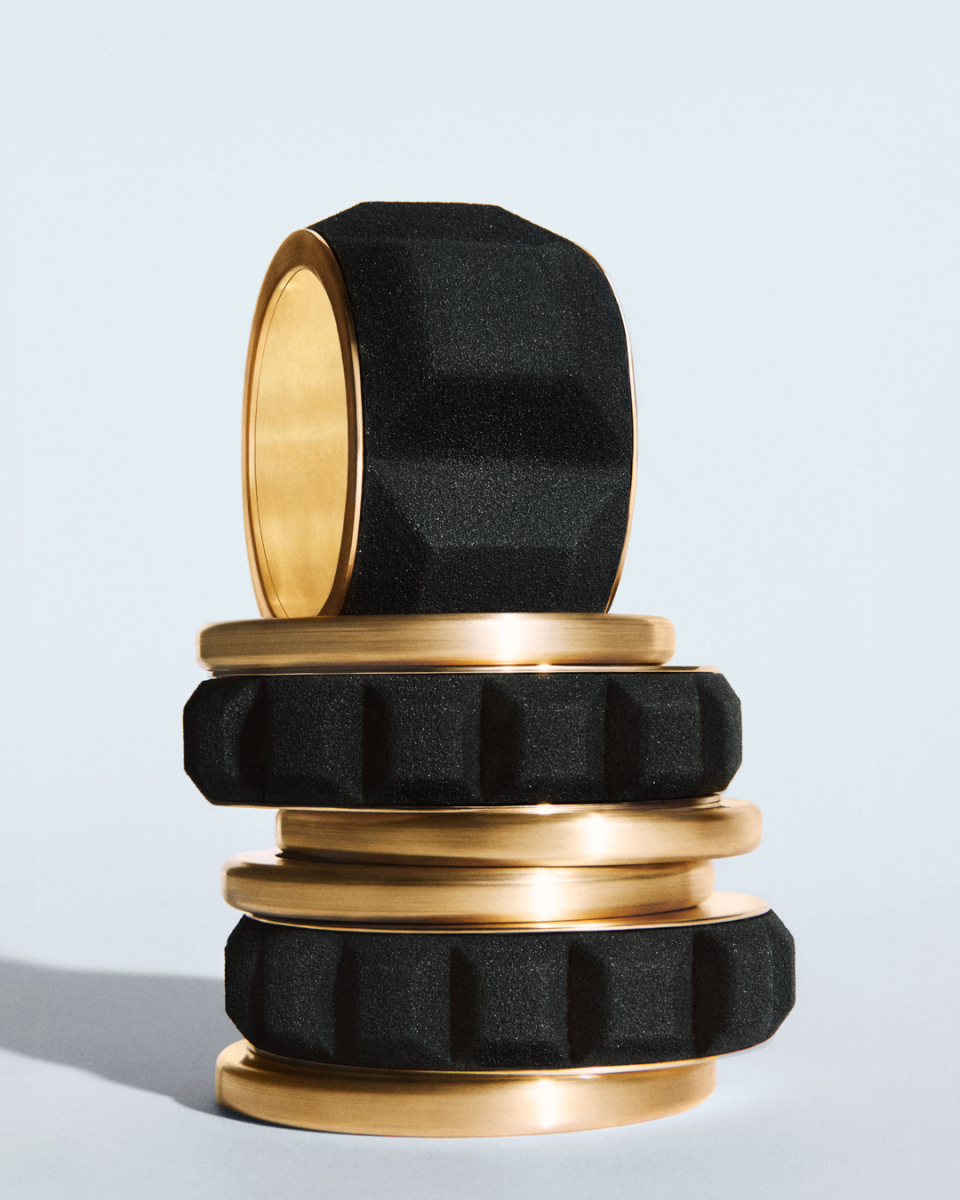
The Quatre Sand concept piece, launched in September, reinterprets the classic Quatre collection using 3D-printed grains of sand.
At the same time, our VIP and VIC client relationships have always been central to our strategy. We create one-of-a-kind experiences that deepen their understanding of our high jewelry, and these moments often lead to powerful word-of-mouth exposure—which is important for both brand image and business. For example, we once organized a custom journey to Morocco for a client, and another time arranged a private experience at Château Latour. We’re able to accommodate whatever they need.
Looking ahead, our focus lies in two areas: first, upgrading our store sizes and locations; second, continuing to convey Boucheron’s deep heritage and exceptional craftsmanship to the Chinese market.

A central display cabinet in the main salon of Boucheron’s Shanghai Xintiandi flagship, crafted by artist Olga Thune-Larsen using marquetry with straw inlay.
Luxe.CO: An increasing number of luxury brands in China are launching large-scale boutiques or double-storey spaces. Amid this fierce competition over physical experience, what core value does Boucheron continue to uphold?
Hélène Poulit-Duquesne: Boucheron boutiques are more like a “home” than a retail concept—and that’s what truly sets us apart from other flagships.
Since the opening of our Xintiandi flagship, I’ve been reviewing the daily sales reports. There’s one story that stood out to me: a lady has been coming in every single day and buying a piece each time, telling us she’s never felt so wonderful in any boutique. That’s exactly the kind of experience we aim to create—when someone feels comfortable in a space, they’re far more likely to want to become part of the brand’s family.
From a commercial standpoint, I don’t entirely understand the necessity of extremely large stores, because in many cases, half the space could achieve the same revenue. But from a brand image perspective, a large boutique demonstrates the brand’s strength and enhances visibility. For Boucheron, we would only open one or two true flagship-level boutiques in any given market.
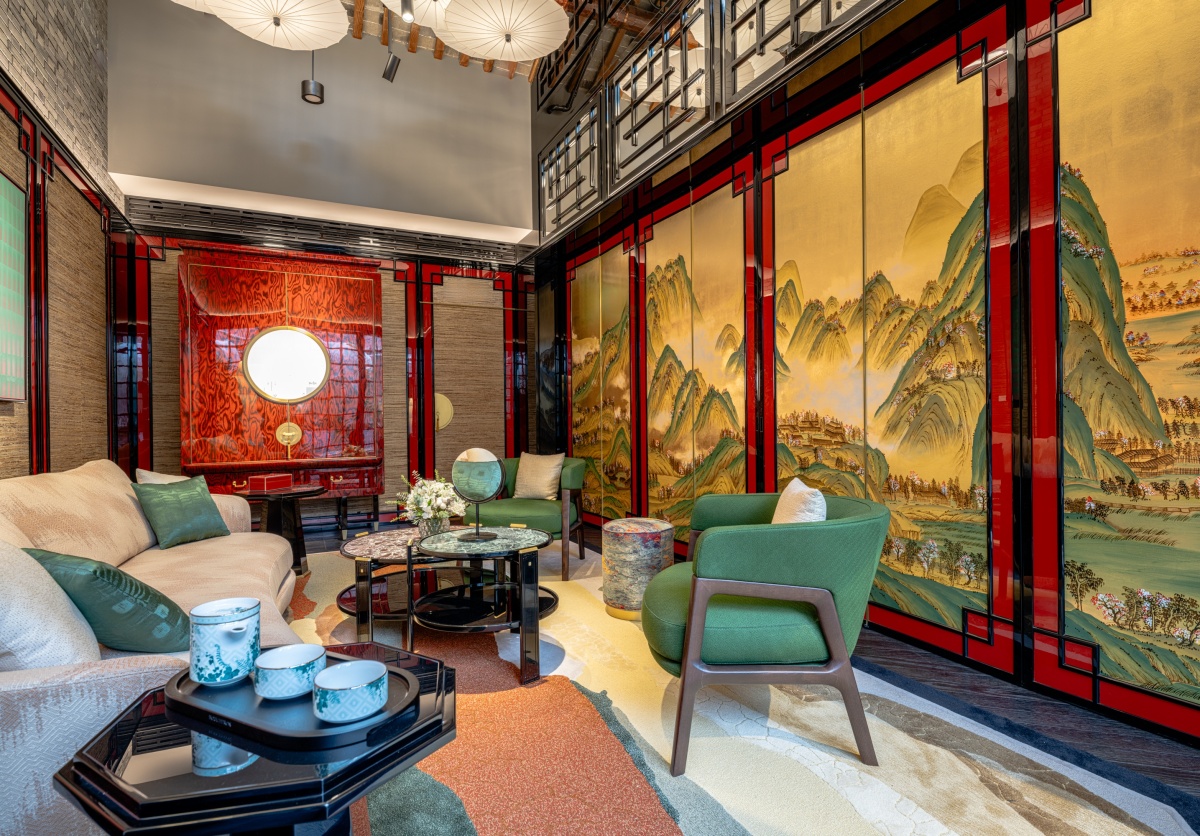
Boucheron VIP salon, Shanghai Xintiandi flagship.
Luxe.CO: Given the current challenging environment for China’s luxury market, how is Boucheron responding?
Hélène Poulit-Duquesne: I remain full of hope for the Chinese luxury market and believe that 2026 will bring a strong rebound. While growth may not match the speed of previous years, it’s certainly not a crisis. I do not agree at all with these narratives about the “end of luxury”.
Of course, I think the industry is undergoing a phase of self-reorganization. We all need to re-examine ourselves. But the desire for high-quality, high-value products will not go away.
As for Boucheron, we are in a phase of expansion—exploring new markets. To be honest, we haven’t encountered many issues. Our momentum is very positive right now. Moreover, the jewelry sector itself is proving to be especially resilient.
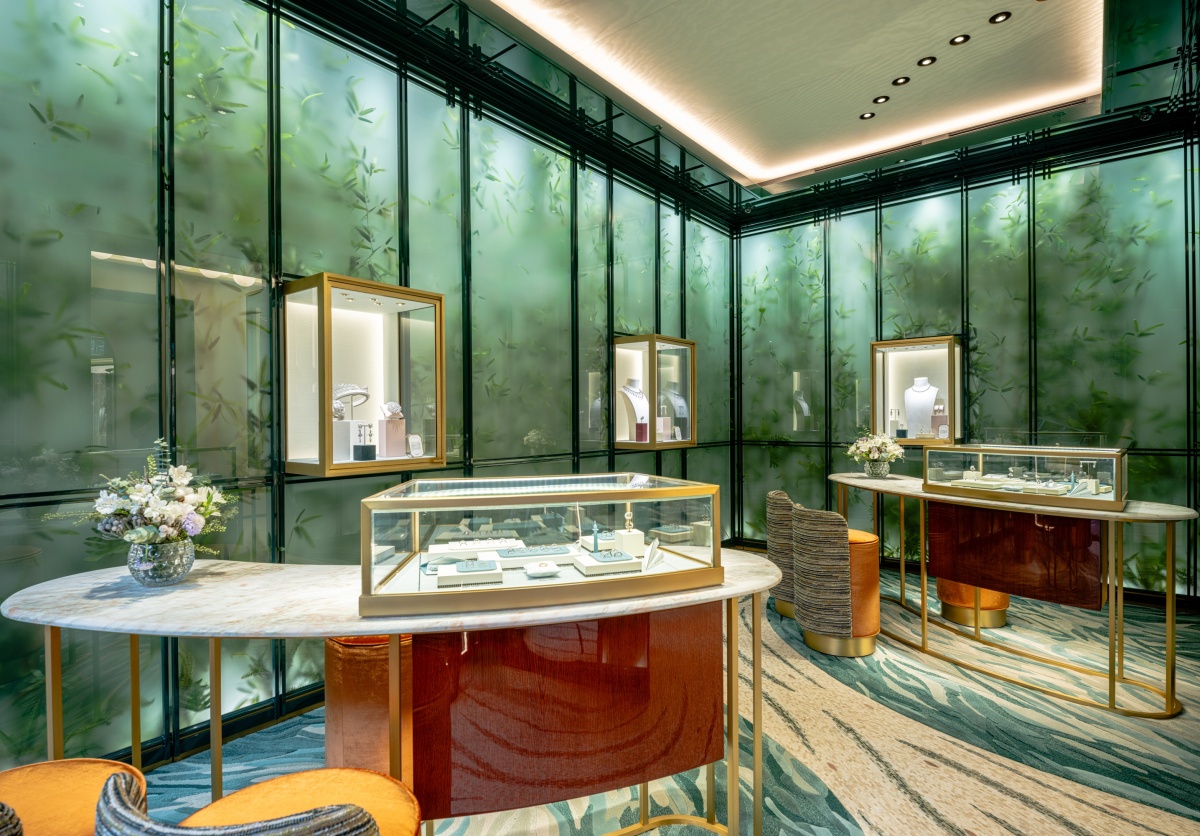
Boucheron bridal salon, Shanghai Xintiandi flagship.
“The Foundation of Innovation Is Staying True to the Brand’s DNA”
Luxe.CO: In recent years, what major changes have you observed in China’s high jewelry market and among consumers? How does Boucheron respond to and lead these trends?
Hélène Poulit-Duquesne: Today, high jewelry that combines both investment value and emotional value has become an important part of the asset portfolios of wealthy consumers in China. The new generation of consumers is very edgy and very knowledgeable, with a deep understanding of craftsmanship. They appreciate the emotional stories behind a piece just as much as the value of the piece itself.
Trends are created. In 2020, we decided to present high jewelry for men. This was totally surprising at the time. At film festival red carpets, we had male celebrities wearing the Maison’s high jewelry. The press was very amazed by what we dared to do, and now all of our competitors are doing the same.
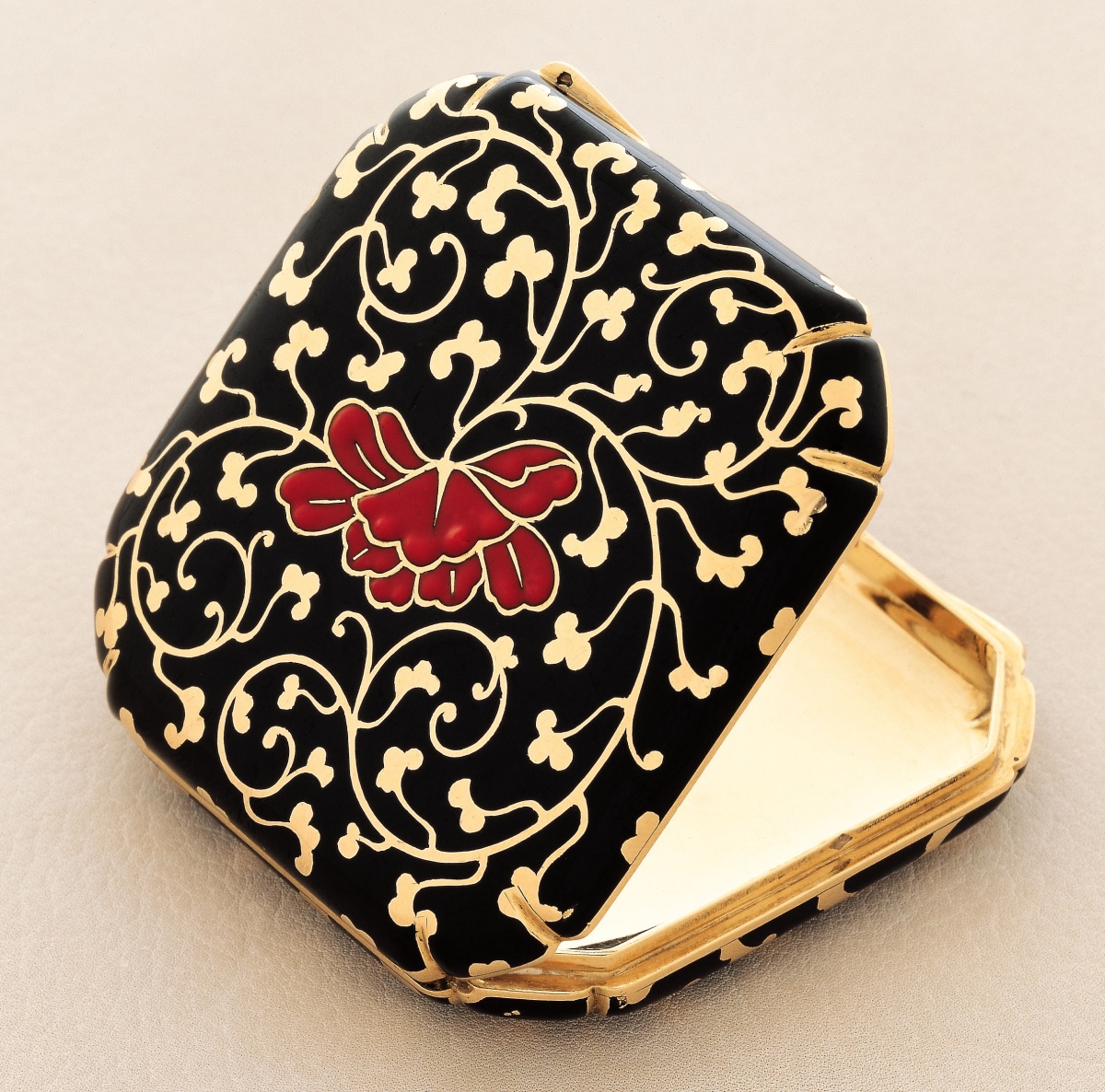
Heritage piece on display at the Boucheron Shanghai Xintiandi flagship: a gold powder compact created in 1925.
To tell the brand’s story to a changing market and new consumers, we work along two main paths. One focuses on craftsmanship, and the other focuses on the Maison’s heritage. When I joined Boucheron, we had no heritage pieces in the company’s possession. Since then, for the past ten years, I have allocated a budget every year to buy back pieces at auctions and on the second-hand market. Today, we have accumulated a number of historical pieces, which allow us to present them in exhibitions and in boutiques, making them part of our storytelling.
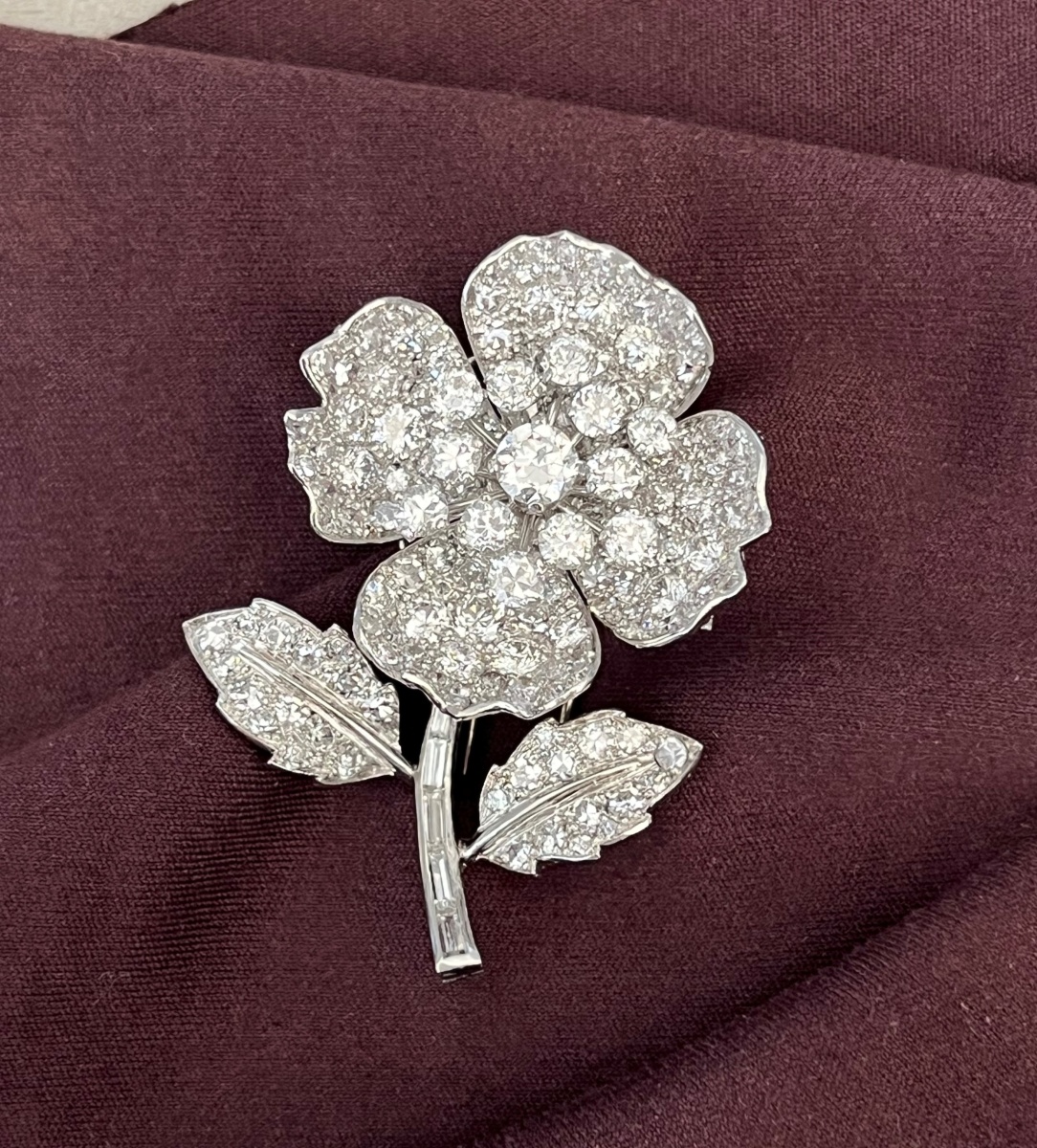
Heritage piece on display at the Boucheron Shanghai Xintiandi flagship: a rose-shaped brooch created in the 1960s.
Luxe.CO: For high jewelry houses, is “innovation” a difficult task today? How do you balance creative design with the preservation of heritage and brand DNA?
Hélène Poulit-Duquesne: For Boucheron, innovation is not difficult, because our founder, Frédéric Boucheron, was himself extremely innovative. It was written in newspapers at the end of the 19th century that Boucheron was one of the most innovative jewelers of the time. Innovation is therefore part of the brand’s DNA.
If we want to respect the past, we need to push boundaries today. And if we want to stay true to our history and our DNA, we need to remain relevant and continue moving the brand forward.
In 2020, we made an important decision to split our high jewelry collections into two launches each year, one in January and one in July. For the January collection, Histoire de Style, I asked our Creative Director, Claire Choisne, to work on the heritage of the brand and to bring a fresh perspective to our archives, using more classical tones.
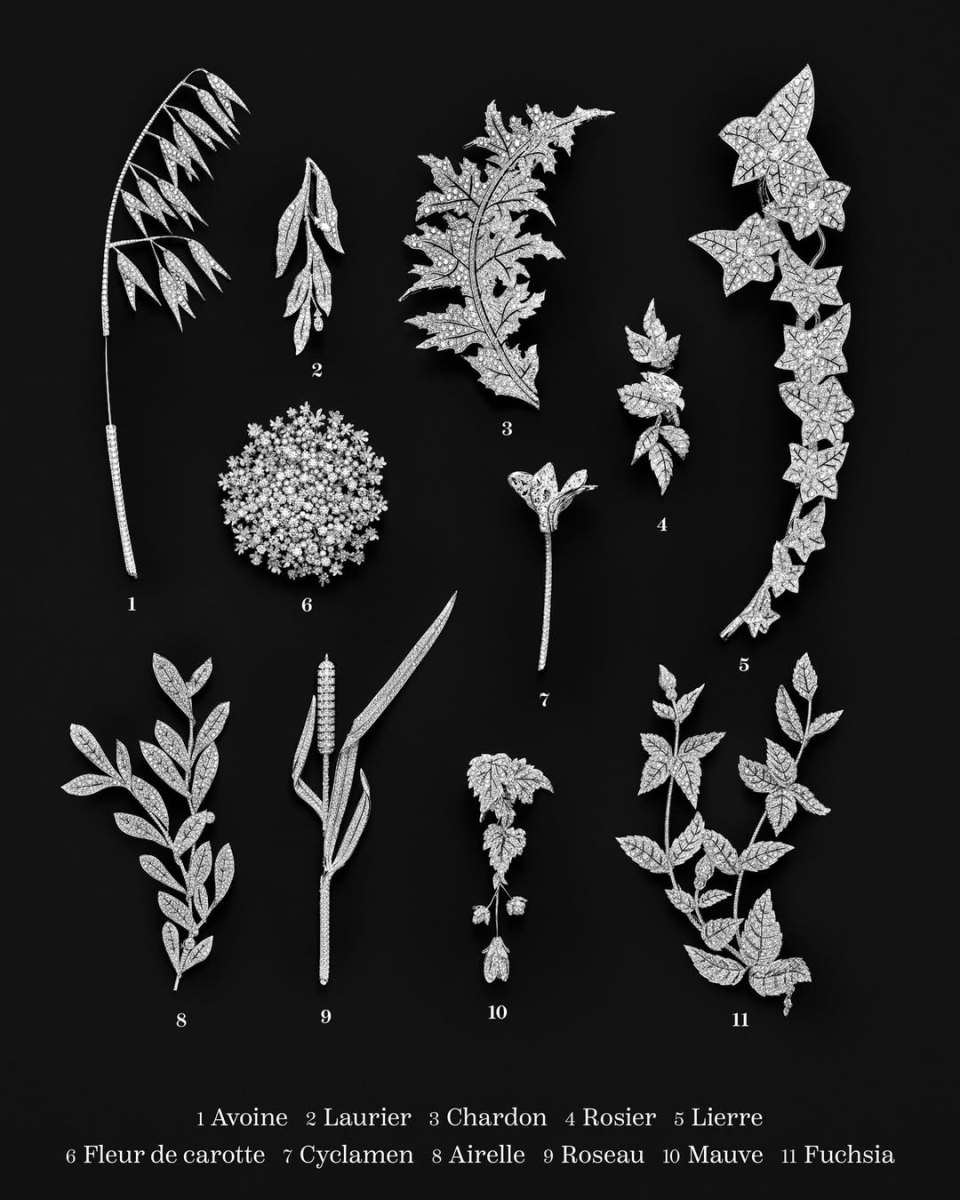
Histoire de Style, Untamed Nature high jewelry collection, released in January 2025.
For the July collection, Carte Blanche, I gave Claire total creative freedom. Together, we push the boundaries of innovation. For this collection, the objective is image-driven: to express our position and tell our story.
After two years, the results proved that this strategy was the right decision. The commercial team told me that the July collection was selling, while at the same time, the communications team told me that the January collection was receiving significant media attention. This confirmed that having two different collections allows us to balance heritage and innovation.
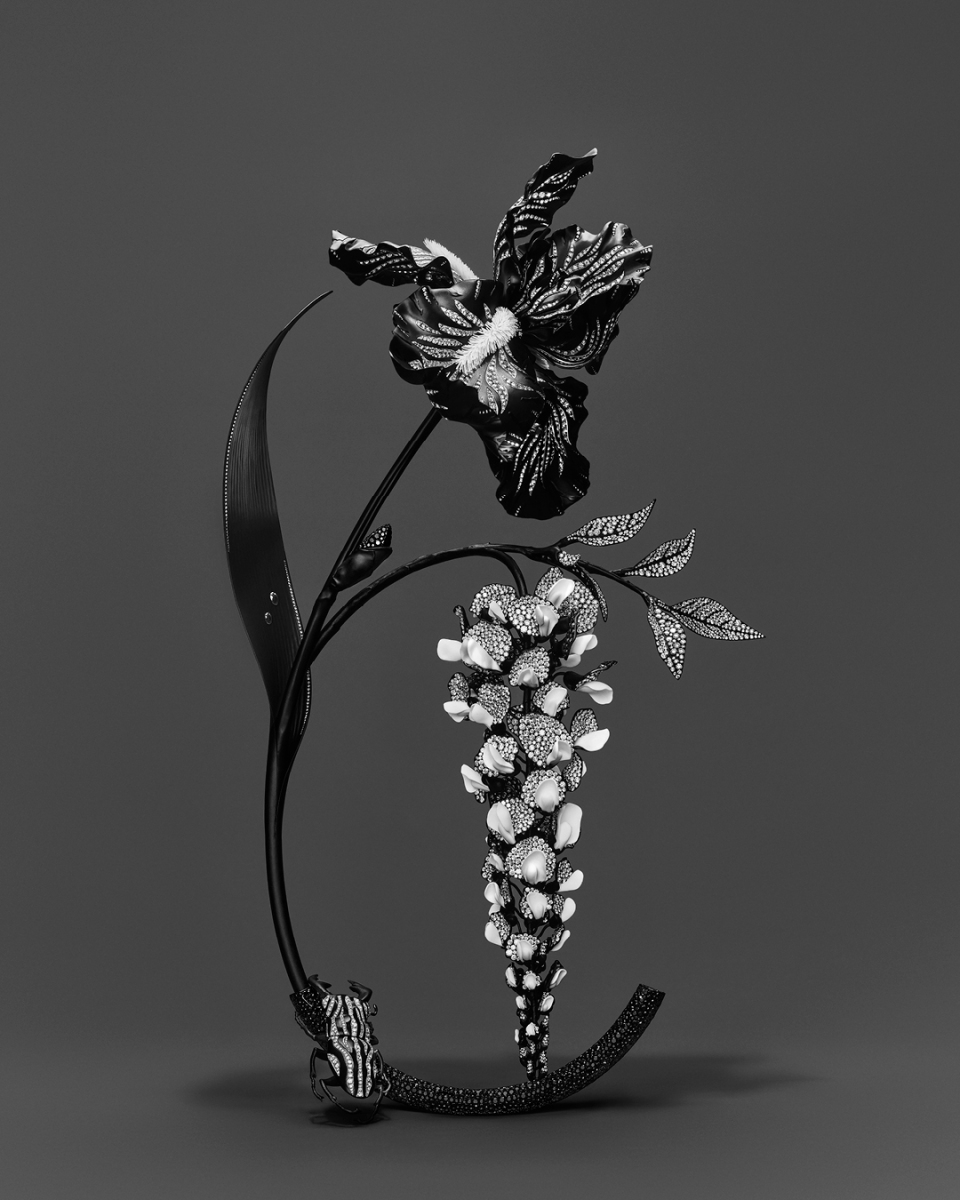
Carte Blanche, Impermanence high jewelry collection, released in July 2025.
| Image Credit: Courtesy of Boucheron
| Editor: Zhu Ruoyu