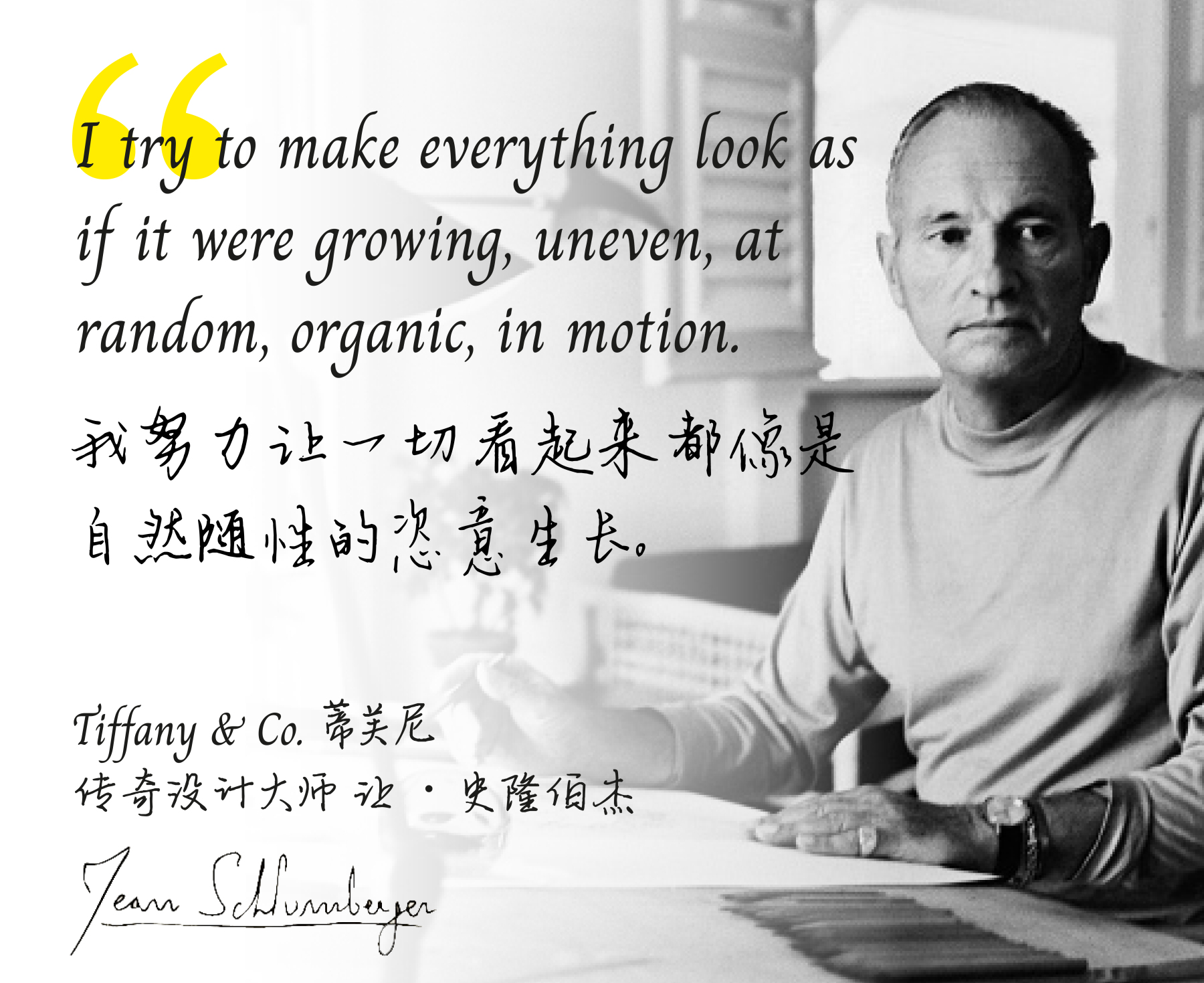
Tiffany & Co.’s legendary design master Jean Schlumberger once offered a dreamlike reflection that vividly articulated his extraordinary philosophy of jewellery design.
This titan of 20th-century high jewellery not only left behind widely celebrated masterpieces such as the Ribbon Rosette Necklace featuring the Tiffany Diamond and the Bird on a Rock, but also redefined the meaning of high jewellery through a purely naturalistic lens—igniting our innate perception of nature and reawakening our connection to life’s vitality.
Today, Nathalie Verdeille, Tiffany’s Senior Vice President and Chief Artistic Officer, has brought Schlumberger’s world to a new realm. In the recently unveiled Tiffany 2026 Blue Book High Jewelry collection, Hidden Garden, we see:
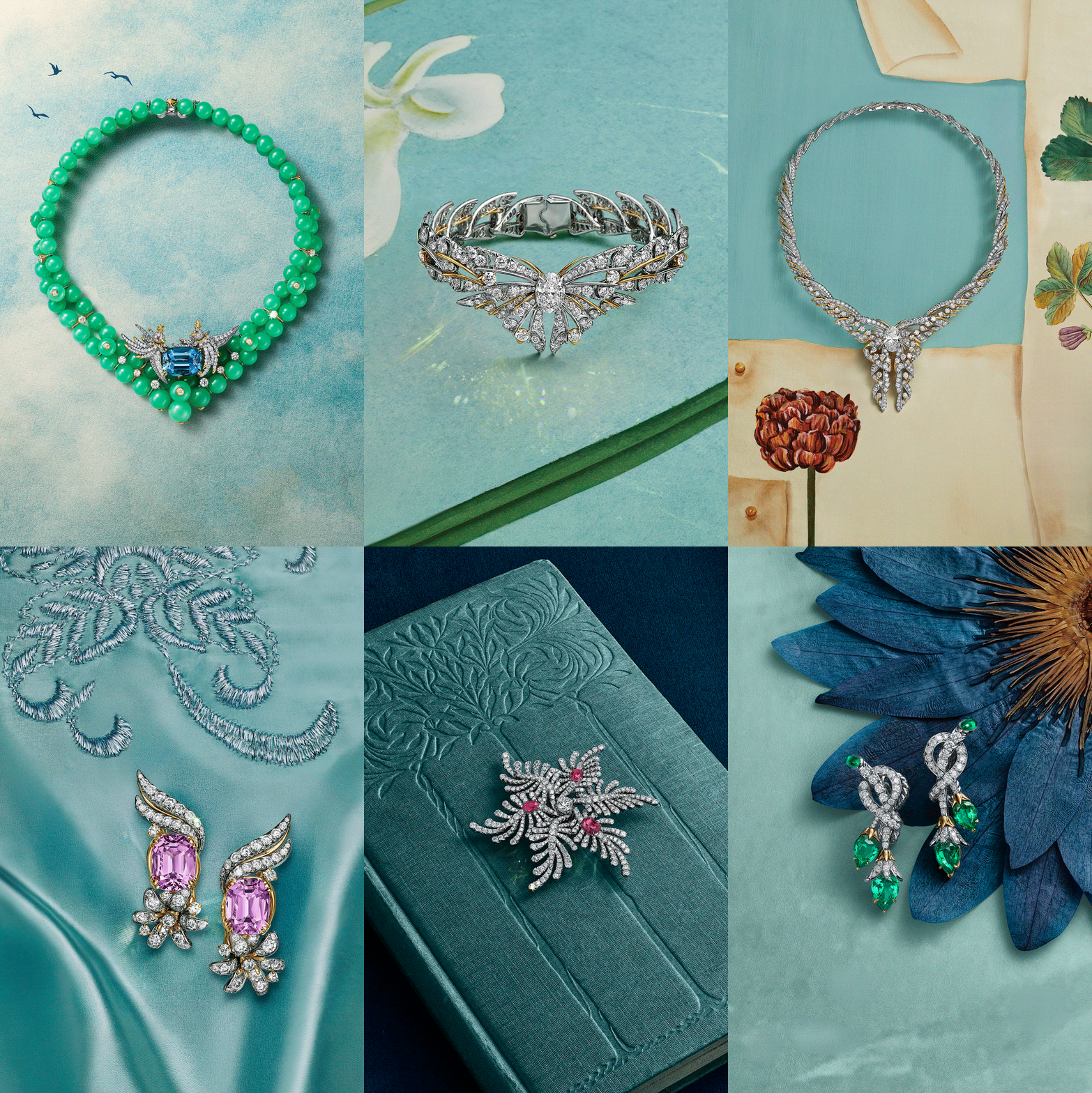
A pair of fluttering Bird on a Rock creations poised gracefully atop an aquamarine of more than 22 carats, while green chalcedony surrounds the birds in lush scenery, further accentuating the richness of the centre stone’s blue hue. In the Bird of Paradise series, fantastical birds perch upon vividly coloured gemstones—from Mexican fire opal and Brazilian rubellite to Ethiopian blue chalcedony and Madagascan spessartite—where a spectrum of coloured stones collides with pointillist-like plumage to create vibrant chromatic interplay.
Butterflies, bees, and floral-themed creations restore vitality to Schlumberger’s garden. Pavé-set white diamonds leave rhythmic intervals that recreate the lightness and agility of butterfly wings; the dynamic posture of bees in flight echoes the geometric structure of honeycombs; gold transforms into trailing vines, sapphires embellish flower stamens, and diamonds compose corollas and leaves, with subtle details revealing nature’s textures and cadence.
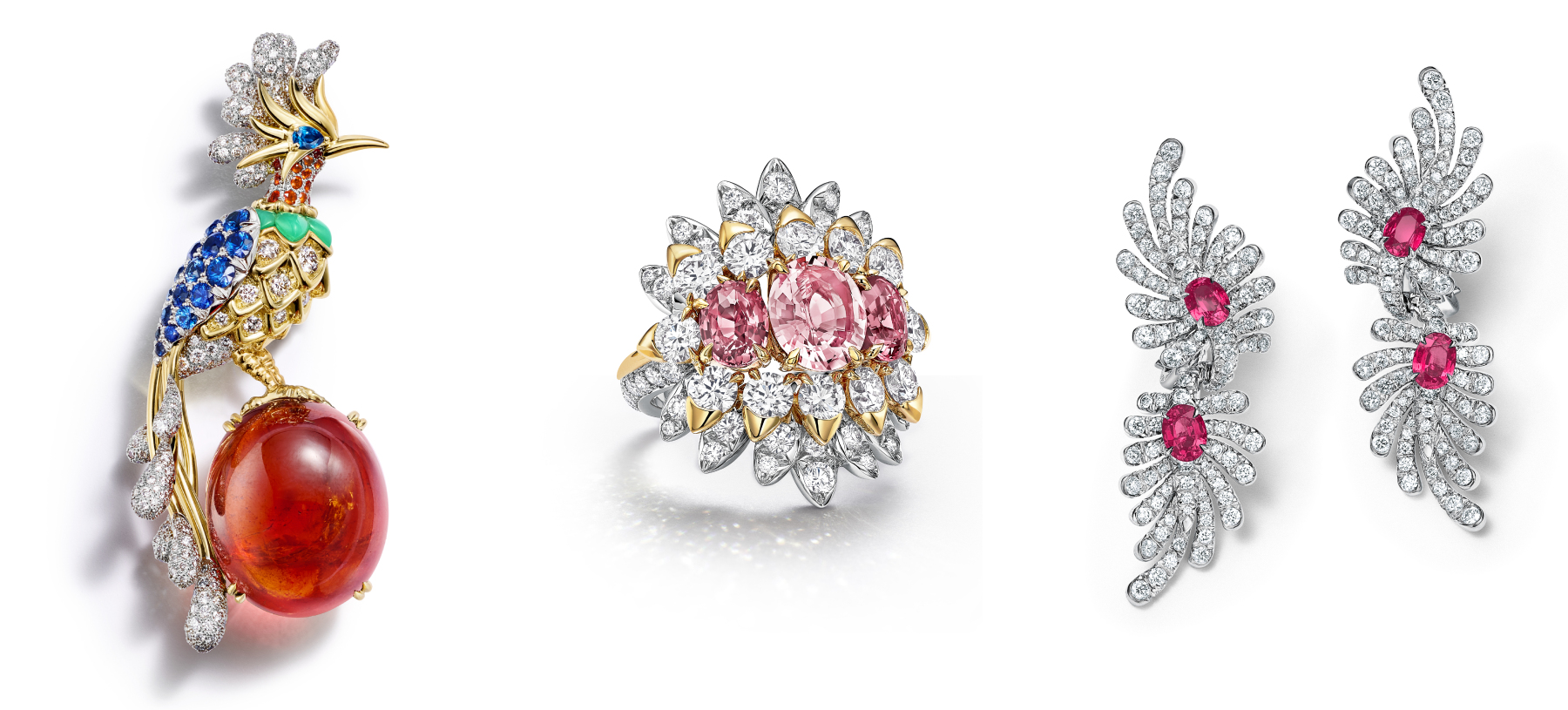
From the Tiffany 2026 Blue Book High Jewelry collection Hidden Garden
The entire collection features numerous large, unenhanced gemstones, including Mozambican rubies, Zambian emeralds, padparadscha sapphires, and Montana sapphires, preserving their natural hues to the greatest extent and adding a rustic vitality to this nature-inspired high jewellery collection.
Tiffany’s contemporary high jewellery language embodies a flourishing tension rooted in nature, inseparable from the inspiration of this pivotal figure preserved within the brand’s Archives—Schlumberger.
More than a dozen archival creations by him are currently on view at the “Birds in Bloom: Tiffany’s Archives” limited-time exhibition at Tiffany’s Beijing Taikoo Li Sanlitun flagship store. On this occasion, Luxe.CO conducted an exclusive interview with Christopher Young, Tiffany’s Vice President of Heritage and Global Creative Visual Merchandising and Creative Director, inviting him to open the doors to Tiffany’s Archives and interpret Schlumberger’s creative brilliance.
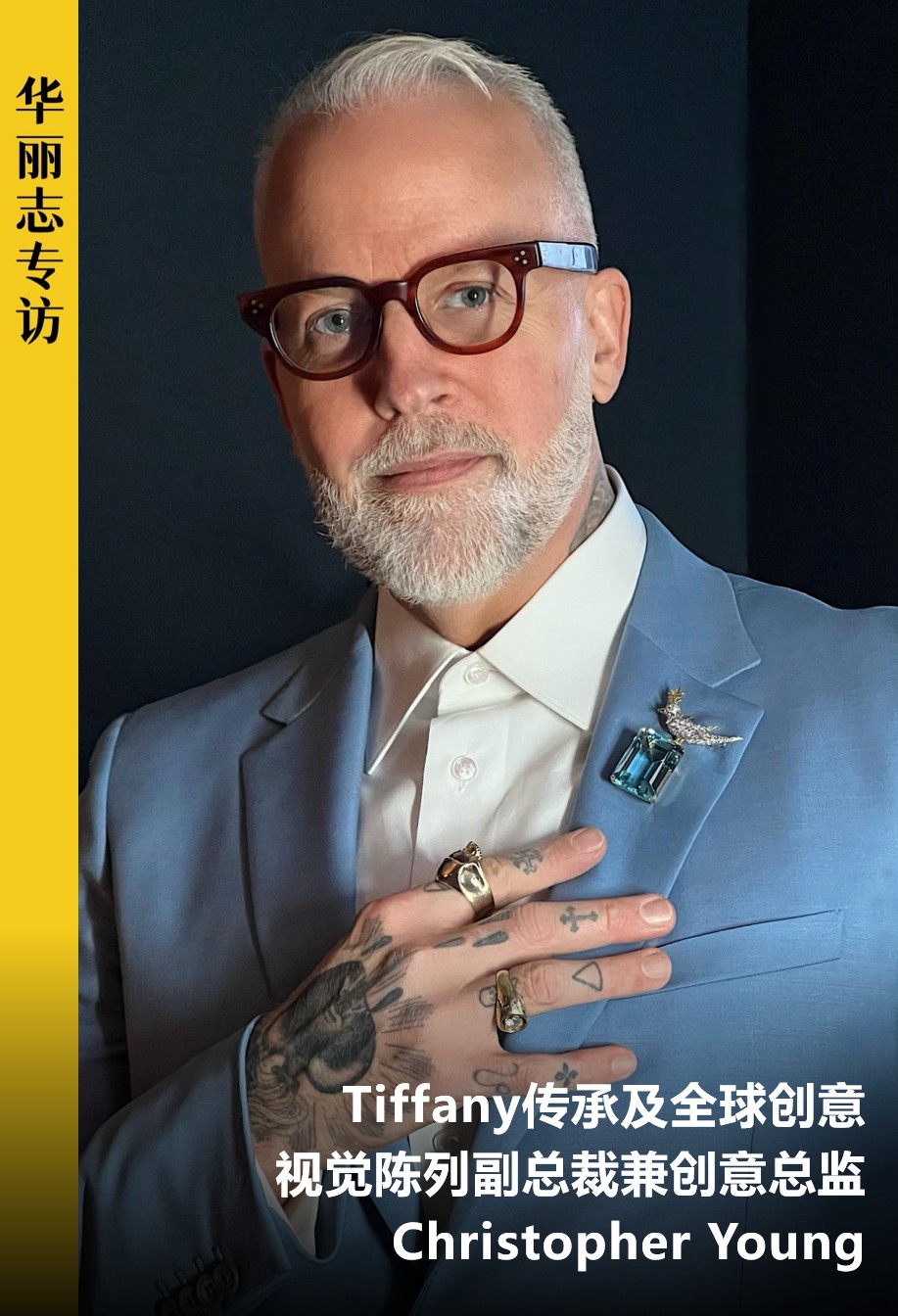
Christopher recalled his first encounter with Schlumberger’s work, many years before he joined Tiffany:
“As a professional illustrator, I was immediately drawn to the innovation in his forms and compositions. I still remember cutting out an image of his Plumes necklace from a magazine and pinning it above my drafting table in the studio as a source of inspiration. It stayed with me because the concept was so complete: technically masterful, poetic, joyful, and infused with a sense of fantasy that thrilled me.”
“The way he arranged pear-shaped, marquise, and oval rubies like drops of blood along the wings of a bird fascinated me. I had never seen anything like it!”
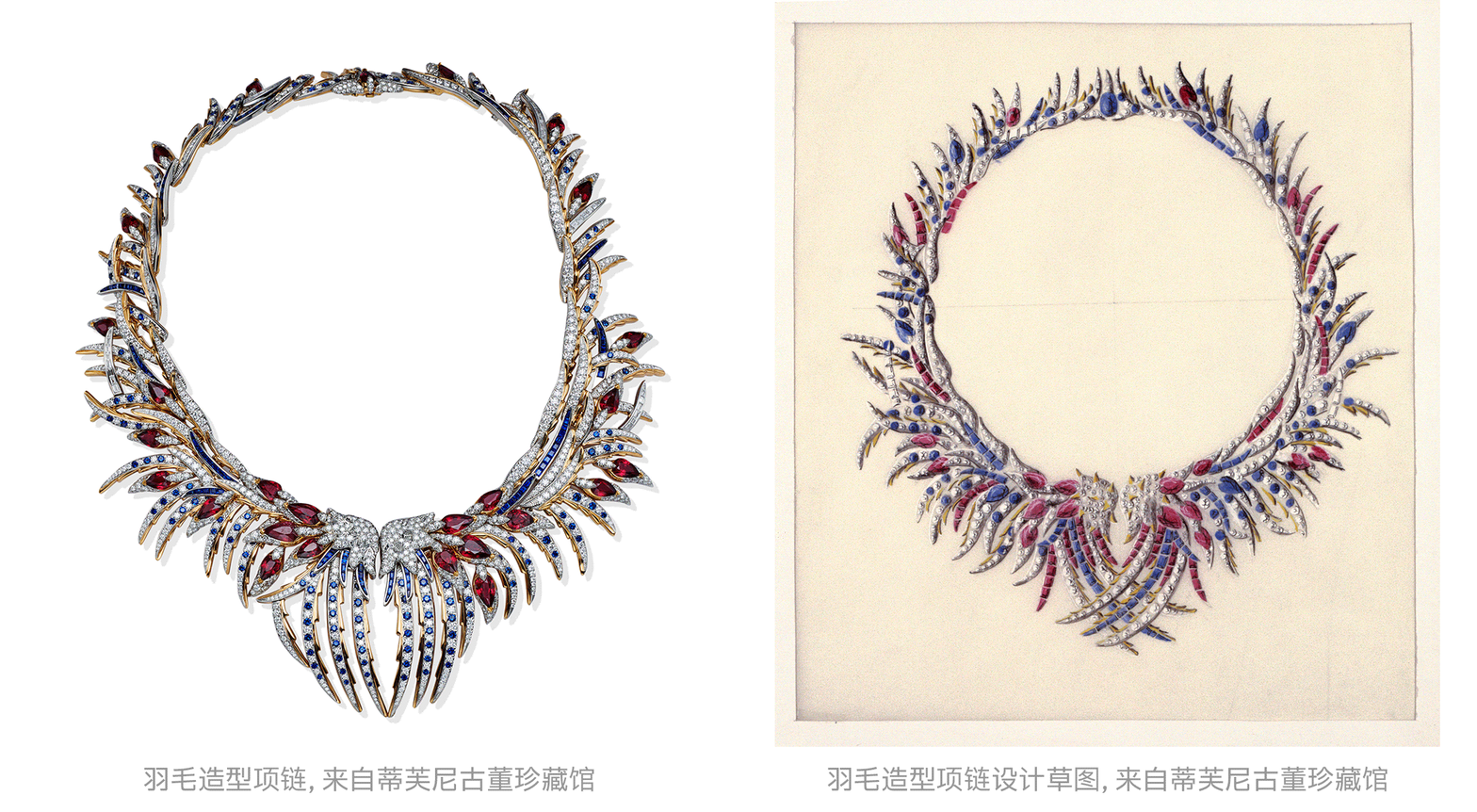
Christopher summarised, “Jean Schlumberger is profoundly significant to Tiffany because he historically transformed the style of high jewellery at a pivotal cultural moment.”
Jean Schlumberger: The Pioneer Who Historically Transformed the Style of High Jewelry
— A visionary style merging Surrealism and Naturalism, endowing static jewels with a sense of life
Schlumberger’s creations seem to possess a magical quality—each viewer discovers a different story within them.
At the “Birds in Bloom: Tiffany’s Archives” limited-time exhibition at the Beijing Taikoo Li Sanlitun flagship store, a Wing Brooch created in 1951 at first glance appears to evoke wings from myth and dreams; viewed from another angle, it resembles an elephant flapping its ears, with two sapphires of different cuts forming deep-set eyes. Another brooch shaped like a bird in flight is in fact inspired by a marine creature, the sea slug (also known as the sea hare), with two movable pearls at the top simulating its flexible tentacles.
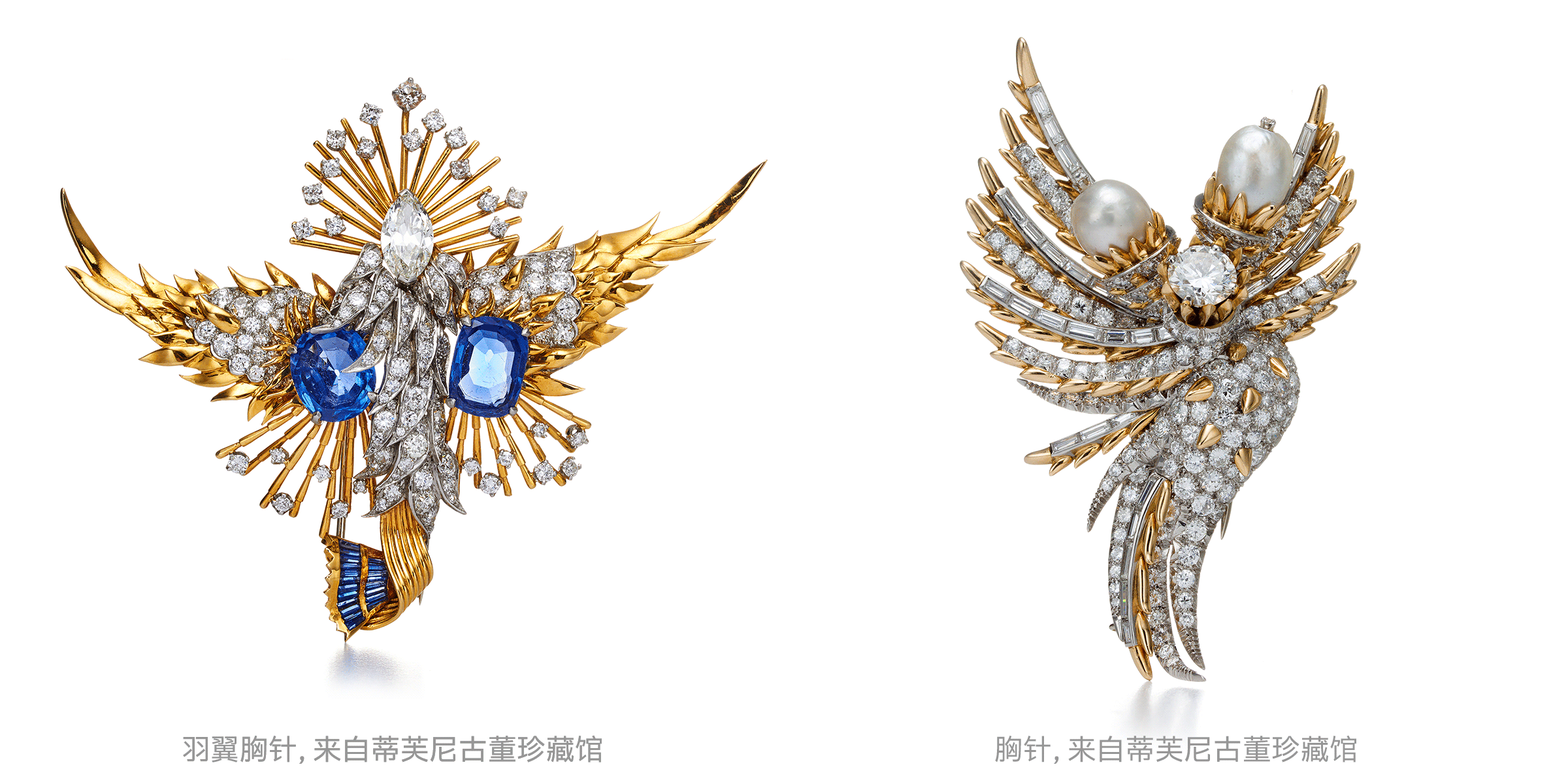
Christopher shared that upon first encountering Schlumberger’s work, he was captivated by the delicate balance within its asymmetrical structures and its surreal dreamlike quality, describing it as “intelligent, refined, and imbued with extraordinary vitality.”
Schlumberger’s highly original imagination may have stemmed from his unconventional background. He was one of the few designers without formal jewellery training and did not begin his career working with precious gems, instead possessing a pioneering boldness and experimental spirit.
Born in 1907 into a prominent French textile family, Schlumberger was expected to study finance in Berlin, but he fled to Paris to pursue art. Cut off financially by his family, he sourced old chandeliers, glass bead necklaces, and antique bracelets from flea markets, dismantling them to create new works.
His early vividly modelled buttons and brooches—depicting animals, shells, cherubs and fruit—caught the attention of haute couture master Elsa Schiaparelli, leading to collaboration in which he designed buttons and costume jewellery for her creations.
He spent several months each year living on tropical Caribbean islands and frequently travelled to Central America and Southeast Asia. Natural landscapes, marine life, exotic flora and fruit, and the cosmos all became sources of inspiration. Rather than merely imitating nature, he sought to reconstruct its structure.
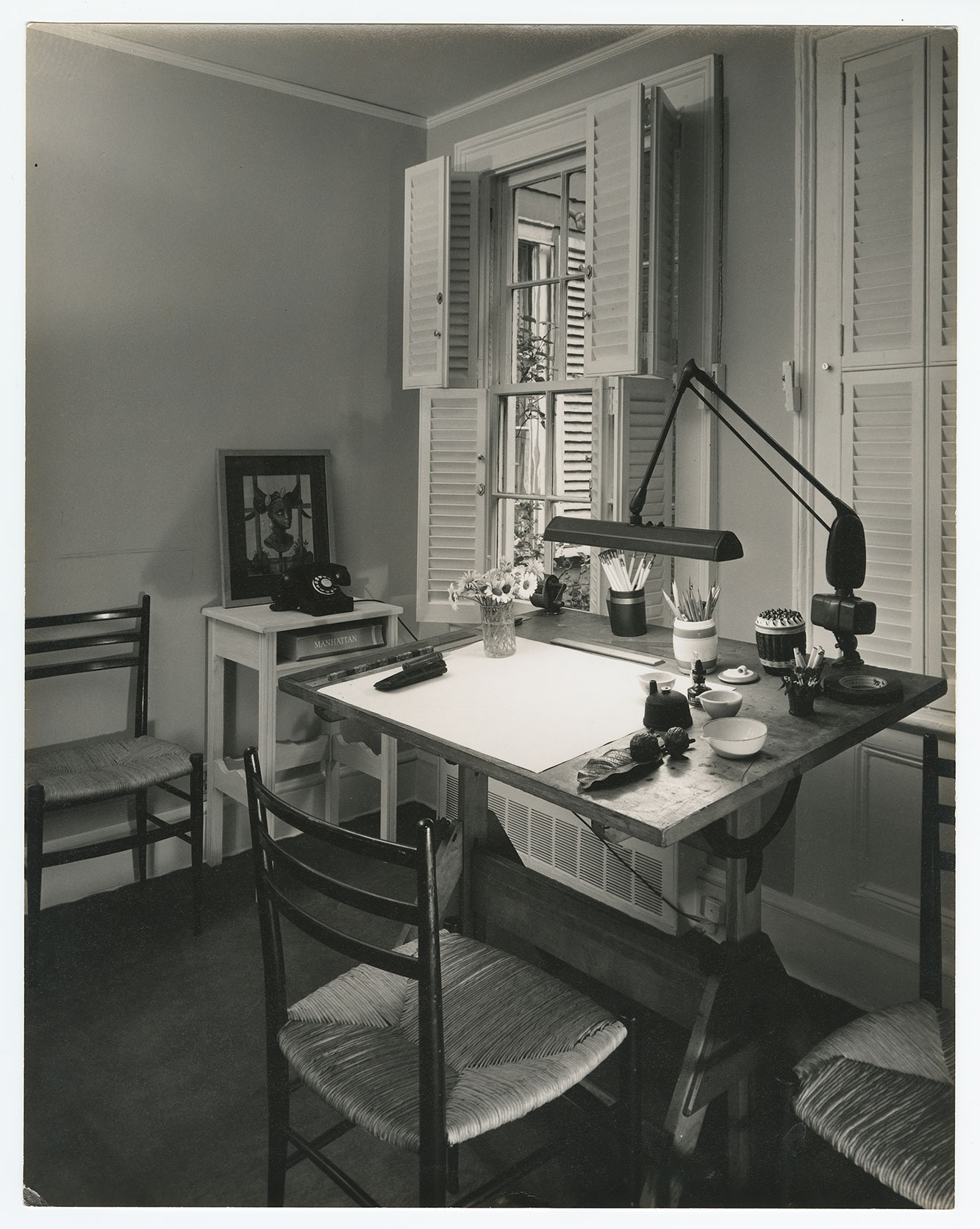
Schlumberger’s residence on a tropical island
In mid-20th-century France, the geometric symmetry of Art Deco dominated aesthetic taste. Schlumberger, however, went against the current, creating a striking contrast with the symmetry, order and static beauty of traditional jewellery.
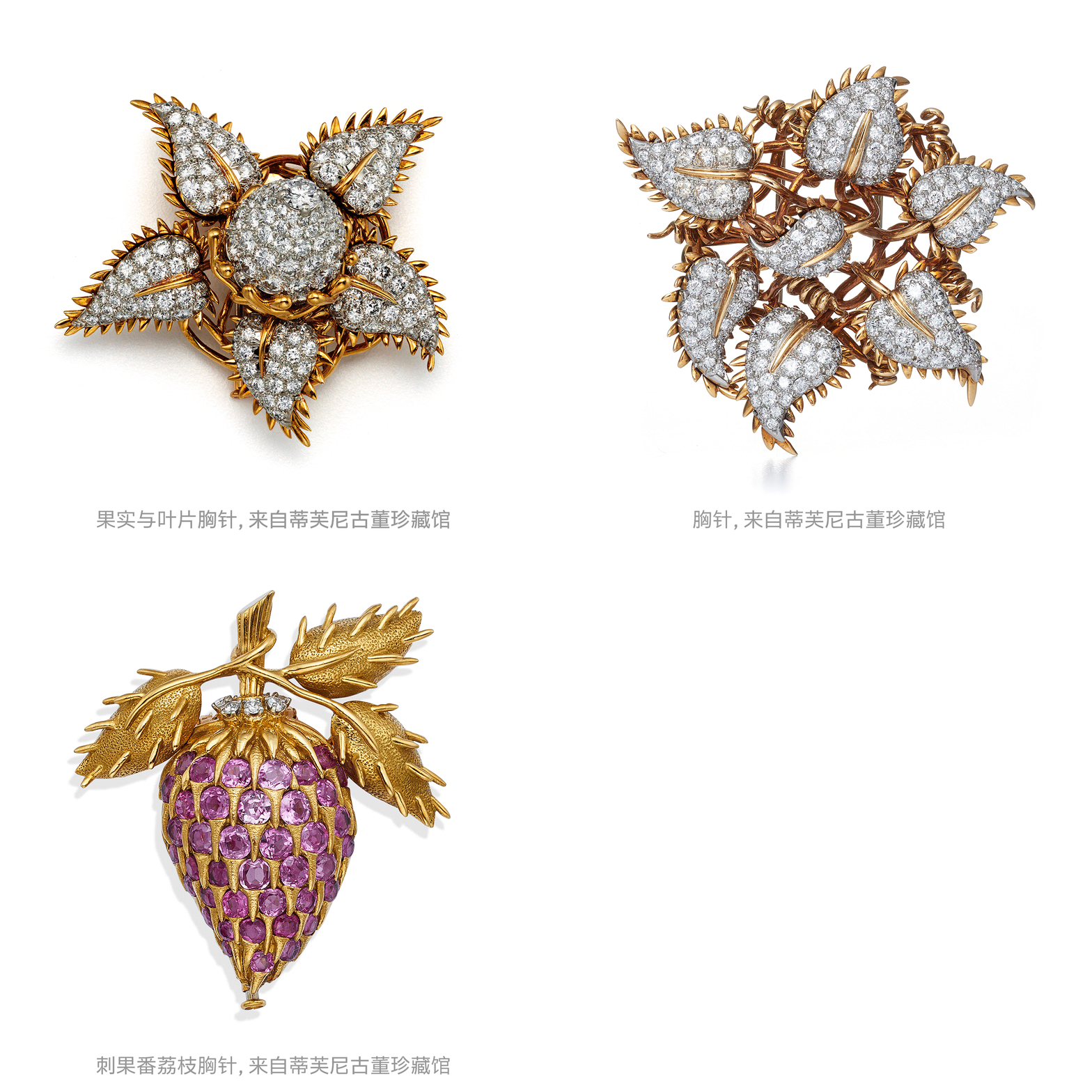
He understood the organic laws of growth in nature—untouched and pure. The Fruit and Leaves Brooch, with its freely reversible leaf structure, simulates a plant’s maturation from blossom to fruit; another brooch features seven independent leaves that rotate 180 degrees, like a dance of natural cycles, stirring a deep-seated memory of life’s order within the viewer’s genes; the Soursop Brooch distils the fruit’s distinctive spiky heart-shaped form, with pink sapphires resembling translucent pulp, as though nature continues to grow within the gemstone.
This genius designer, who thrived freely in nature and defied convention, creatively infused static jewels with the rhythm of life.
— Infusing Tiffany with fresh vitality distinct from traditional European jewellers
Having survived the ravages of World War II, Schlumberger eventually relocated to New York to continue pursuing his passion for design. In 1956, at the invitation of then-Tiffany Chairman Walter Hoving, he joined the company as Vice President, becoming the first designer in Tiffany’s history permitted to sign his creations—widely regarded as a pioneer of “artist jewellery.”
By then, his distinctive personal style had already garnered attention. “His work helped define a new postwar vision and imagination of luxury—more expressive, imaginative, colourful and modern,” Christopher observed.
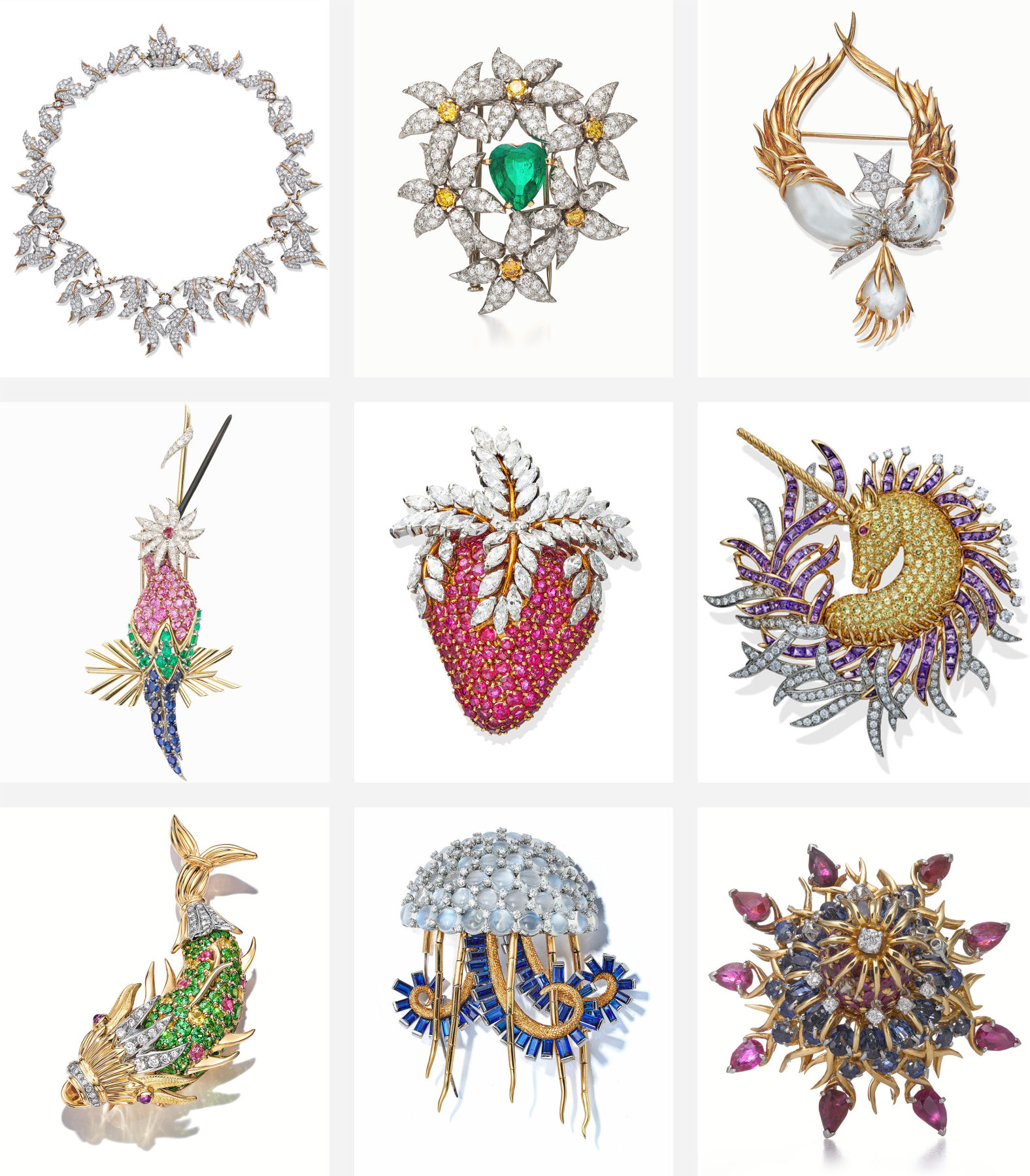
Schlumberger distilled the natural world and extraordinary imagination into jewellery art, with flora and fauna, the ocean, the cosmos, textiles and mythology forming his five major creative themes.
At the time, Tiffany already enjoyed the reputation of America’s “Diamonds King.” Schlumberger’s arrival significantly strengthened the brand’s authority in coloured gemstone high jewellery.
“He injected Tiffany with vibrant creative energy that remained elegant without being overly serious, unlike those traditional European jewellers.”
Rather than beginning with gemstones, Schlumberger first sketched his designs, and partners would then source materials to realise his vision. Tiffany’s century-long global gemstone procurement network offered him “every pigment imaginable.”
For a designer, this was near-luxurious creative freedom: top-quality, rare gemstones became his palette; gold and other precious metals served as canvas and medium; and the world’s finest craftsmen and gemologists were his brushes.
This painterly approach to coloured gemstones found perfect expression in the 1960 Hedge and Row of Flowers Necklace. Twenty-two yellow sapphires are arranged in a circular composition, interspersed with thirteen turquoise stones. The vivid yet rhythmic palette sees gold transformed into soil, branches, and sunlight, while brilliant coloured gemstones evoke the presence of seasons and life.
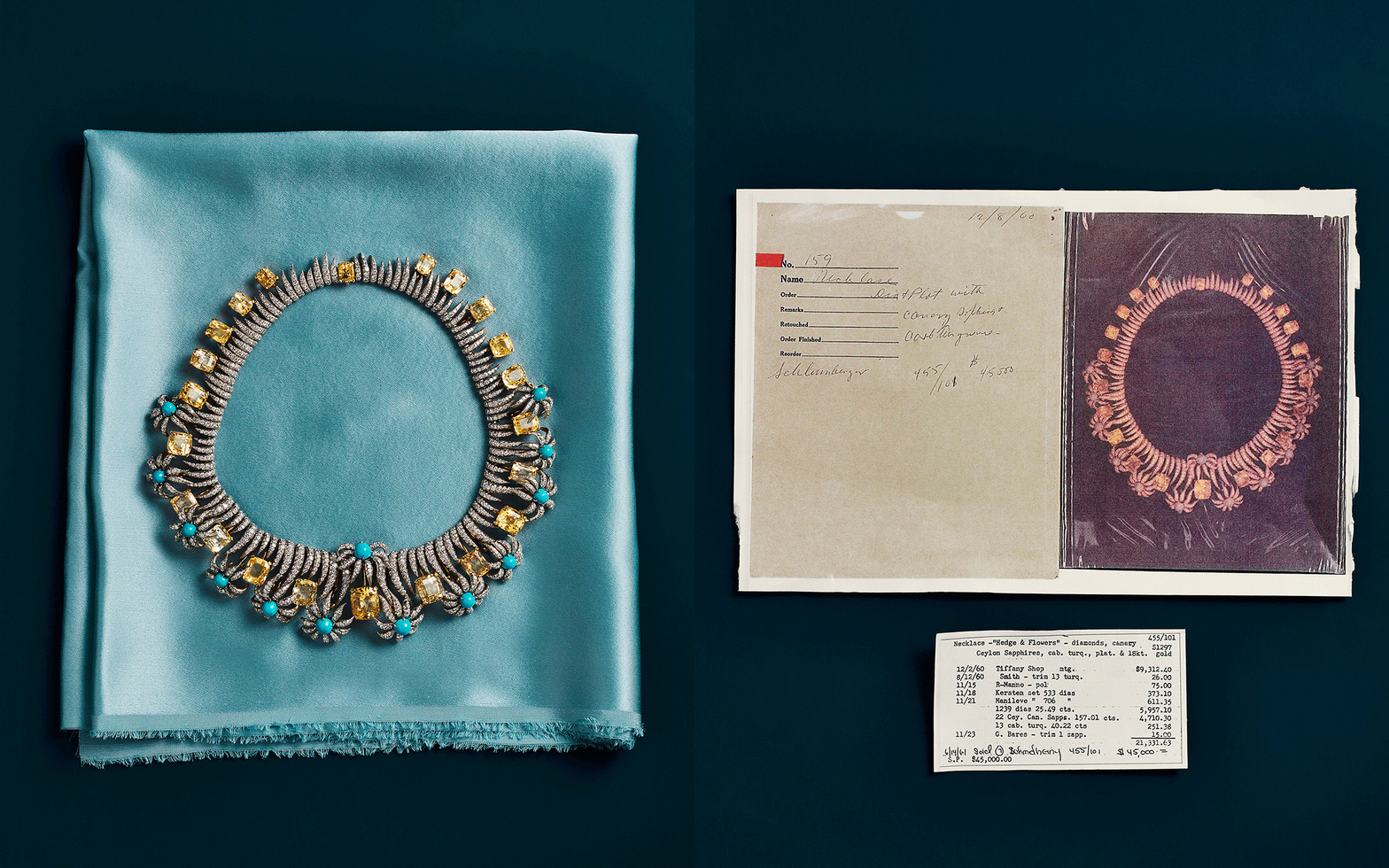
Hedge and Row of Flowers Necklace, from Tiffany’s Archives
Through close collaboration with Tiffany, Schlumberger created a series of passionately coloured, exuberantly formed works infused with the spirit of tropical seas, erecting enduring monuments in the history of high jewellery.
— Each of Schlumberger’s jewels is a portrait an artist offers to women
Schlumberger once said, “Some women want to look expensive, but I prefer them to look precious.”
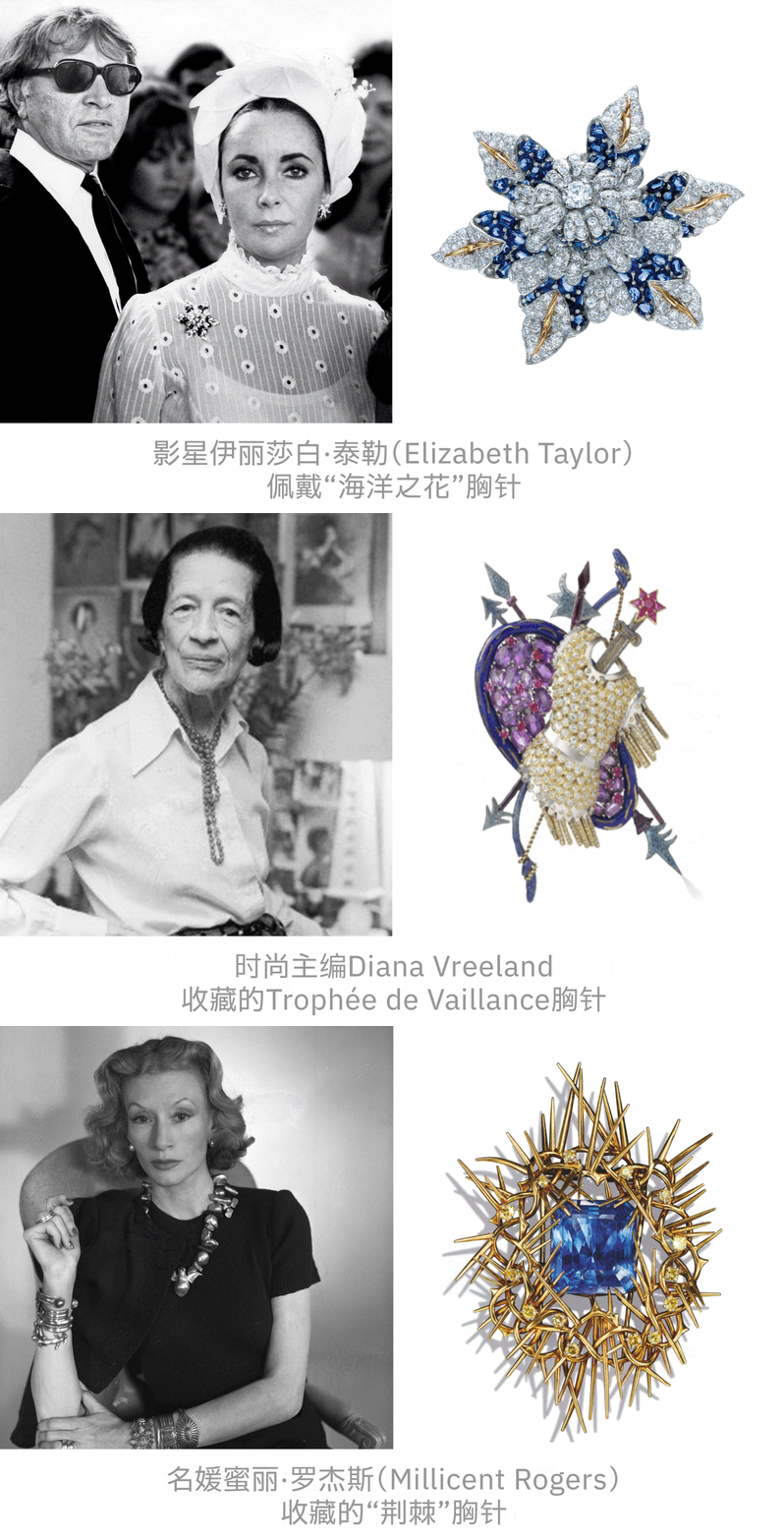
His dynamic, individualistic creations attracted many notable women of his era, including actress Elizabeth Taylor, former First Lady Jacqueline Kennedy, influential fashion editor Diana Vreeland, and heiress Millicent Rogers.
Horticulturist and collector Rachel Lambert “Bunny” Mellon was among Schlumberger’s most important collectors and muses, their mutual appreciation of nature forging a deep bond. At the exhibition, Christopher created a verdant garden setting in tribute to their friendship.
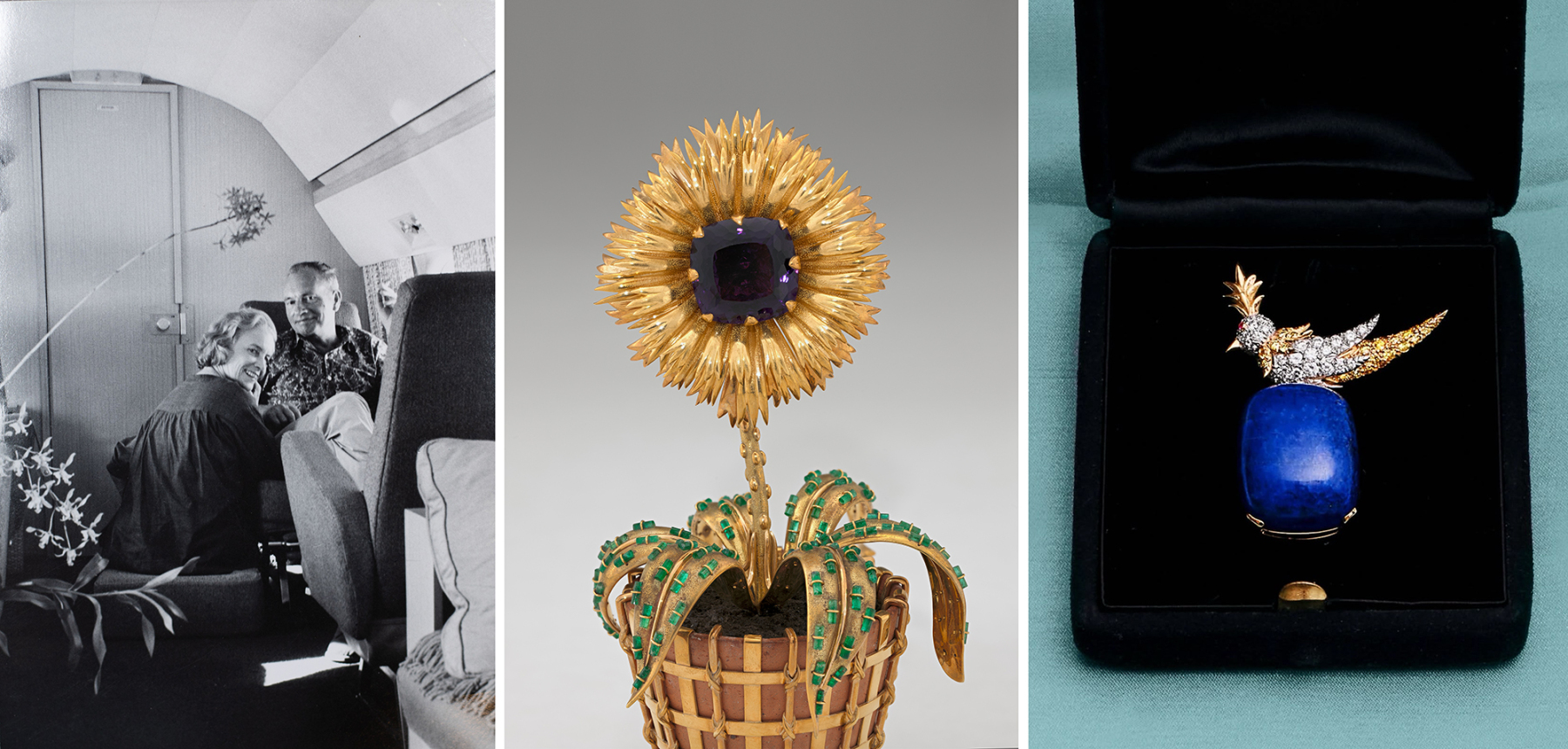
Inspired by a yellow-crested cockatoo he encountered during his travels, Schlumberger created the iconic Bird on a Rock. Bunny Mellon was among the first to own a Bird on a Rock brooch. The Flower Pot jewellery object he customised for her vividly recreated the textures of a flowerpot and soil.
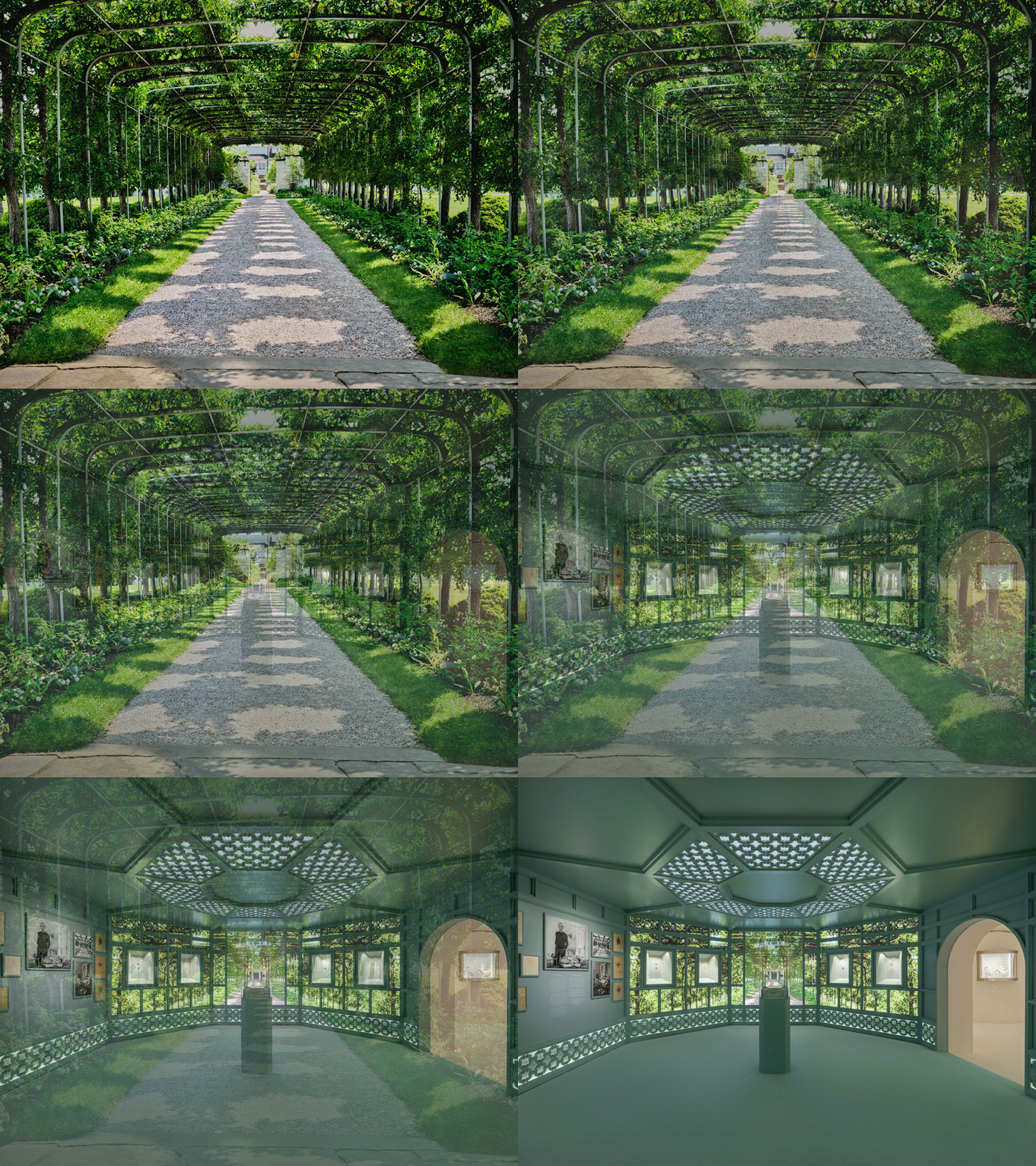
The “Birds in Bloom: Tiffany’s Archives” limited-time exhibition at the Beijing Taikoo Li Sanlitun flagship store recreates Bunny Mellon’s Oak Spring Garden.
Christopher also cited a memorable client: the British aristocrat and top model Baroness Fiona Campbell Walter Thyssen-Bornemisza, who commissioned the Plumes necklace. Pink sapphires paired with diamonds and sapphires exemplify Schlumberger’s fearless elegance, harmonising with the client’s beauty, boldness and distinctive character.
“In many cases, the collector’s own story deepens our understanding of the jewel. It is no longer simply seen as a beautiful object, but as an expression of personality and personal belief,” Christopher explained. “It reminds us that Jean Schlumberger’s jewellery was never solely about design itself. Each piece is a portrait—an artist’s portrait—depicting the character of every client.”
Schlumberger left Tiffany’s Archives with one of its most comprehensive specialised high jewellery collections. Beyond this, the jewellery treasury spanning nearly two centuries holds countless astonishing historical treasures, continuing to provide today’s creators with an inexhaustible source of inspiration.
Tiffany’s Archives: A Living Treasury
— “What is archived is not only jewellery, but human emotion”
Christopher began his relationship with Tiffany at a young age, designing window displays as an illustrator. He officially joined the brand in 2011, gaining in-depth access to Tiffany’s Archives. Today, he also oversees the brand’s global creative visual and merchandising direction, serving as a true “gatekeeper” of Tiffany’s aesthetic.
He introduced us to some of the “magical” holdings within Tiffany’s Archives—from the cash ledger used on the very first day of Tiffany’s business operations in 1837, to the Tiffany pocket watch presented by survivors of the Titanic to the captain of the rescue ship.
“The meaning an object carries goes far beyond its material value. When such pieces return to Tiffany’s Archives, what is preserved is not only gemstones, craftsmanship, or design history. Human emotion returns with them as well. That is what makes archival work so profound,” Christopher explained.
Tiffany’s story is also told through the “entire ecosystem” that brought these jewels into being, including design sketches, production records, photographs, advertisements, correspondence, and “numerous traces that reflect their creativity.” “These materials allow us to gradually piece together their stories. The process is deeply fulfilling. We may begin with a single image or an article, and from there an entire world slowly emerges.”
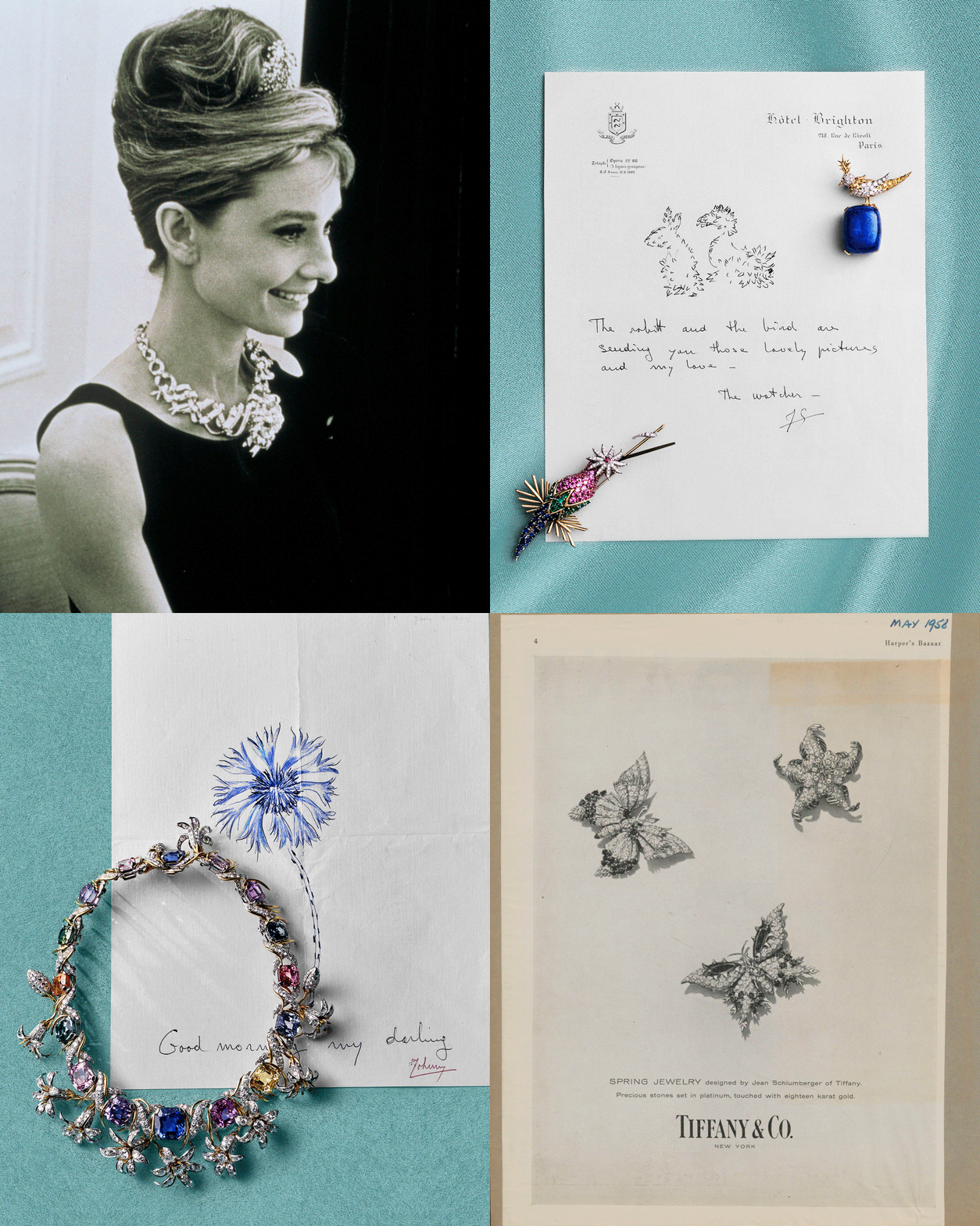
Christopher emphasised that the Archives also reflect Tiffany’s longstanding distinctive creativity: “The fusion of purity in design with technical audacity; the union of diamond authority with artistic imagination; the balance of refinement and a sense of wonder.”
— Tiffany’s Heritage: An Evolving Continuum of Ideas
Inventiveness, joy, and creativity—Christopher uses these three keywords to describe the relationship between Tiffany and its legendary designers. Together, they form the essential driving force behind the brand’s creative vitality.
More than half a century ago, Tiffany embraced the “non-traditionally trained” genius of Jean Schlumberger with remarkable foresight, granting him access to the finest gemstones, unlimited creative freedom, and an introduction to a global clientele eager to appreciate the highest level of originality. That encounter enabled Schlumberger to reach the pinnacle of his design career.
Today, these invaluable archival assets continue to flourish in the hands of Tiffany’s new generation of creatives. Under the leadership of Nathalie Verdeille, Tiffany’s Senior Vice President and Chief Artistic Officer, the Bird on a Rock has evolved from a single brooch into a comprehensive series encompassing necklaces, rings, and even timepieces, becoming a powerful showcase of Tiffany’s expertise in rare gemstones and design innovation.
As Christopher observed, “Tiffany’s heritage is not frozen in the past; it is an evolving continuum of ideas, always capable of being reinterpreted in new and unexpected ways.”
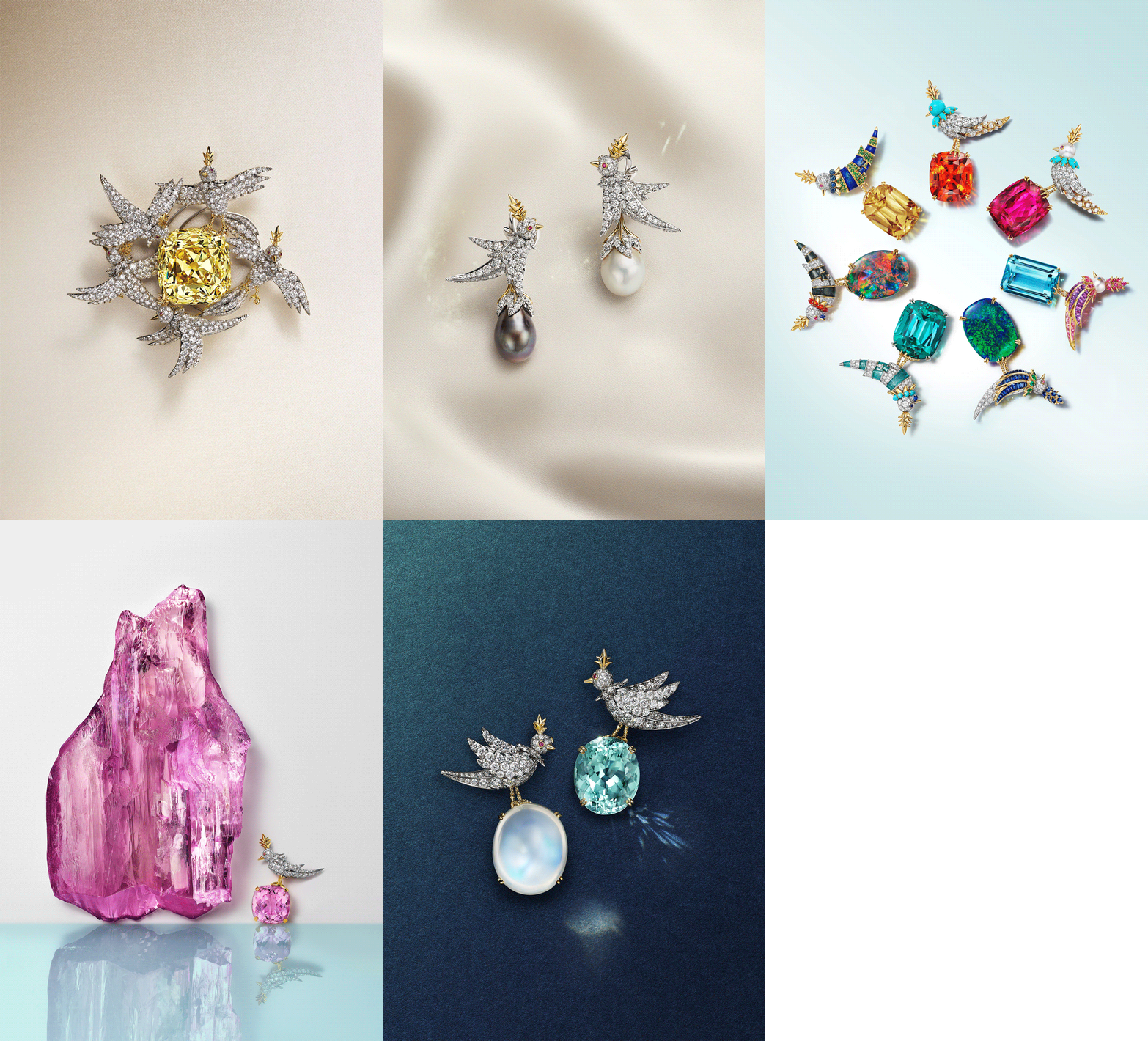
In 2023, Nathalie Verdeille unveiled the 2.0 edition of the legendary Bird on the Tiffany Diamond, featuring five birds perched upon the legendary yellow diamond in gestures of stepping lightly, pecking gently, and caressing softly—infusing the Bird on a Rock with renewed narrative expression. In recent years, from the Pearl Bird on a Rock and Rainbow Bird on a Rock to the Love Birds series, and limited-edition creations crafted from an extraordinary rough kunzite of more than 7,500 carats acquired by Tiffany, this iconic design has continuously pushed the boundaries of materials.
Balancing responsibilities for both Tiffany’s Archives and global creative visual direction, Christopher has a particular understanding of the mutually enriching relationship between history and the present. In his view: “History provides substance and credibility to creative work, while contemporary creative expression ensures that heritage remains alive, relevant and moving forward.”
In March this year, 27 archival Tiffany jewels and objects appeared prominently in the Academy Award-winning film Frankenstein, which received three Oscars, with Christopher leading the collaboration. “The deeper I delve into these archival materials, the more I understand why Tiffany’s influence endures and remains timeless,” he said.
“During my time at Tiffany, I have been fortunate to enjoy tremendous creative freedom, of course, built upon long-term trust and accumulated experience. Within necessary constraints, we are able to seek out fresh narrative contexts, evoke emotional resonance, and create unexpected visual poetry.”
He concluded, “I firmly believe in the importance of dreams. Surprise, joy, and wonder are indispensable elements of the Tiffany experience.”
| Image Credit: Courtesy of Tiffany
| Editor: Elisa