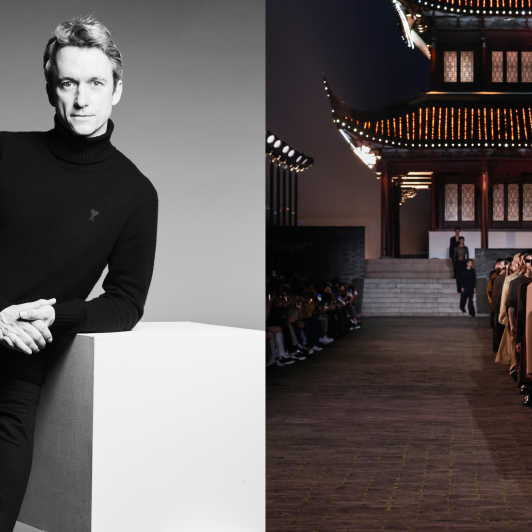
On April 10th, on the Xiangmen City Wall in the old town of Suzhou, French fashion brand AMI staged its second major show in China. Just beneath the city wall, within Renheng Warehouse Street, AMI opened its 17th store in Mainland China.
“From the moment I joined the brand, I emphasized to the founder: if we have the ambition to expand, we must conquer the Chinese market,” Mr. Nicolas Santi-Weil, CEO of AMI, told Luxeplace.com. “China has become AMI’s largest global market in the last two years.”
When Nicolas Santi-Weil, armed with experience in investment and brand management, took the helm as CEO in 2013, the brand’s annual sales were only 1.8 million euros. By 2023, AMI’s revenue had surged past 300 million euros.
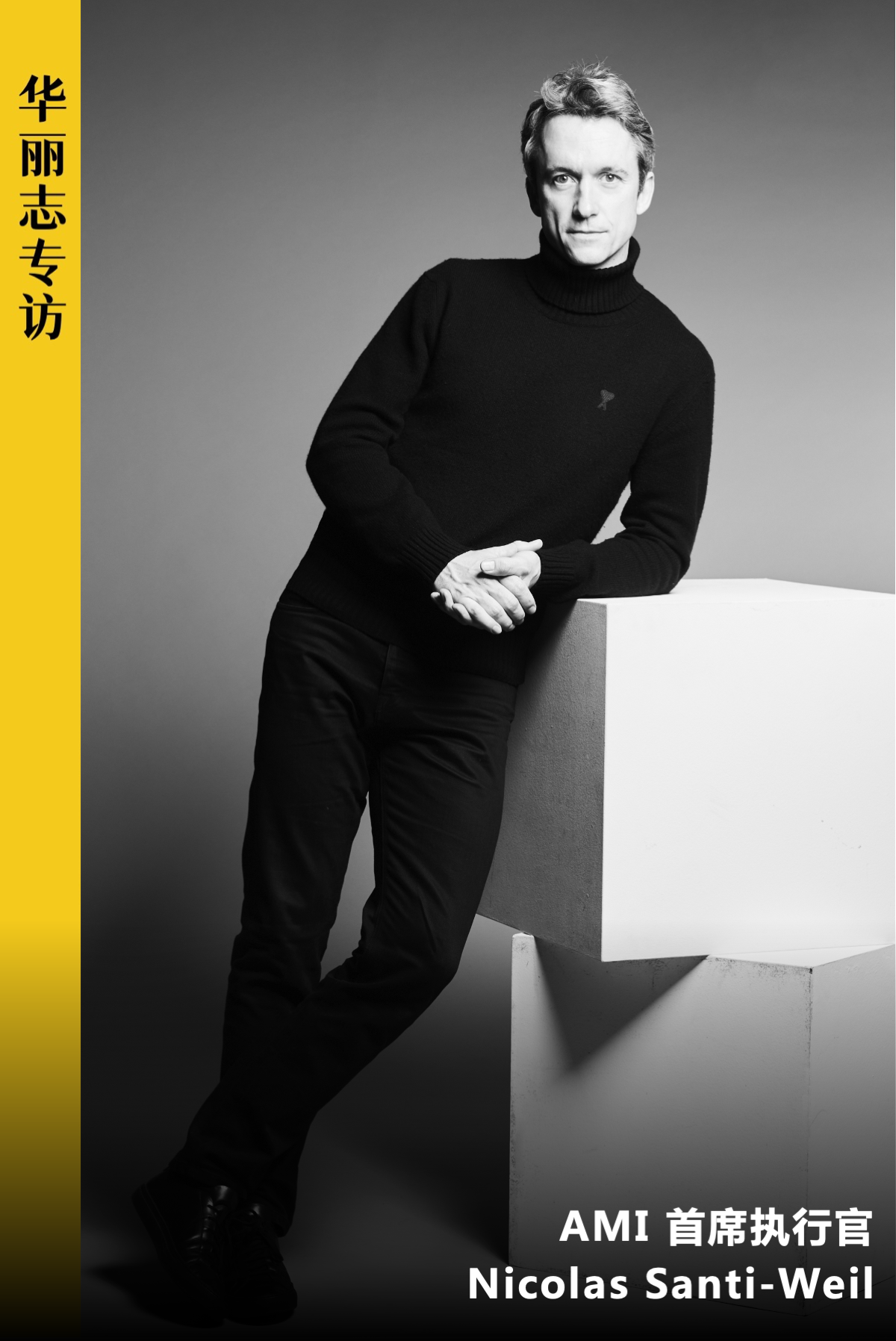
If the success in style positioning—striking a balance between contemporary and designer brands—can be attributed to the founder Alexandre Mattiussi’s talent and efforts, then the business success, timely market entry, and broader market acceptance in China can be credited to the acumen and actions of Nicolas Santi-Weil.
This interview with Mr. Nicolas Santi-Weil offers deeper insights into why AMI has been more dynamically growing among many foreign fashion brands entering the Chinese market in recent years and discusses potential risks and areas of focus for the future.

Understanding China—”The Chinese Market Deserves Real Investment”
“I first came to China 20 years ago, sometimes visiting two, three, or even four times a year,” says Nicolas Santi-Weil, who has a long-standing connection with the Chinese market, both as an entrepreneur and an angel investor. Before 2012, he served as a co-founding partner and executive director at the French brand The Kooples. Prior to that, he was the global development director at the French high-end custom shirt manufacturer, Liste Rouge.
Unlike many foreign brand CEOs, Nicolas’s understanding of China is not just from frequent visits; he has ventured beyond Beijing and Shanghai into other cities, immersing himself in local culture and life, witnessing the dynamic growth of Shenzhen, being surprised by Chengdu’s tea-drinking customs, and thoroughly enjoying the small restaurants in Guangzhou and Hong Kong.
His grassroots approach to exploring markets made Nicolas realize, “China is more than just a giant in procurement and production.”
“China is an important but difficult market. Nevertheless, as both CEO and investor, I see it as a very intriguing market that warrants substantial time, money, and human resources investment,” he asserts.
Upon joining AMI, Nicolas immediately urged the founder Alexandre Mattiussi to focus on the Chinese market. In 2016, AMI ventured into China, initially starting with small-scale wholesale.

Luxeplace.com: How did you come to understand the Chinese market?
Nicolas Santi-Weil: Twenty years ago, due to my supply chain role, I frequently visited China, sometimes up to four times a year. I was pleasantly surprised by many cities, including Hong Kong, Shenzhen, and Ningbo.
For instance, over twenty years ago on my first trip to Hong Kong, I explored the small streets of Kowloon, discovering local brands and small restaurants—activities I deeply enjoy. My first visit to Chengdu left me astonished at people gathering in the streets for tea in the afternoon. I have a passion for street food, and the local snacks were delightful. On my first trip to Guangzhou, I was taken to a modest-looking restaurant that offered an exceptionally good meal.
Luxeplace.com: What was the situation when you joined AMI?
Nicolas Santi-Weil: When I joined, AMI was just one year old, and its revenue scale was quite small, but for me, money wasn’t the driving force. My motivation was to create something that would make me happy and proud, and to work with people I enjoyed being around.
I told the founder that I wanted to invest in AMI, and if the business developed, I would see a return. That’s why I became both an investor and the CEO.
Luxeplace.com: What was your perception of the Chinese market at the time?
Nicolas Santi-Weil: I noticed the young, trendy kids here who are keen on Western culture and eager to discover new European brands.
I believe that if you want to enter the Chinese market, you must be fully committed—not just selling on Tmall or JD.com. You need to come to China, meet people, understand the culture, and understand how the younger generations live, how they travel, and what clothes they wish to wear.
When I discussed my observations with Alexandre, he was very curious. We not only visited Shanghai and Beijing but also traveled to different cities like Ningbo and Chengdu, interacting with Chinese designers, architects, chefs, and creative professionals, listening to their ideas. Alexandre also fell in love with Chengdu’s hotpot.
What surprised us was their eagerness to better understand French culture, designers, and our lifestyle; we shared the same curiosity.

AMI fashion show in Suzhou
Investing in China — Stores, Fashion Shows, and Teams
In 2019, AMI’s annual revenue was 35 million euros, which grew to 129 million euros in 2021, and further increased to 230 million euros in 2022.
Despite the pandemic impacting the fashion industry, AMI was able to thrive against the odds, thanks to Nicolas’ strategic foresight to boldly and firmly invest in the Chinese market.
Looking back at AMI’s development journey in China, the preparations made before the pandemic laid the foundation for subsequent rapid growth: flagship stores were established in Beijing’s Sanlitun and Chengdu’s Taikoo Li in 2018, providing direct engagement with Chinese consumers, and in 2019, a significant fashion show was held in Shanghai, marking the brand’s first show outside Paris.
“It was a bold move, as China was a distant country and we were uncertain of the outcome or if people would be willing to participate. But we decided to go ahead,” said Nicolas.
The Shanghai fashion show in October 2019, just months before the pandemic hit, attracted many more Chinese customers to AMI. Nicolas revealed that in the month following the fashion show, sales increased by 2.5 times.
“As the pandemic began in Europe, China was already on the path to recovery… We were expanding in the Chinese market, opening six new stores in less than a year,” Nicolas recalled.
After the pandemic in Europe subsided, Nicolas and other executives quickly traveled to China to recruit a team and establish a subsidiary in Shanghai to manage AMI’s operations directly.
In July, the brand’s official WeChat account was launched, followed by entries into Tmall and JD.com in August, and subsequently, several more stores were opened… That year marked a turning point for AMI in the Chinese market.
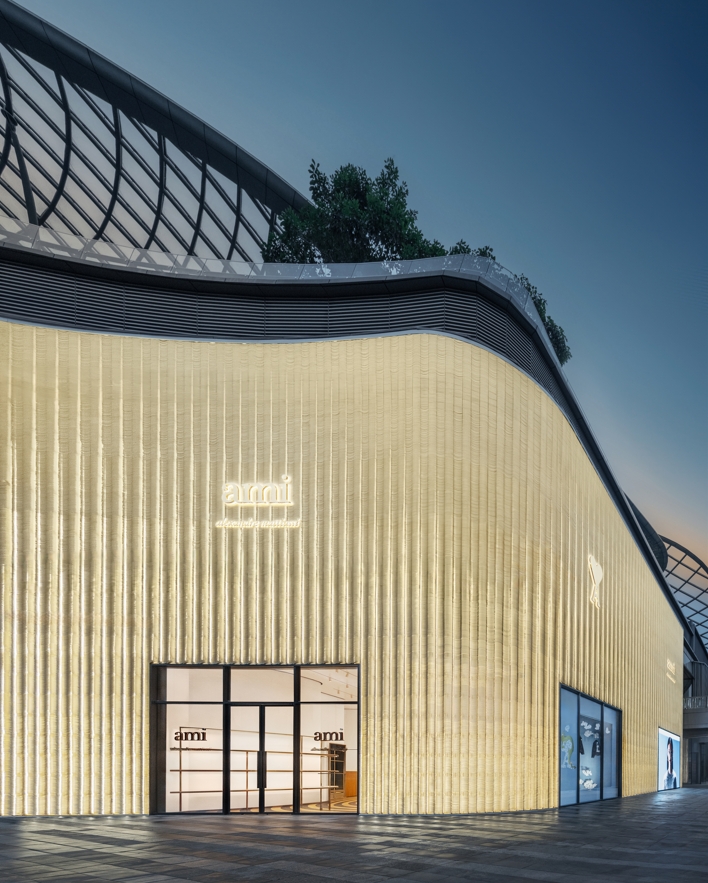
AMI’s latest flagship store opened in February this year at Tianhe Plaza, Guangzhou.
Luxeplace.com: During the pandemic, how did AMI develop in the Chinese market?
Nicolas Santi-Weil: At that time, we had already opened our first flagship stores in Beijing and Chengdu and had held a fashion show. AMI’s market in China was rapidly expanding, opening six stores in less than a year. We had a retail partner who performed excellently and was a great support.
After the pandemic in Europe, we came to China as quickly as possible, took back the business from our partner, and built a very skilled and professional team in Shanghai.
Luxeplace.com: What data do you focus on for AMI’s business?
Nicolas Santi-Weil: The number of customers, including new and returning customers, as well as customer loyalty or repeat orders. These are the two main dimensions of AMI’s growth, which I believe need to be considered together.

AMI Tianhe Plaza Boutique in Guangzhou
The Story Behind the Suzhou Show?
This Suzhou fashion show was AMI’s second show in China. In 2023, AMI opened a boutique at Renheng Warehouse Street, marking the brand’s 17th store in China.
With a narrative of cultural storytelling, AMI introduced itself to Suzhou through more tangible forms of stores and fashion shows, hoping to “convey a strong message, a cultural message, not just marketing or a commercial activity, but to do something meaningful—sharing AMI’s story, and the best way to do that is through a show.”
Suzhou’s rich cultural and historical essence captivated CEO Nicolas and founder Alexandre, with Nicolas aspiring to “build bridges between China and France, which I believe can be achieved through culture.”
Thus, AMI became the first fashion brand to host a show on the Xiangmen City Walls of Suzhou.
Nicolas held high expectations for the show: “I hope this fashion show will have a strong impact on the Chinese and even the entire Asian and global markets. When the brand begins to cut back on investments and marketing activities, this event, this location, everything should send a powerful message.”
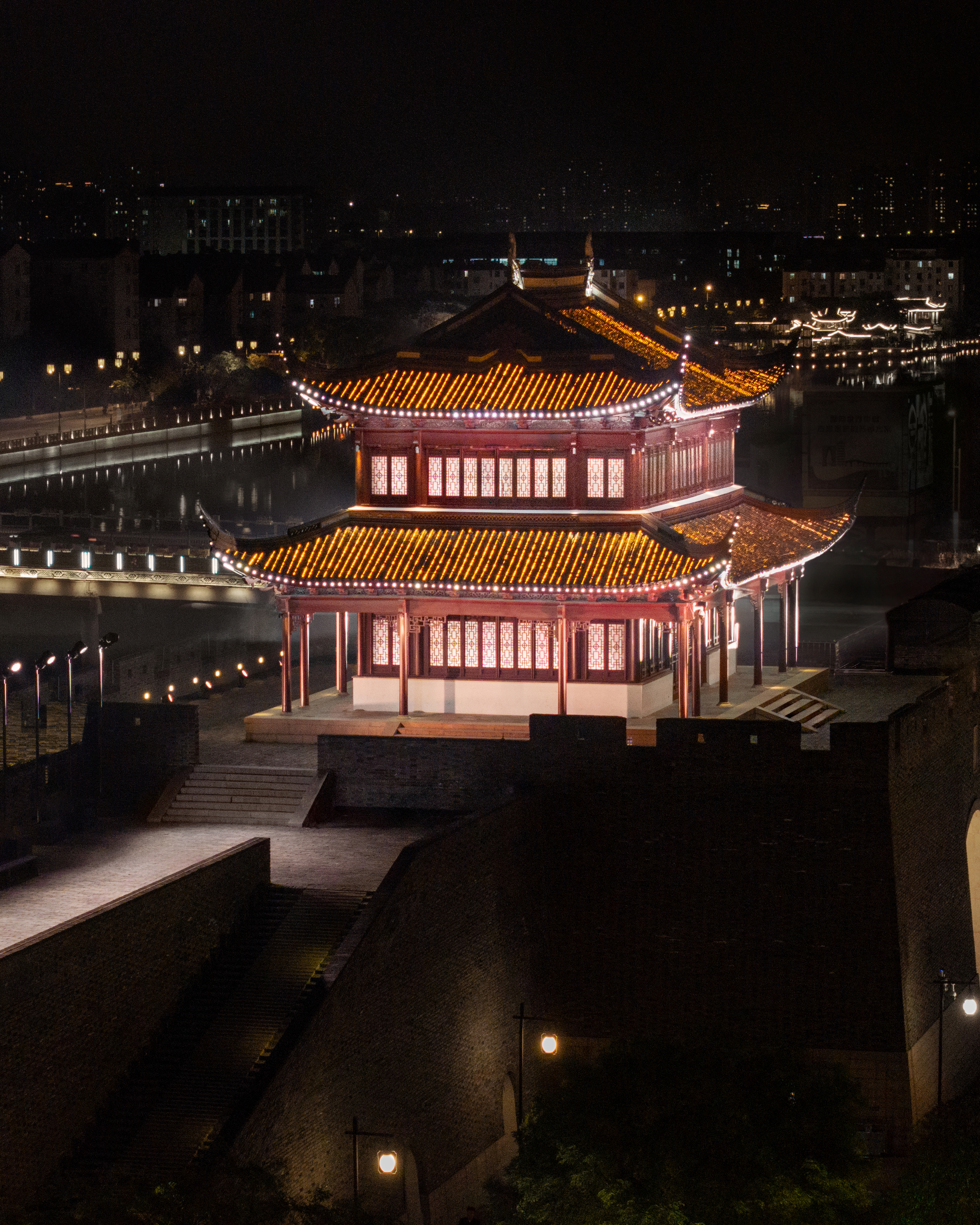
Suzhou Xiangmen City Wall
Luxeplace.com: What was the rationale for the 2019 show in Shanghai?
Nicolas Santi-Weil: From 2011 to 2018, we only held fashion shows in Paris, twice a year, never venturing outside Paris or France.
In 2019, I told Alexandre, if you truly believe in the Chinese market, we need to do something special there, not just a business event, but a strong cultural signature move. I thought hosting a fashion show there would be interesting.
Before this, our fashion show livestreams attracted between 20,000 and 40,000 viewers. The Shanghai show had millions of viewers, a sight we had never seen before. I believe this was a momentum changer, a significant move not only in Asia but globally.
Luxeplace.com: Why choose to showcase AMI again in Suzhou with a fashion show?
Nicolas Santi-Weil: “By hosting a fashion show, you get to know the city where you’re holding the show. You need to find the right location, select the right people, and understand the local culture to tell your brand’s story accurately.
In Suzhou, we were enchanted by the small bridges, classical gardens, and the cultural heritage. We fell in love with the city, which is fascinating, and we hope to build cultural bridges between China and France, which we believe can be achieved through cultural engagement.
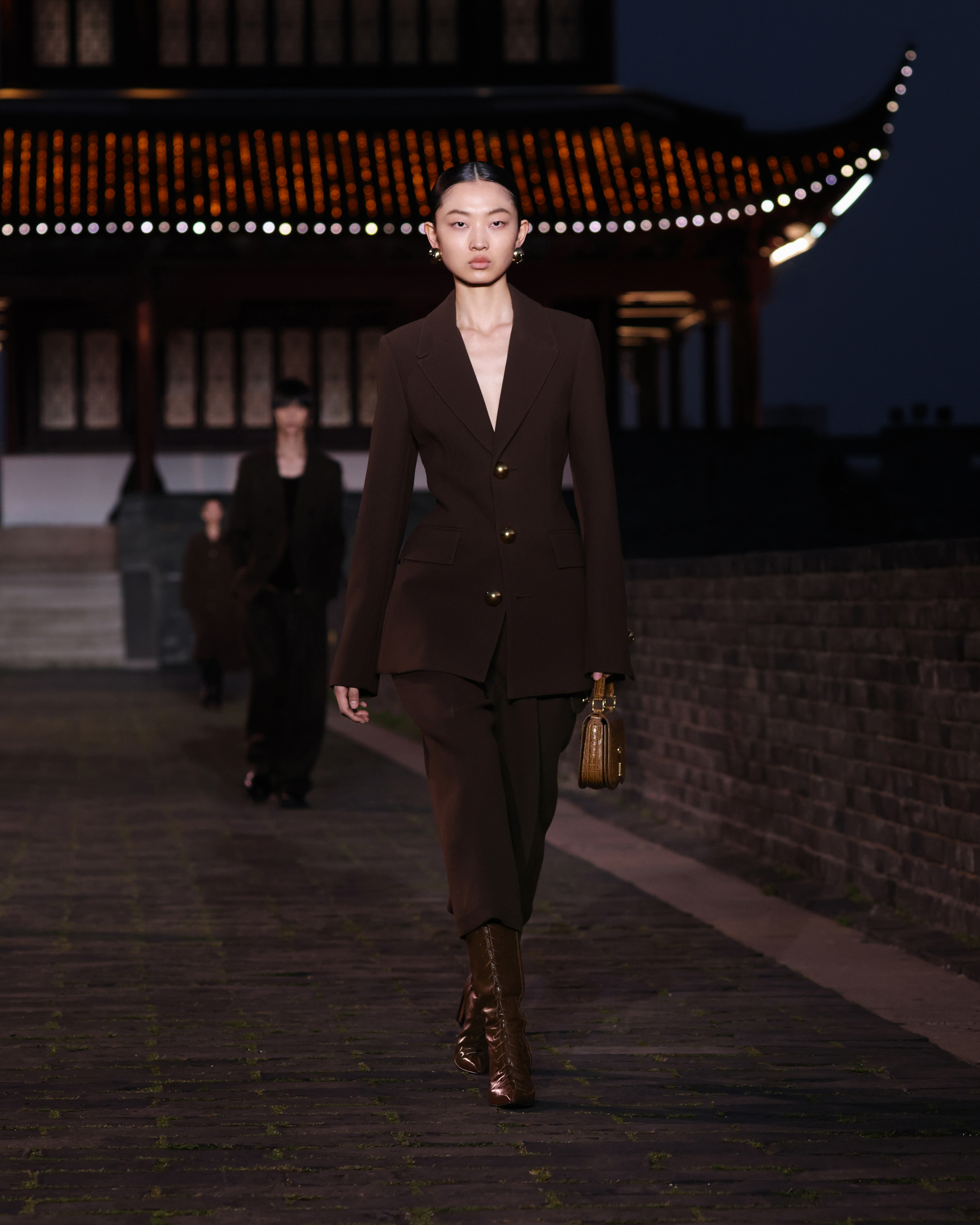
AMI fashion show in Suzhou
Luxeplace.com: Why open a store at Renheng Warehouse Street in Suzhou?
Nicolas Santi-Weil: We visited Renheng Warehouse Street early on and saw the ancient city walls and the design of the mall coming together.
Opening a store in an excellent location is part of our global strategy. From this store, you can see the city walls and the temple scenery. We spent a lot of time designing this store. Before opening, founder Alexandre came here personally to feel the local craftsmanship, such as Suzhou’s fan making, to truly understand and listen to the city’s stories and culture.
Renheng Warehouse Street welcomed us warmly, believing in AMI and wanting to do something special with us. We also wanted to share our brand’s story.
We became part of the Warehouse Street project and agreed with the landlord to become the first fashion brand to host a show under the city walls, which was very special.
This show also narrated AMI’s story to the customers and citizens of Suzhou, telling them about AMI, what AMI loves to do, and expressing our appreciation for their culture and architecture.

AMI Suzhou Warehouse Street boutique store
Positioning as a “Friendly Luxury Brand,” How Does AMI Convey Emotional Value?
AMI’s founder, Alexandre Mattiussi, previously worked as a designer at Givenchy, but Nicolas did not want to position AMI strictly as a designer brand or a traditional luxury brand. Instead, their shared vision was: “to capture the effortlessly stylish and laid-back Parisian chic with an easy, genuine, and friendly fashion philosophy.”
Nicolas highlighted AMI’s keyword: “friendly luxury.” As luxury brand prices have escalated to exorbitant levels—with some increasing by more than 50% in four years—many consumers have been deterred. This pricing trend has opened a gap and an opportunity for brands like AMI.
AMI distinguishes itself from the “niche concept” of designer brands and the “exclusivity” of traditional luxury brands by emphasizing making customers feel joyful and welcomed. AMI’s differentiated positioning, based on emotional value, narrows the distance with consumers, true to the brand’s original intent: to create an ideal wardrobe for friends and loved ones.
Luxeplace.com: How does AMI position itself today?
Nicolas Santi-Weil: AMI (meaning “friend” in French) is a friendly luxury brand that takes genuine pride in its craftsmanship and expertise. We are very happy, straightforward people; this is our vision and our understanding of what a luxury brand should be. We aim to share this perspective through engaging conversations with our Chinese friends. We always ask ourselves: Are we moving in the right direction? Is our vision understood? Does it align with the locals’ views? Is it relevant to their country?
We want to maintain a friendly and welcoming attitude, approaching our business like making friends—even if someone just comes to look and doesn’t buy anything, we want to befriend them and tell them what AMI is and who is behind AMI.
We emphasize the concept of “family” (f.AMI.ly), where AMI is an inclusive family. It’s not about where you were born but where you connect with others and build lasting relationships—that’s what family means to us.
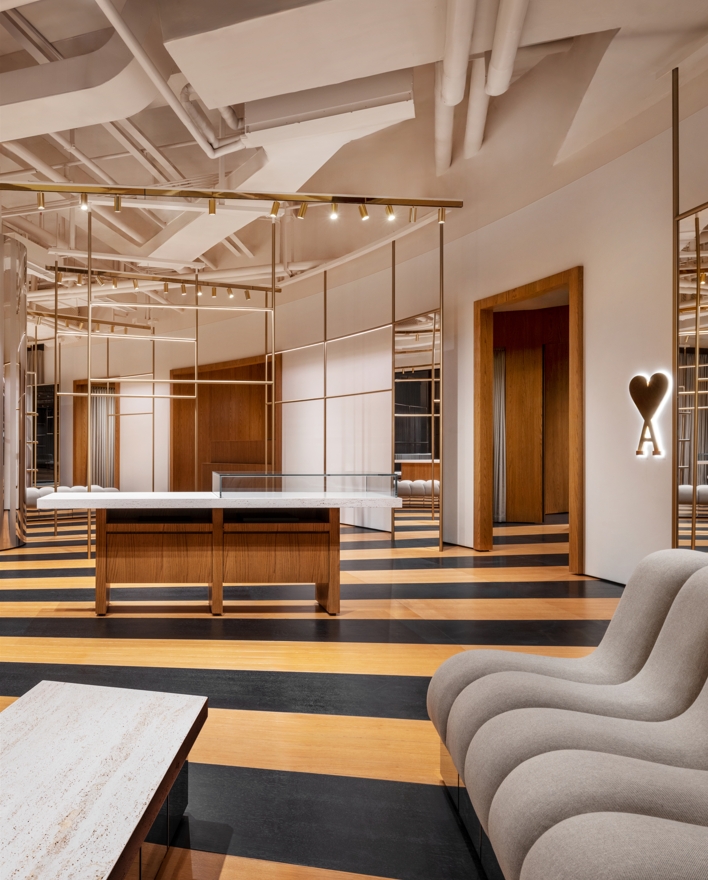
AMI Suzhou Warehouse Street boutique store
Believe Me, There’s Still Significant Growth Potential Ahead
Years after the pandemic, regarding how AMI continues to sustain growth, Nicolas emphasizes the importance of “respecting time.”
“If you move too quickly, you can destroy the brand and its stories. Believe me, there’s still significant growth potential ahead.”
Additionally, Nicolas remains highly cautious about the direct impact of the logo.
While the brand’s “heart-shaped A” logo is already well-recognized among the general public, perhaps a part of AMI’s growth has been “driven by the logo.”
However, Nicolas admits, “AMI is much more than just a logo.”
“AMI is professional, passionate, and disruptive, so we’re not just creating an everyday brand, but an entire wardrobe. That’s what makes AMI special.”
Nicolas stresses the importance of “sharing the full story of AMI,” allowing customers to understand the brand’s philosophy and history through the logo, while on some products, the brand’s logo is even becoming smaller and less conspicuous because he wants consumers to see a more complete, more versatile AMI.
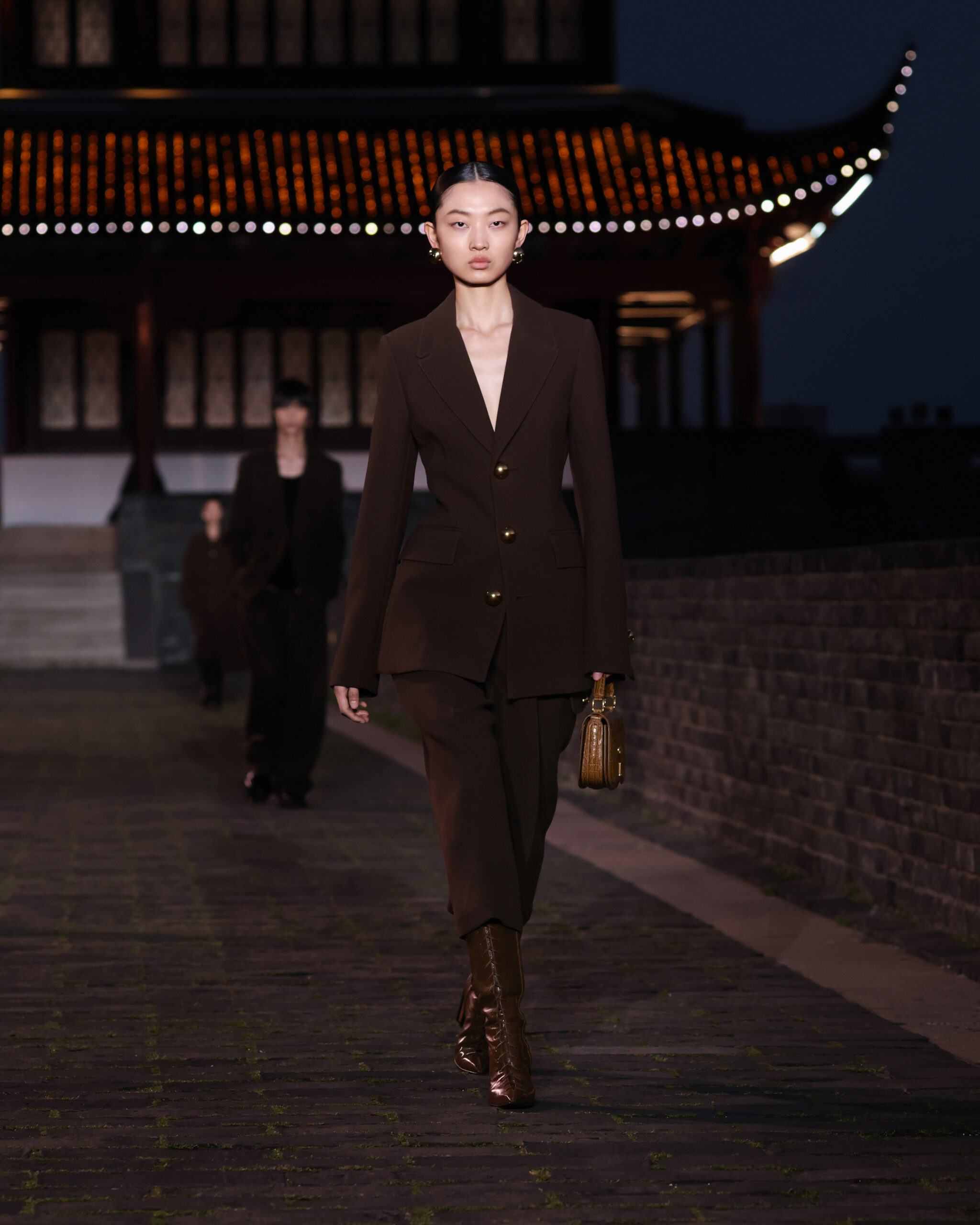
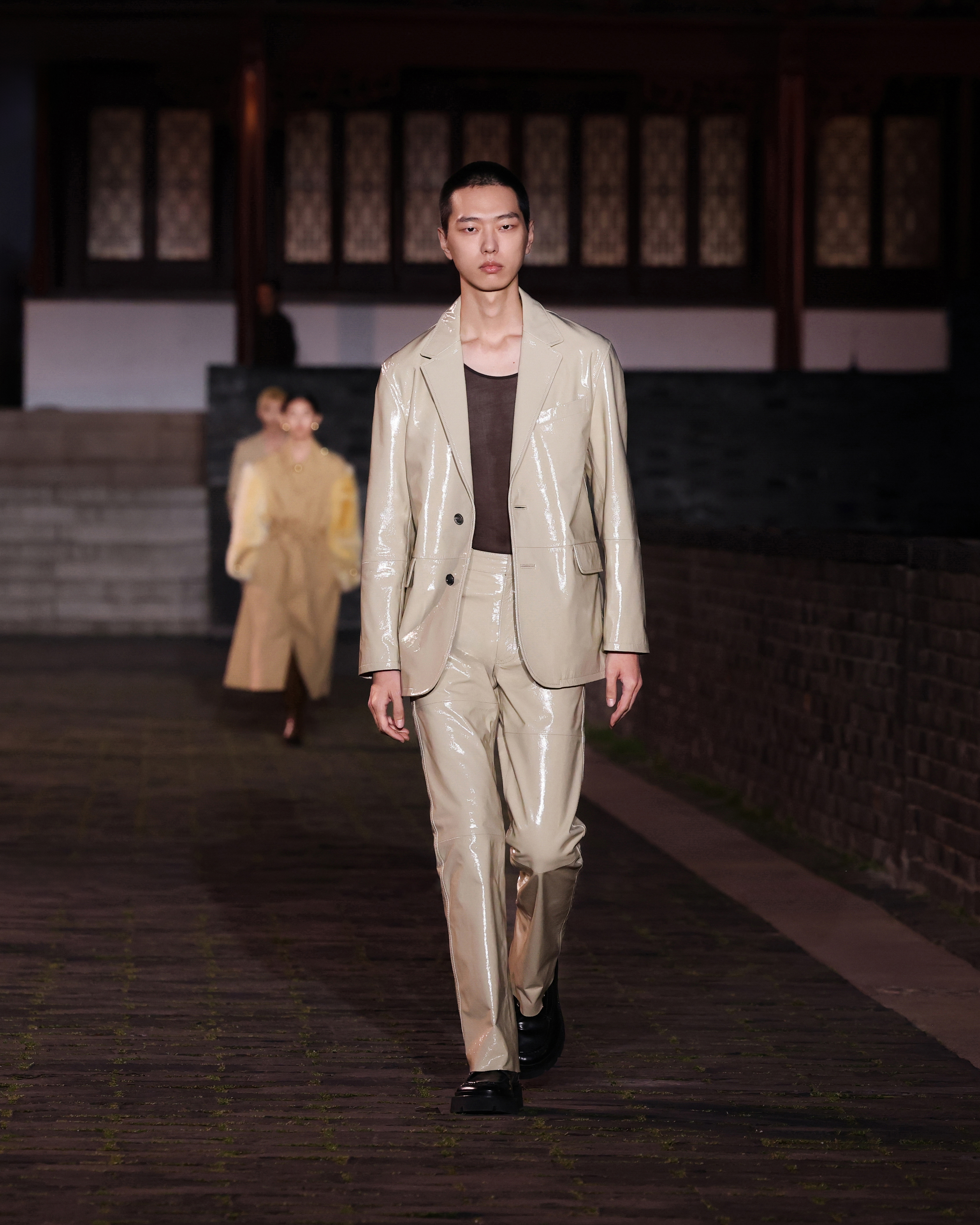
AMI 2024 Autumn/Winter Collection
Luxeplace.com: How will AMI continue to tell its brand story in the future?
Nicolas Santi-Weil: People can recognize our logo, which is a tag they want to display. The logo is simple and sells well. We’re proud of it because this logo has been Alexandre’s signature since childhood, something genuinely his.
But AMI is much more than a logo. We train our staff to share the behind-the-scenes story of AMI with customers, tell them about designer Alexandre, and his concept of a 360° full wardrobe.
If we were driven only by the logo, we’d be out of fashion in two years, and people would want a new brand because they see the same logo everywhere.
Luxeplace.com: What changes do you see in the challenges of the Chinese market?
Nicolas Santi-Weil: The current challenge is that customers are spending less.
Some European brands might think, “Well, there’s a crisis in China, let’s wait and stop developing stores.” But I believe the crisis is temporary, and this country still has tremendous potential. Perhaps customers won’t spend as much, but they still want to dress up, find beautiful clothes, and be elegant. So, I think we need to act and amplify our presence, which is why we’re doing this fashion show.
Luxeplace.com: What are AMI’s plans for products in the future?
Nicolas Santi-Weil: We spent about ten years establishing our menswear category, and have been seriously developing our womenswear category for the past three years. We aim to first develop womenswear and accessories, then expand into children’s wear, step by step.
China is AMI’s fastest-growing market for accessories. The Paris Paris and Voulez-Vous collections are growing so quickly that we have to reallocate stock intended for other countries to China because of the strong market response there.
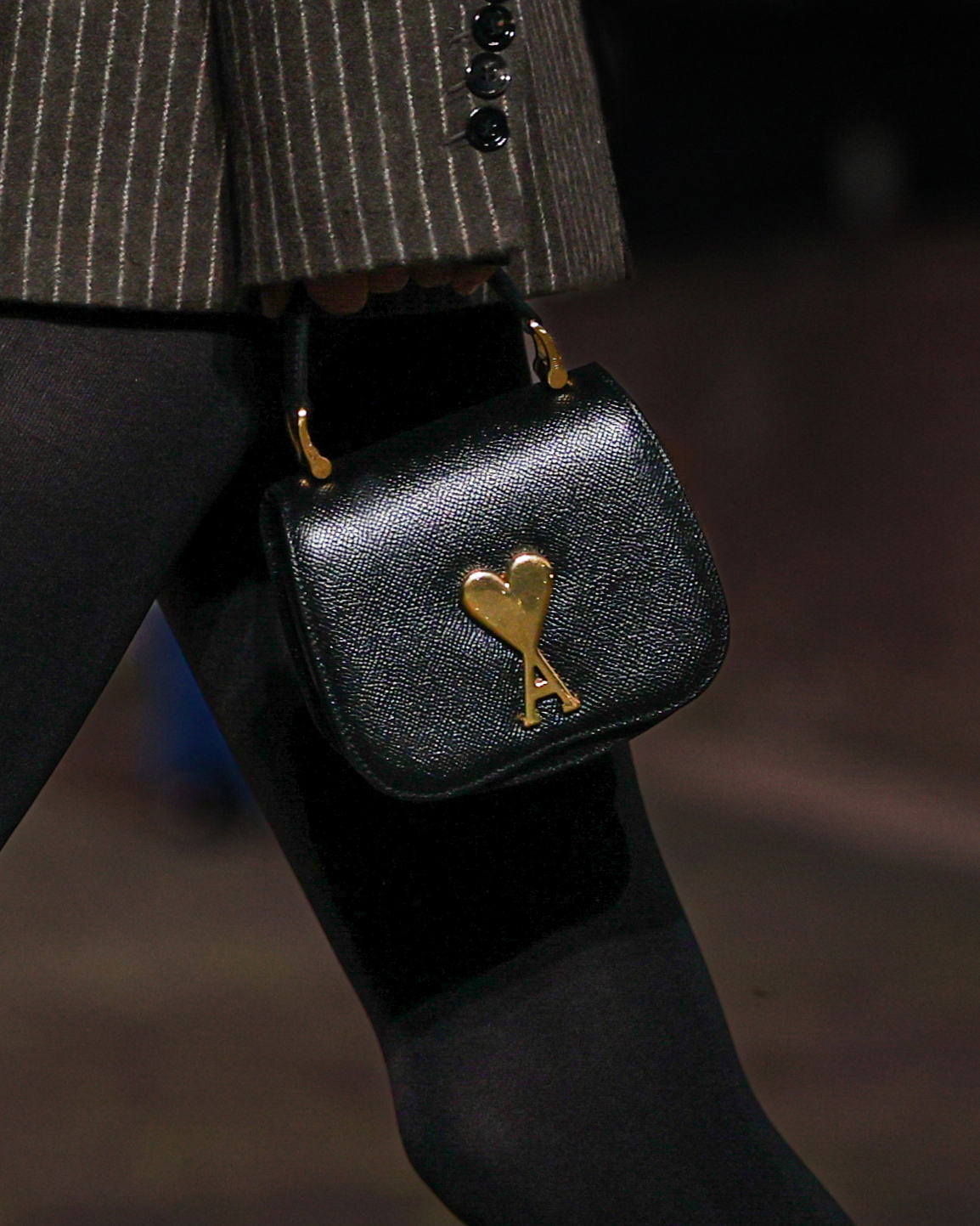
AMI 2024 Autumn/Winter Collection Paris Paris bags
Luxeplace.com: What are AMI’s future intentions for the children’s wear category?
Nicolas Santi-Weil: Alexandre wants to do children’s wear, as AMI’s logo is well-suited for it, and I think we’ll do very well because we’ve had successful children’s wear capsule collections that sold out quickly.
People send messages when they have babies, saying, “I’d love to dress my baby in AMI. Could you please design a collection?” So, children’s wear will definitely be part of AMI’s future, but not too quickly.
Luxeplace.com: Does AMI have any specific business targets in terms of data?
Nicolas Santi-Weil: First, data is not the main target. Our primary goal is to position ourselves correctly, establish sustainable operations, host appropriate events, fashion shows, and hire more experienced sales staff.
Thus, we haven’t set a strategic plan, but we will continue to build the brand and respect timing. I believe that if you don’t respect timing, if you move too quickly, you can spoil the brand and its stories. So we want to take it one step at a time.
But the good news is that we’ve already surpassed our 2023 target of 300 million euros. We still see significant growth happening in the coming years. Believe me, we’re still poised for substantial growth.
We’re increasing our marketing activities in China, convinced that it is a huge market for us, and we plan to continue investing in China. I repeat, when I say investing, it’s not just about money—it’s about people, it’s about culture, so it’s a broader investment.
| Image Credit: Provided by AMI
| Editor: Elisa