1914 was a significant year in tennis for both Shanghai and Wilson.
That year, in preparation for the Far Eastern Championship Games, Shanghai’s sporting community joined forces with St. John’s University, the University of Shanghai and other universities to organise tennis trials for East China, bringing Chinese players into a more structured competitive system for the first time. In the same year, Wilson launched its first all-wood tennis racket in Chicago, laying the foundation for its subsequent global reputation in professional tennis.
More than a century later, the tennis histories of Shanghai and Wilson have converged once again, sparking something extraordinary.
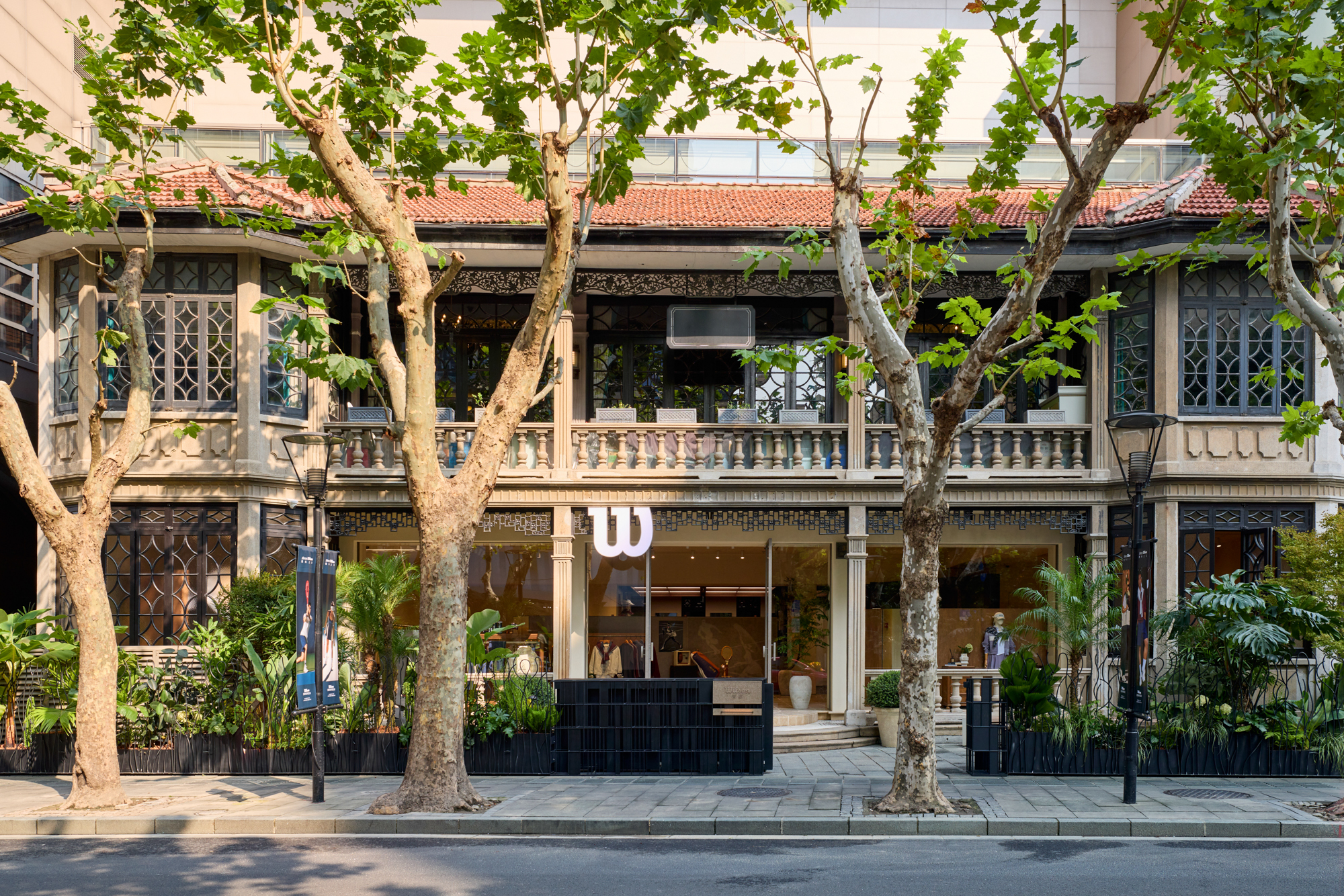
As the 2026 Rolex Shanghai Masters officially got underway on October 8, Wilson opened Qingdi, a new urban concept store at 338 Zizhong Road in Shanghai’s Xintiandi. The store’s significance extends beyond an enhanced retail space: it represents Wilson’s attempt in China to turn a century of tennis heritage into an immersive experience of the contemporary tennis lifestyle.
For many years, consumers have known Wilson primarily through the rackets swung by players, the tennis balls bouncing across courts, and the equipment of all sizes lining the shelves of specialist tennis shops. As one of the world’s most recognisable heritage tennis brands, with a reputation for technical expertise, Wilson has long earned its place among professional players and enthusiasts. One of its central strategic challenges in recent years, however, has been to translate that expertise into brand content that a broader audience can understand and connect with, building more substantial, lasting brand value.
Participation in and interest in tennis have grown rapidly in China in recent years. According to the General Administration of Sport of China, the country’s 2025 tennis season attracted nearly one million spectator visits, generated RMB 250 million (approximately USD 37.13 million) in ticket revenue and drove more than RMB 16 billion (approximately USD 2.38 billion) in related spending. The 2026 tennis season in China, which includes the China Open, Shanghai Masters and Wuhan Open, is now in full swing. At the China Open, one of the first tournaments to begin, cumulative attendance through October 4 rose sharply by 37% compared with the same period last year.
The competitive beauty and vitality of tennis are reaching beyond professional courts, inspiring growing numbers of sports enthusiasts and consumers of sports fashion. Sports brands, particularly those focused on tennis, must respond to this momentum by evolving their retail concepts and brand communications, tapping more fully into their potential to seize current market opportunities and shape future trends.
At Qingdi in Shanghai, Wilson has offered a fresh response.
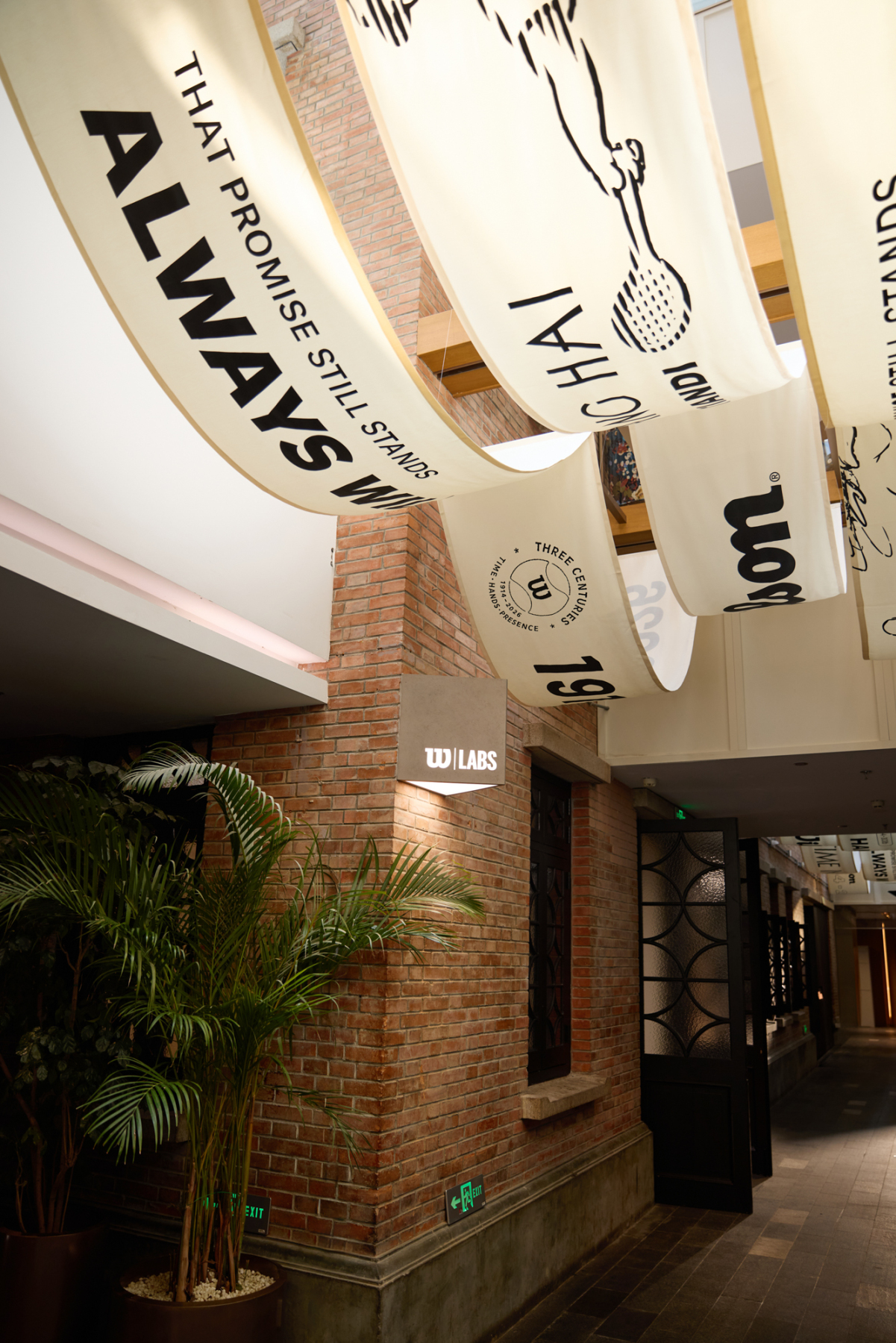
How Can a Century of History Become Tangible Brand Assets?
To showcase more than a century of tennis heritage, Wilson has created a space that combines exhibitions with opportunities to socialise. The presentation goes beyond a straightforward display of historical archives, offering carefully curated, detailed content and engaging experiences that consumers can immerse themselves in.
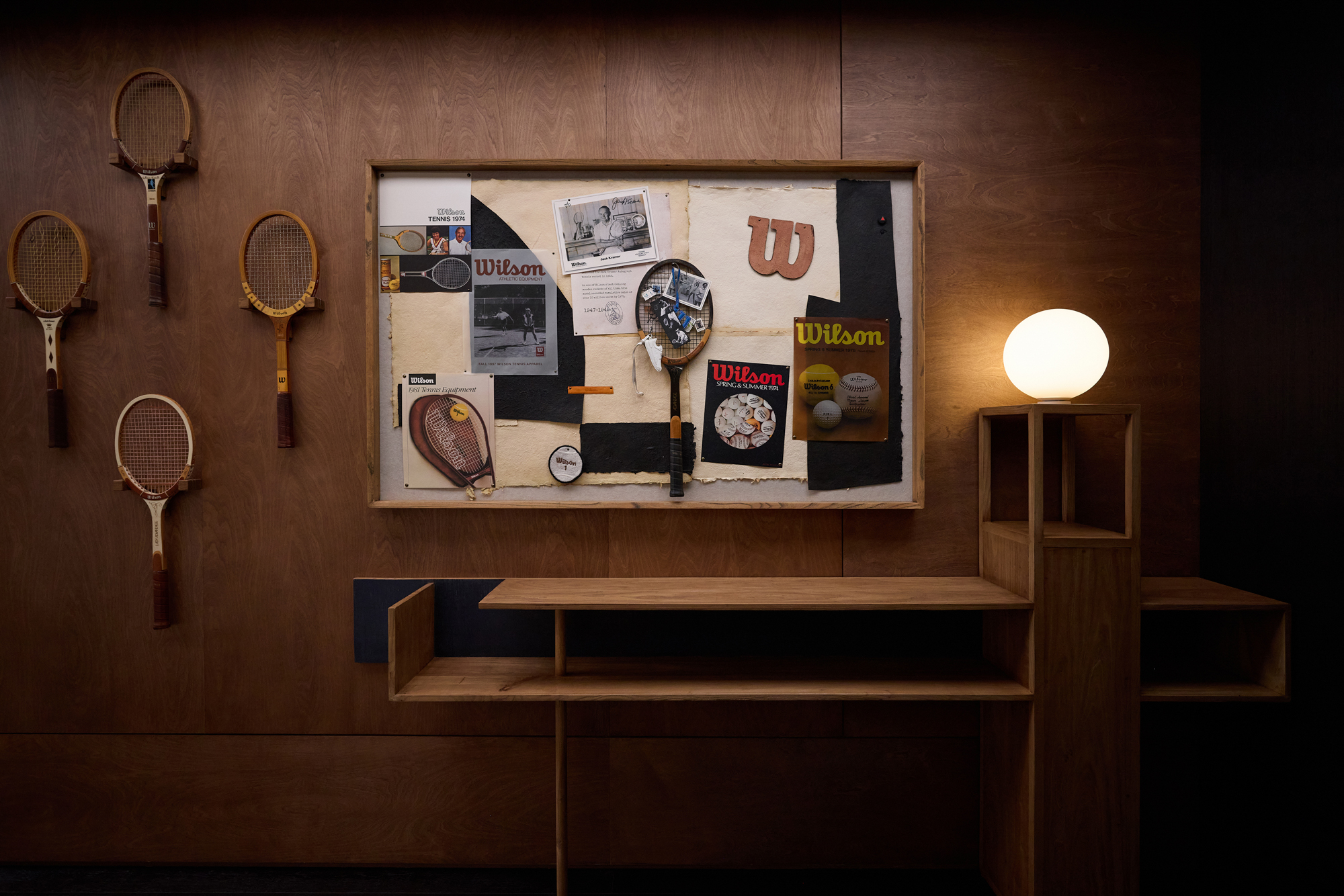
From its first wooden racket in 1914 to the introduction of leather grips in the 1930s, the classic Jack Kramer model in 1949, its first steel racket in 1967 and the Pro Staff series that became an icon on the professional circuit in the 1980s, Wilson’s product history mirrors, to some extent, the evolution of modern tennis equipment.
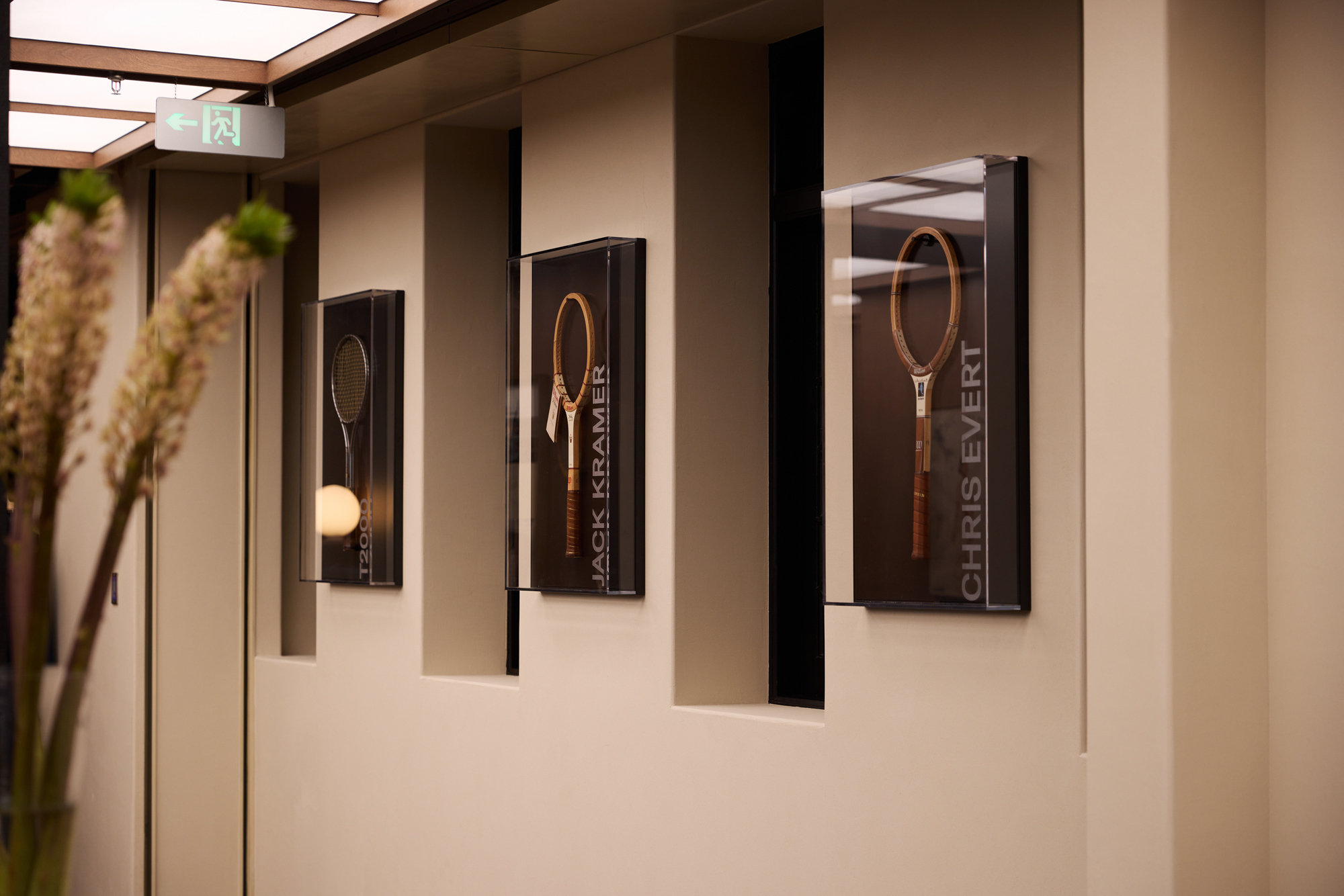
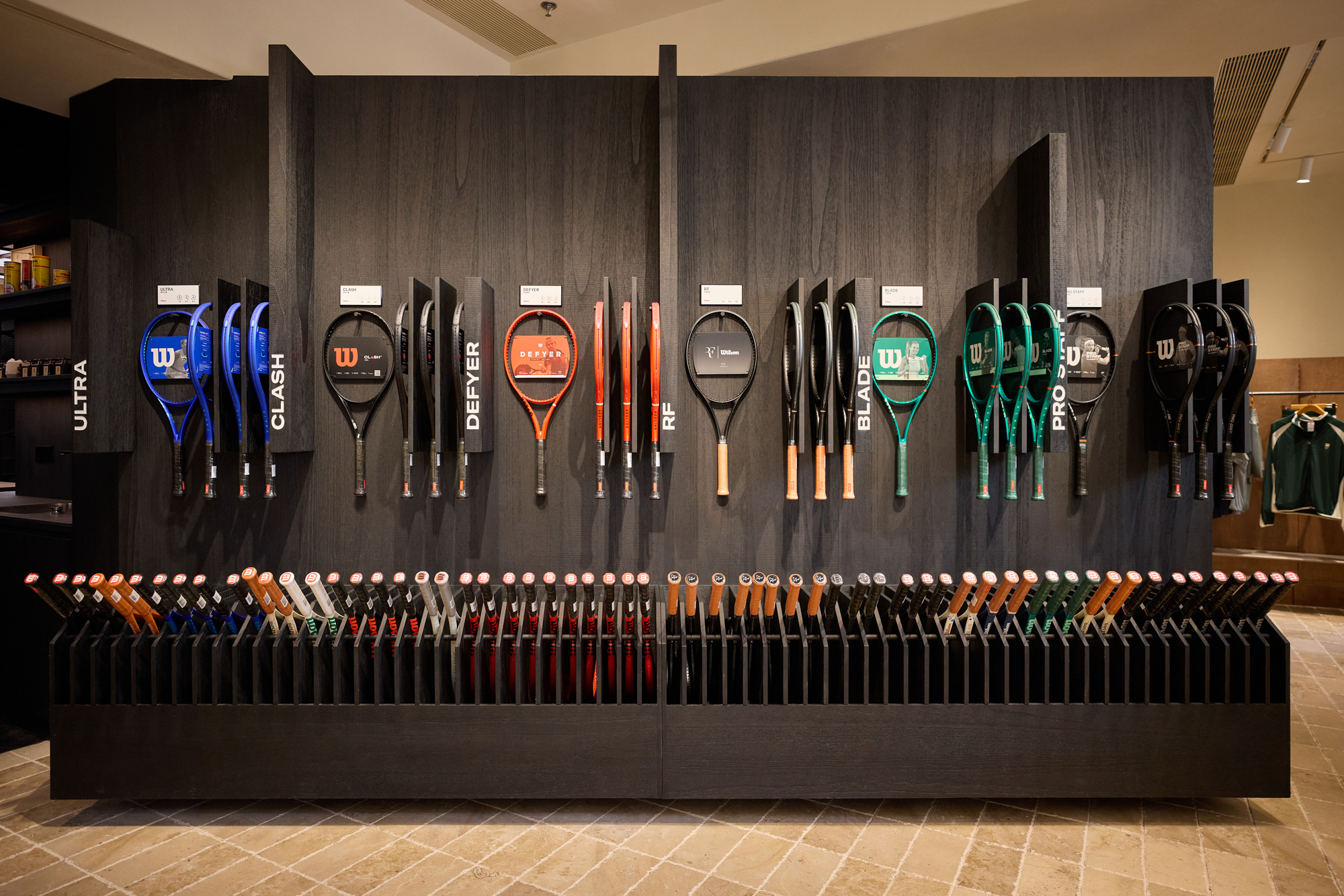
Beyond product development, Wilson’s standing in professional tennis is another core brand asset. On the professional tours, Wilson is one of the most widely used racket brands among the top 100 ATP and WTA players. It has continuously supplied the official ball of the US Open since 1978 and became the official ball supplier to the French Open in 2020, where it is also the official stringing partner. Legendary players including Roger Federer, Pete Sampras and Serena Williams achieved the vast majority of their Grand Slam successes with Wilson rackets.
Previously, much of this history remained in the brand’s archives and within specialist circles.
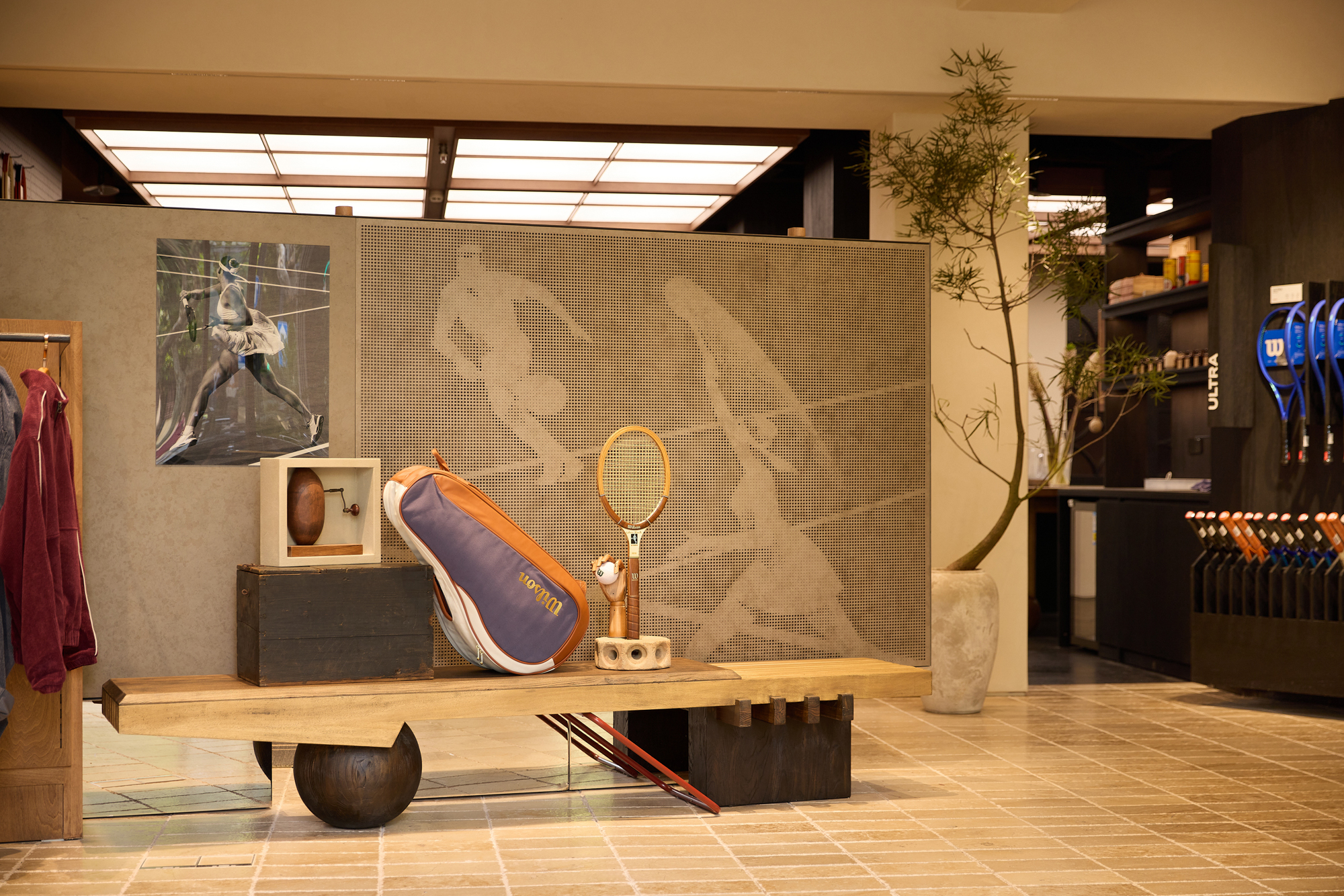
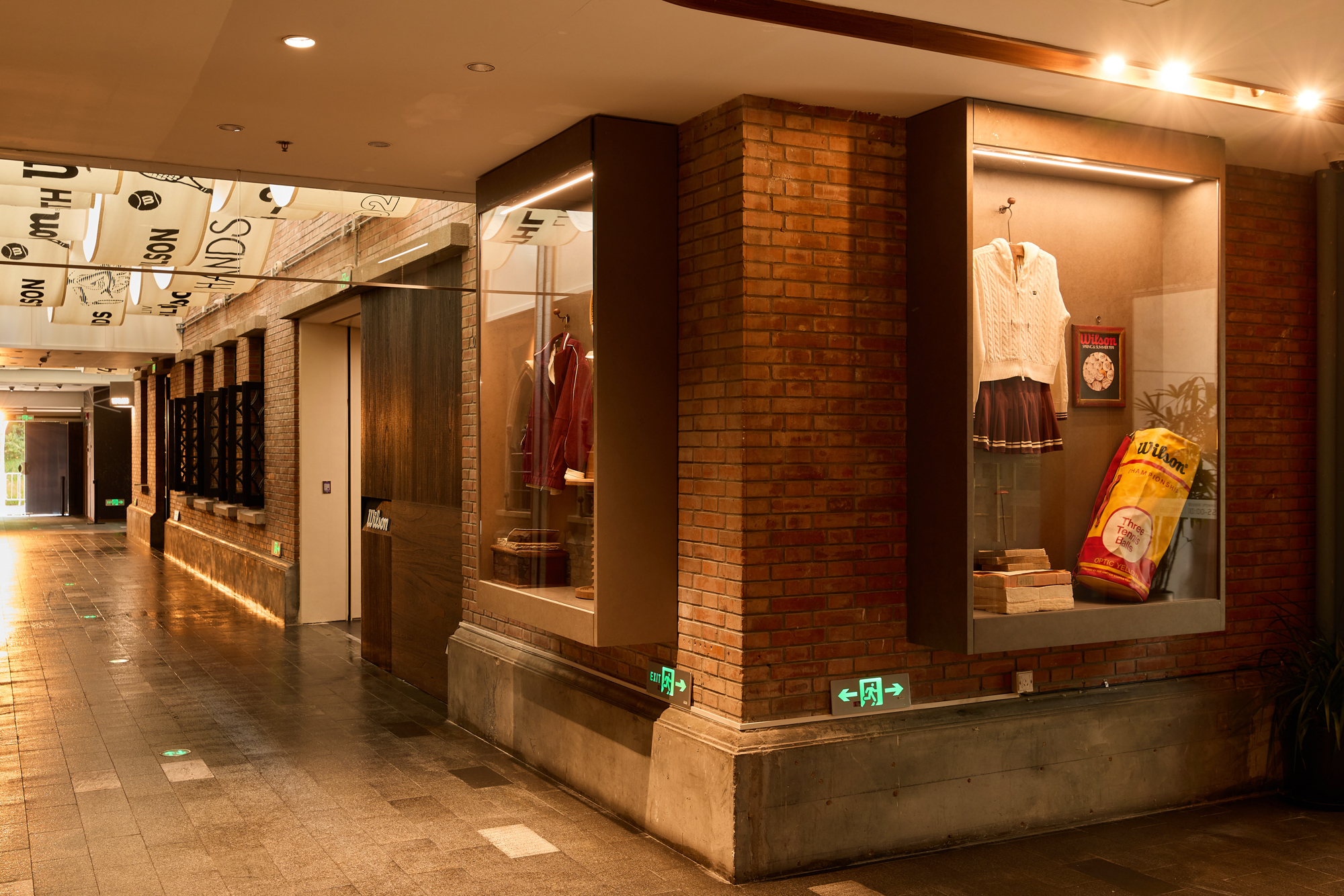
At Qingdi, Wilson has turned these milestones into firsthand experiences. A dedicated brand history exhibition displays iconic rackets, allowing visitors to examine changes in materials, construction and design across different eras.
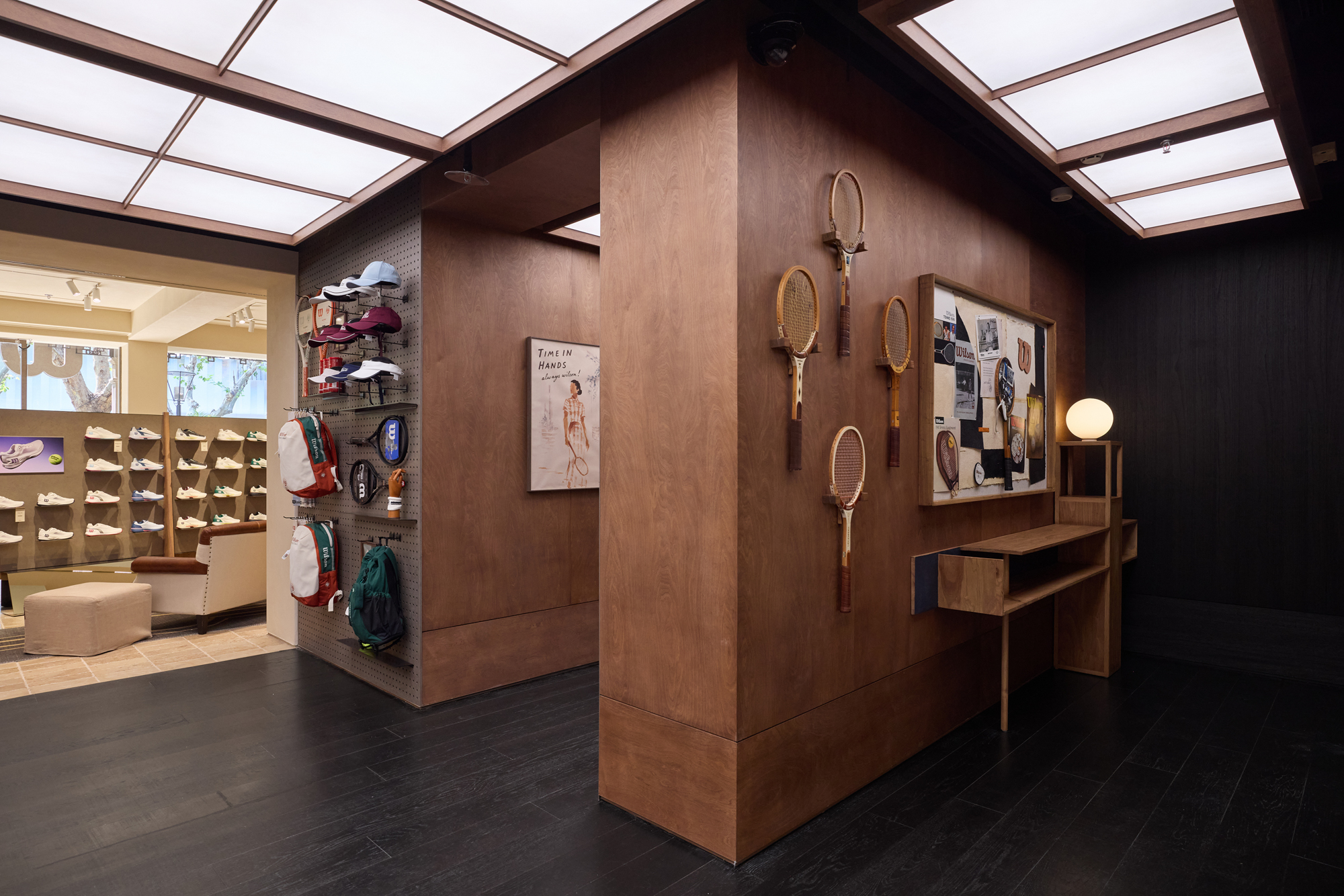
Here, rackets become more than merchandise on a shelf. They offer a vivid introduction to the technical evolution of tennis equipment, the development of tennis culture and Wilson’s accumulated heritage.
Beyond the historical exhibition, Qingdi reinforces Wilson’s professional expertise through comprehensive customer services on site.
The store has a stringing workshop offering a 45-minute, one-to-one stringing service. Customers can see how stringers optimise a racket to suit their playing style, habits and needs.
The tennis-inspired table at the main entrance is particularly inventive. Its base draws on the mechanics of racket stringing, incorporating tennis elements naturally into furniture design. Together with artwork assembled from pegboards on the wall behind it and handcrafted furniture, it creates a relaxed, inviting first impression of the store.
Qingdi seeks to bring Wilson’s extensive tennis expertise from the competitive arena into an urban retail setting, presenting tennis culture in a more vivid, multidimensional way.
Why Shanghai’s Xintiandi?
Wilson’s decision to base its latest retail exploration in Shanghai is closely tied to the city’s longstanding tennis culture.
Before 1874, Shanghai was already home to China’s earliest organised tennis club, the Shanghai Tennis Club, which laid two grass courts in the racecourse area using grass seed shipped from overseas. In 1911, the Shanghai Lawn Tennis Club, commonly known as the Xilianhui, was established. Using courts in the central area of the racecourse, around what is now People’s Square, it regularly held the Shanghai Lawn Tennis Championships, attracting overseas players from Tokyo, Manila and elsewhere.
As tennis entered the modern professional era, Shanghai became an increasingly important centre for the sport’s commercial development in China. Today, the city has more than one million tennis players and over 2,400 high-standard tennis courts.
In 2009, the Shanghai Masters became an ATP Masters 1000 tournament, making Shanghai the only city in Asia to host an ATP Masters 1000 event.
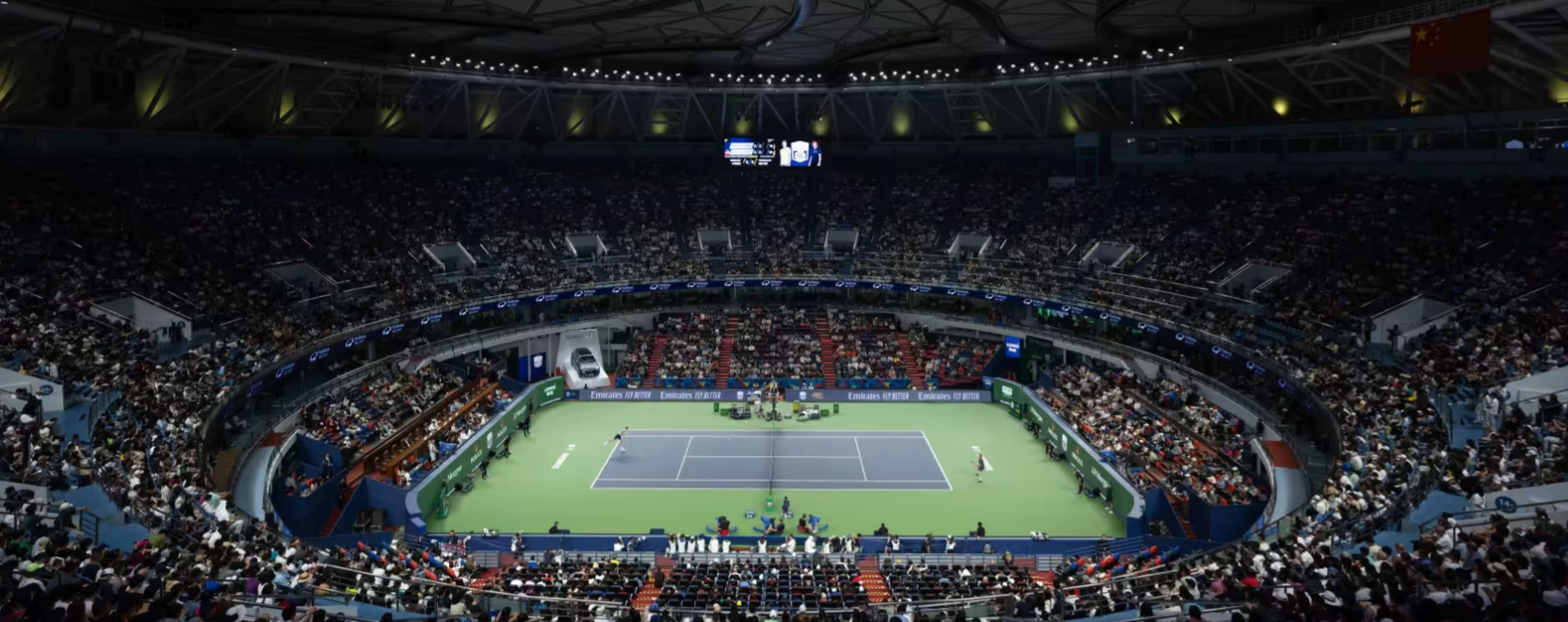
Shanghai Qizhong Forest Sports City Tennis Center (Image source: Rolex official website)
The growth of the Rolex Shanghai Masters also illustrates how tennis has expanded from competitive events into a commercial ecosystem. Today, the tournament is more than a sporting event: it is an important platform connecting sport, commerce and urban life.
Official figures show that the 2025 Rolex Shanghai Masters attracted more than 250,000 spectator visits and generated over RMB 100 million (approximately USD 14.85 million) in ticket revenue. Around 60% of spectators came from outside Shanghai, including approximately 10% from overseas. Sales of official tournament merchandise exceeded RMB 20 million (approximately USD 2.97 million).
For Wilson, Shanghai is more than a tournament host city. It is a key market capable of supporting the brand’s next phase of retail exploration.
Xintiandi provides another layer of connection.
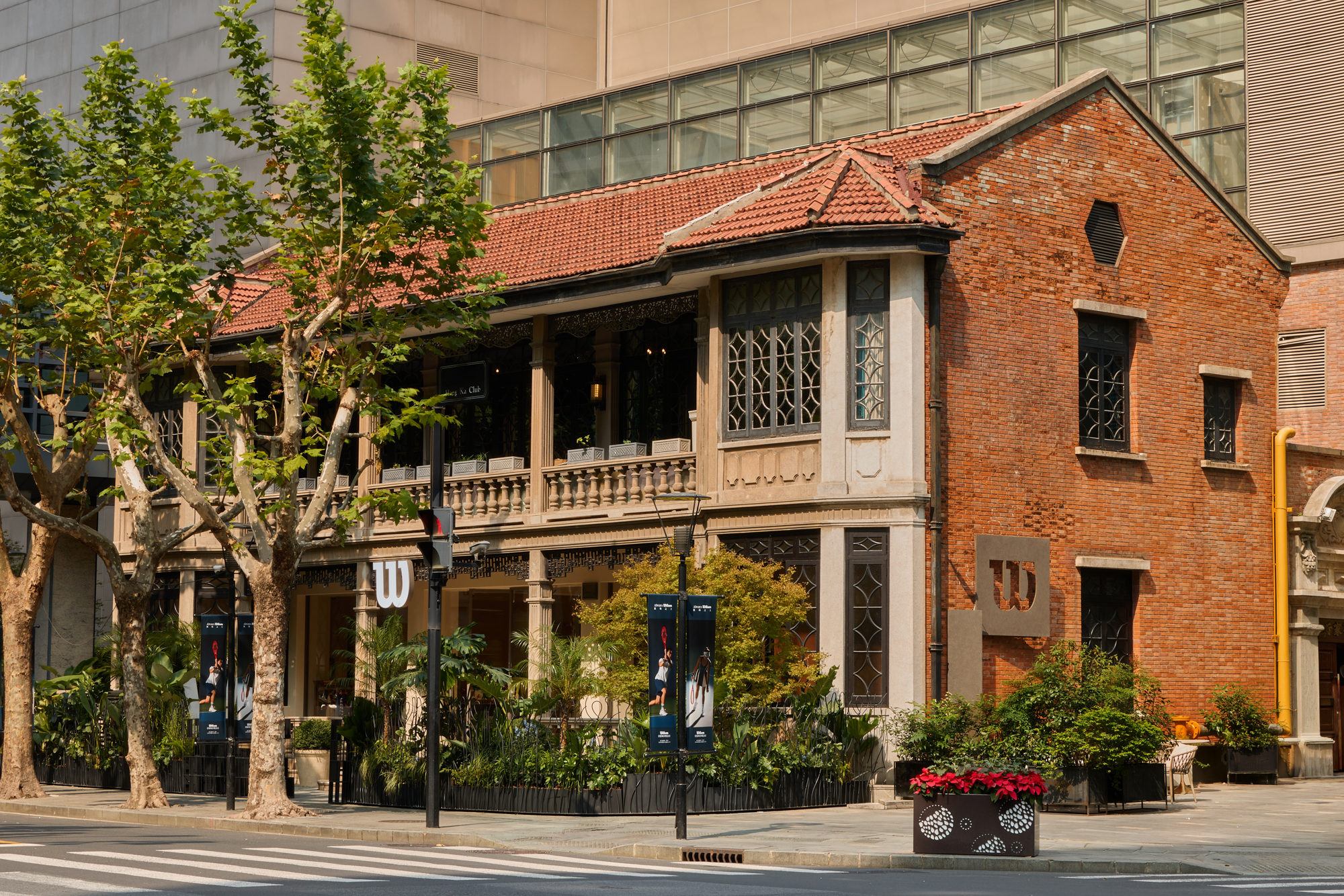
The historic shikumen neighbourhood in Xintiandi where Qingdi stands occupies the former site of Shanghai’s longstanding Fuxing United Shopping Centre. It is a distinctive example of how the city’s culture and commercial life come together.
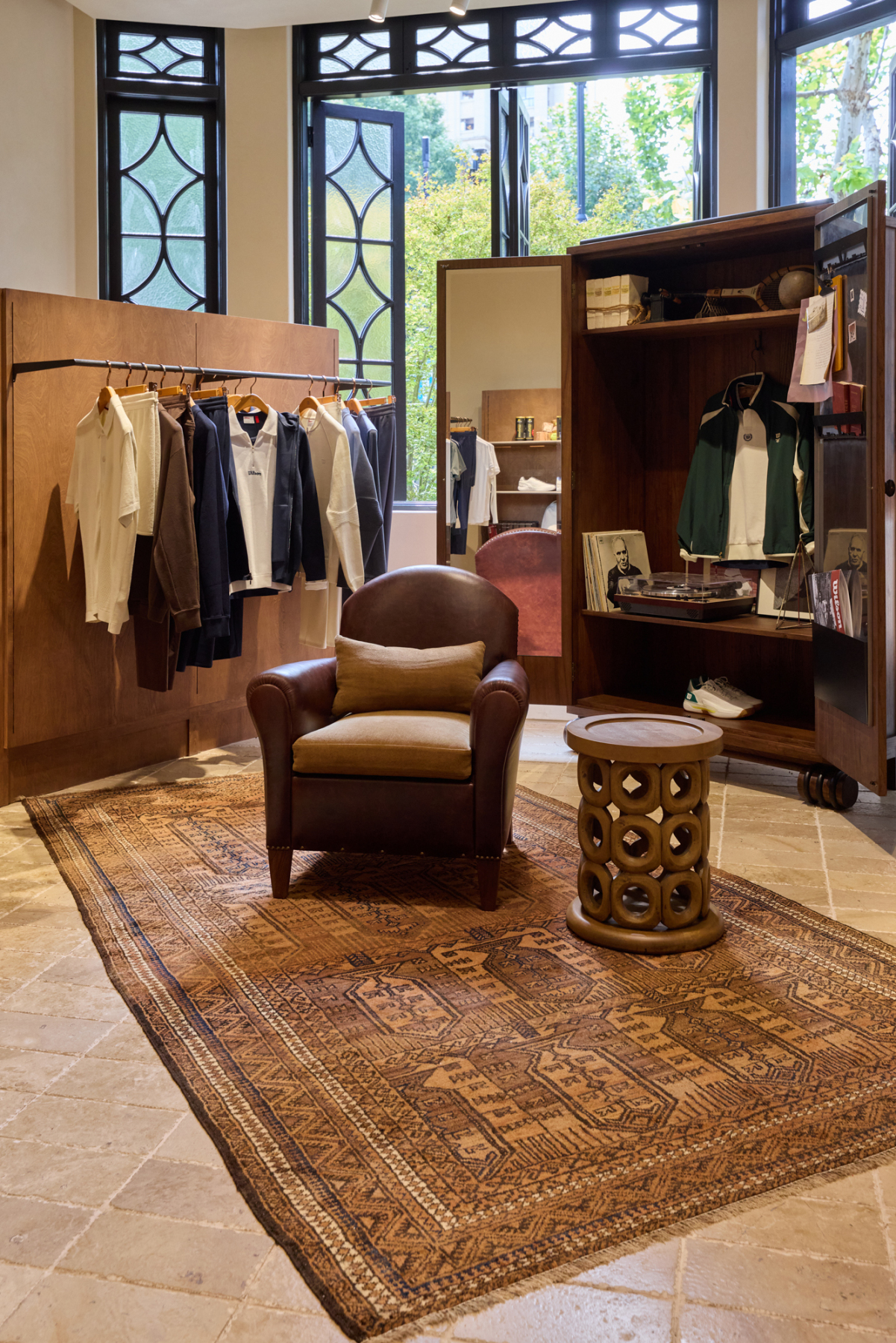
The store preserves historical features such as grey bricks, steps and railings, while reconfiguring the space through contemporary design to connect Wilson’s century-long history with Shanghai’s urban memory.
The result is closer to an urban space devoted to tennis culture than a conventional sporting goods store.
From Selling Rackets to Cultivating a Tennis Lifestyle
The deeper shift behind Qingdi is the continuing evolution of Wilson’s growth strategy in China. Looking back, the brand’s retail development in the country has broadly followed three stages.
The first was the Retail 1.0 era, centred on sales of specialist equipment, primarily reaching tennis players and enthusiasts through dealer channels such as specialist tennis shops and outlets at sports venues. The brand’s relationship with its users largely revolved around the “functionality” of specialist equipment such as rackets and tennis balls.
The second was the Retail 2.0 era of directly operated stores offering multiple product categories. In 2021, Wilson began strengthening its DTC (Direct-to-Consumer) presence in China, expanding its footwear and apparel ranges beyond tennis equipment while pursuing premiumisation. Through medium-sized, directly operated stores in upscale shopping malls, Wilson presented a more complete and elevated brand image, introducing more people outside tennis circles to the tennis culture it represents.
With Qingdi’s opening, Wilson’s retail exploration has entered its third stage: the Retail 3.0 era of building brand strength and cultivating consumer relationships around “tennis culture”. The question it seeks to answer is no longer simply how to “sell more products”, but how to build deeper, longer-lasting consumer relationships around tennis and strengthen brand awareness and loyalty.
This shift is closely tied to the Tennis 360 strategy Wilson has been advancing in recent years.
At parent company Amer Sports’ Investor Day in September this year, Wilson Tennis 360 was identified as one of the group’s three core growth engines. Figures show that the business achieved a compound annual revenue growth rate of approximately 20% over the past four years, with revenue expected to exceed USD 600 million in 2026.
Notably, growth has come not only from the traditional racket and ball businesses, but also from a broader range of categories, including footwear, apparel and accessories.
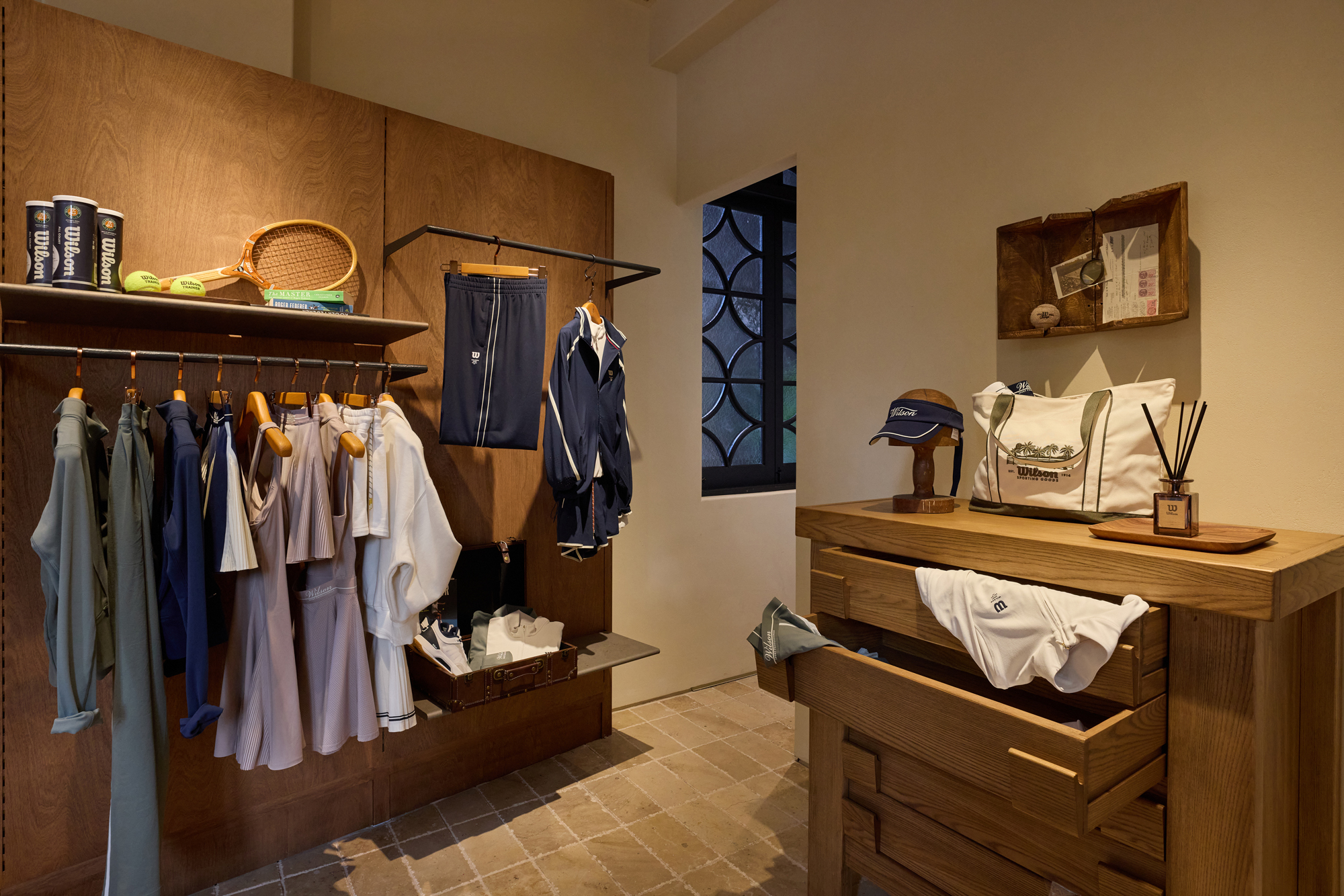
Behind this is Wilson’s development of a more comprehensive product offering and brand philosophy centred on tennis, covering training, competition and a wider range of lifestyle settings “beyond the court”. This enables the brand to reach a broader consumer base and create multiple touchpoints that convert engagement into purchases.
China is a key market for testing this strategy. In an exclusive interview with Luxe.CO in 2025, Wilson Sportswear President Gordon Devin said, “China has the best retail experience in the world, and I’d be delighted to bring it to other parts of the world.”
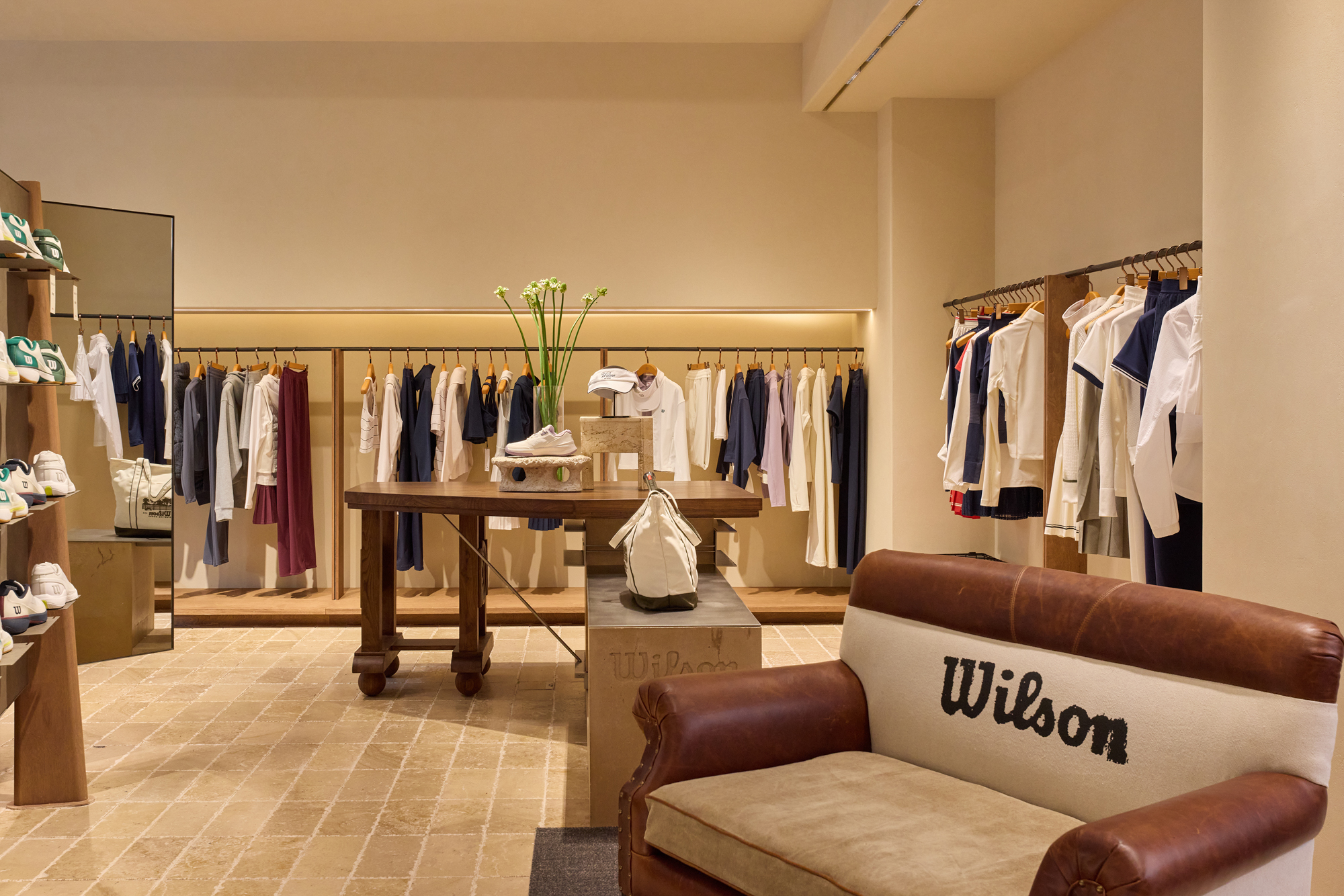
Qingdi’s interior layout gives physical form to this business strategy. Alongside specialist equipment, the store features extensive displays of new products, apparel and footwear. An open garden at the entrance, together with a drinks counter, courtyard and event spaces inside, meets consumers’ needs for socialising and relaxation in their “off-court lives”. For the opening, the brand invited public figures including actress Tan Zhuo and actor Hu Yitian to experience the store, showcasing a lifestyle that brings sport and socialising together.
Building the “Infrastructure” of Tennis Culture
The 2026 Sports & Outdoor Brands China Power Ranking, recently released by Luxe.CO, noted that as competition intensifies, physical stores are evolving from traditional sales channels into important spaces for shaping consumer perceptions, communicating specialist expertise and building lasting brand assets.
When an ordinary consumer first encounters a specialist sport through a store visit, an apparel purchase or an in-person brand event, the store’s role extends beyond selling products. It becomes physical infrastructure connecting the brand, the sport and the consumer, a gateway for promoting participation, and a stage and showcase for a fashionable sporting lifestyle.
As a global leader in tennis, Wilson is accelerating the expansion of its directly operated retail network in China. According to Amer Sports’ official financial figures, Wilson had added a net total of 12 brand stores as of the second quarter of 2026, most of them in Greater China and Asia-Pacific. For the full year, the brand plans to add approximately 40 net new Wilson Tennis 360 stores in China.
This store expansion and enhancement reflect Wilson’s determination and ambition to lead the growth of China’s tennis and tennis lifestyle markets.
From its first wooden racket in 1914 to today’s tennis lifestyle space in a Shanghai shikumen building, Wilson is seeking to turn a century of specialist expertise into new value for consumers. For sports brands, future competition will unfold both in the sporting arena and in physical retail spaces: retail operations determine how widely a brand can reach consumers, while sustained investment in sporting culture determines how deeply, and for how long, it can take root in their minds.
| Image Credit: Wilson
| Editor: Luxeplace